

You Don't Need A Bench Grinder To Sharpen Lawn Mower Blades: 8 Other Ways
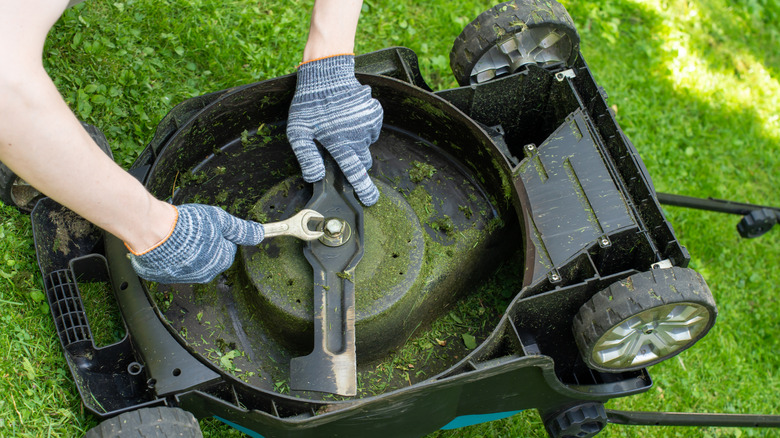
When it comes to keeping your yard in picture-perfect condition, the work doesn't end once you turn your lawn mower off. It's also important to maintain your lawn mower regularly, from cleaning it to keeping up with routine maintenance. This also means sharpening the blades as needed. Bench grinders are a common method of sharpening lawn mower blades, but if you don't have one on hand, there are several alternatives as well.
hen you're sharpening lawn mower blades, the goal is to create a smooth, even edge with no nicks or damage without removing so much material that the blade becomes weakened. As a result, there are various tools that can accomplish this task, from different types of grinders and sanders to manual options like metal files. You can even get creative and use items that you may not have initially considered, such as a kitchen knife sharpener, to help get the perfect blades for creating that tidy lawn you love showing off.
Even without using a bench grinder to sharpen your lawn mower blades, it's important to keep the right safety techniques in mind. This includes preparing the mower for blade removal and sharpening, as well as wearing the appropriate personal protective equipment (PPE). Before removing the blade, disconnect the mower from its battery, unplug it if it's electric, or disconnect the spark plug wire if it's gas-powered. Then wear protective gloves, safety glasses, and hearing protection while sharpening.
Kitchen knife sharpener
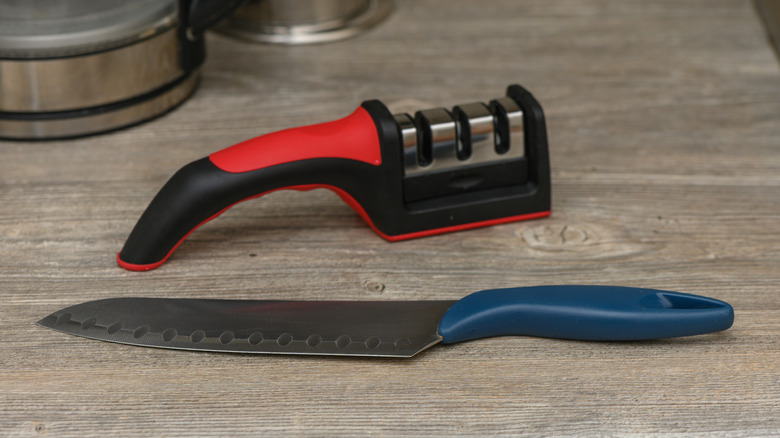
One of the best parts about sharpening your lawn mower blades on your own is that you don't necessarily need any fancy tools or equipment. Instead, this easy DIY task can also be accomplished with supplies you may already have on hand, including a kitchen knife sharpener. To use a kitchen knife sharpener for lawn mower blades, treat it similarly to how you would a knife. However, remember that sharpness isn't the goal here. Lawn mower blades perform best when they're about as sharp as a butter knife, not a chef's knife.
Specialty sharpener
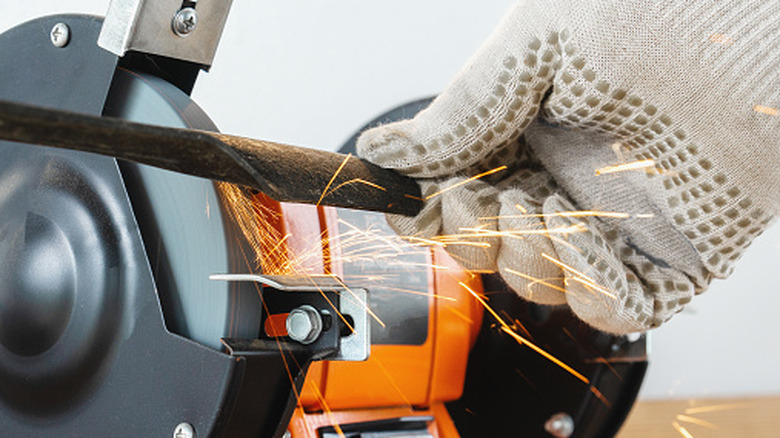
You can also purchase a lawn mower blade sharpener designed specifically with this task in mind. While there are many DIY approaches to sharpening your blades, including with a bench grinder or the alternatives discussed in more detail below, there are also tools designed specifically for lawn mower blades. This can include manual and electric options. Just keep in mind that because they're specialized for this task, they may not serve many other purposes in your tool shed, which may be a drawback if you're trying to make the most of a small storage space.
Handheld metal files
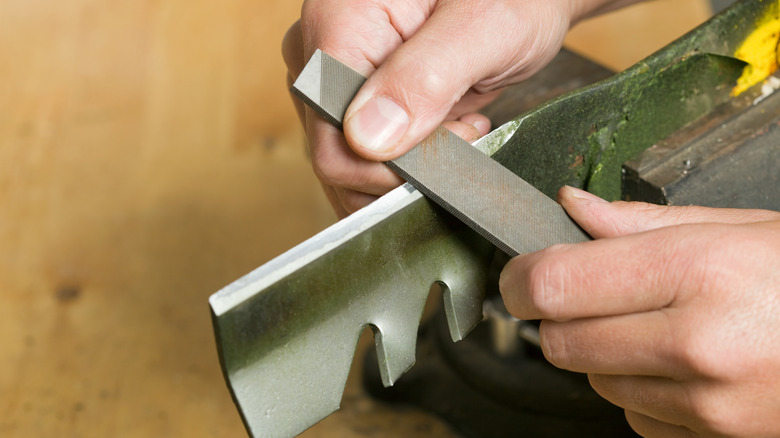
If you're looking for a more traditional approach to sharpening lawn mower blades without a bench grinder, there are always manual handheld options like metal files. Handled metal files work similarly to grinders but involve a bit more effort on your part. However, since you're controlling the strikes and the angle of the file, you also have more control over the results. Because of this, while it may take more effort to use metal files, you may enjoy the finer control they offer, especially when it comes to achieving the ideal edge on your lawn mower blades.
Angle grinder
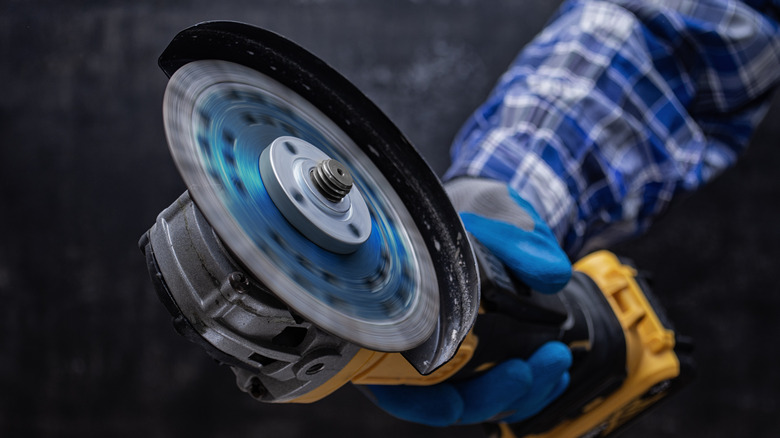
Even if you don't have a bench grinder for your mower blades, you may have other common tools on hand. An angle grinder can be a great alternative for getting those butter-knife-sharp blades that help keep your lawn in good shape. To use an angle grinder to sharpen your lawn mower blades, you'll need to first remove the blades themselves. Then, once you've taken the right safety precautions, use light passes with your angle grinder to sharpen the edge without overheating or thinning the blade.
Drill-powered grinder
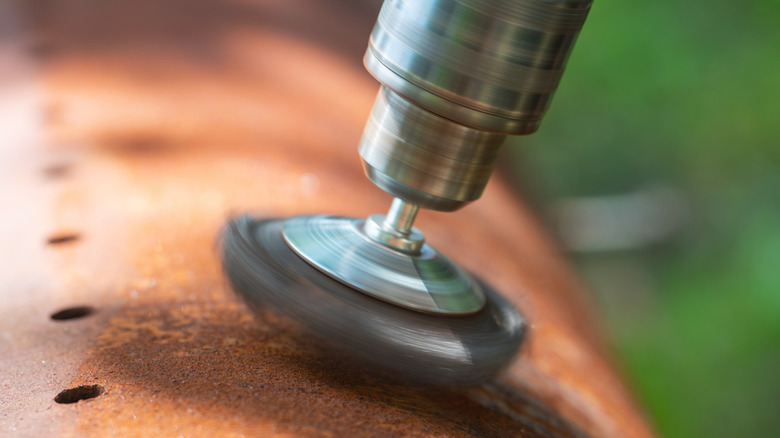
When it comes to DIYs, drills are a true multi-purpose tool. While you may turn to these handy power tools when it comes time to assemble furniture or hang pictures, you can also use them for sharpening your lawn mower blades so long as you purchase the right attachment. There are various blade-sharpening attachments available for drills, although you may need to double-check compatibility to ensure they work with your model. Using a drill might seem safer than a grinder or sander, but it's still important to wear the proper PPE, especially eye protection.
Sandpaper
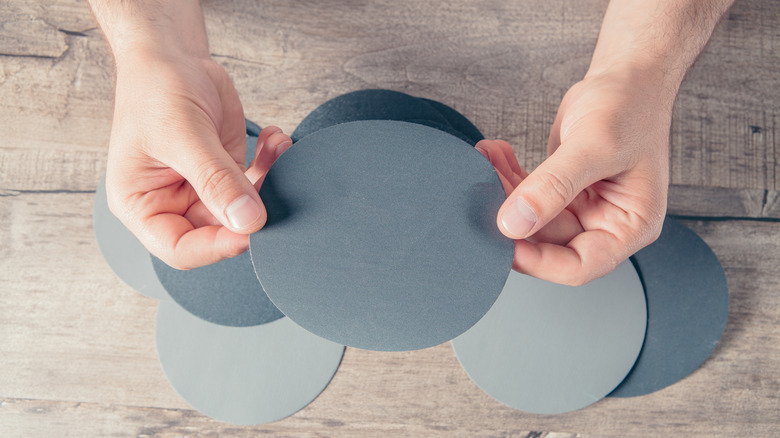
Sometimes, your blades may simply require a quick touch-up to maintain their sharpness rather than a full sharpening. In many cases, when using a grinder, you'll use sandpaper to get that sharpened finish. However, you can also use sandpaper by hand, so long as you're aware of the caveats. Sanding your blades by hand to sharpen them can be time-intensive and may not work for heavily damaged blades. Instead, it's best for a quick-touch rather than a truly dull blade.
Belt sander
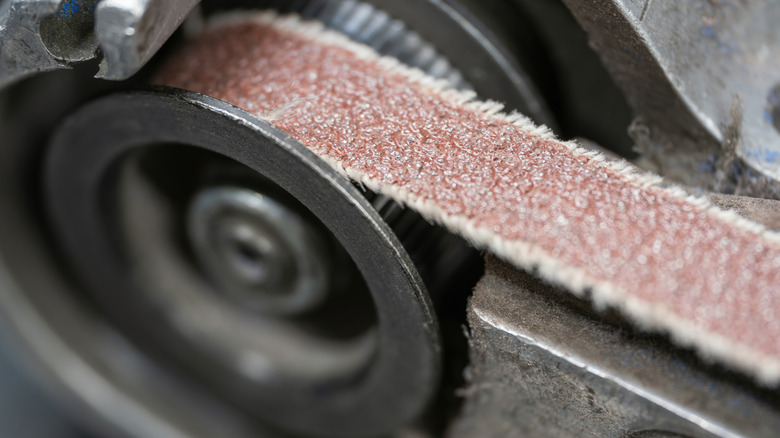
Typically, when it comes to sharpening and sharpening tools, a grinder like a bench grinder is the go-to. However, sanders can come in handy if you don't have another option available. Belt sanders can be especially helpful, as they're often able to sharpen your blades without generating too much heat, which protects the longevity of your lawn mower blades. And, considering how long lawn mower blades typically last, choosing an option that's gentle but effective can make the difference between frequent replacements and blades that last for years.
Hire a professional
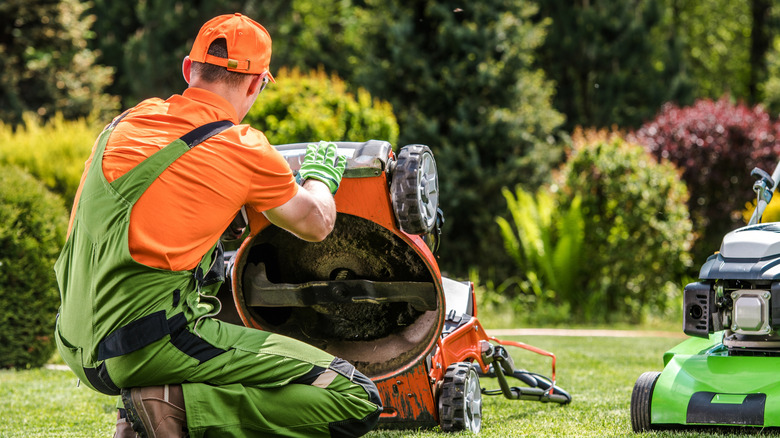
Not every approach to sharpening your lawn mower blades without a bench grinder has to involve a DIY solution. If you don't feel comfortable sharpening your blades without a bench grinder, or simply don't want to do it yourself, you could consider hiring a professional to service your lawn mower. You may be able to find a mobile professional who can visit your home and sharpen the blades, or, if you're able to remove them yourself, you can take them to a local landscaping or tool shop for sharpening.