

Raking Vs Replenishing Your Gravel Driveways: How To Know Which One You Need
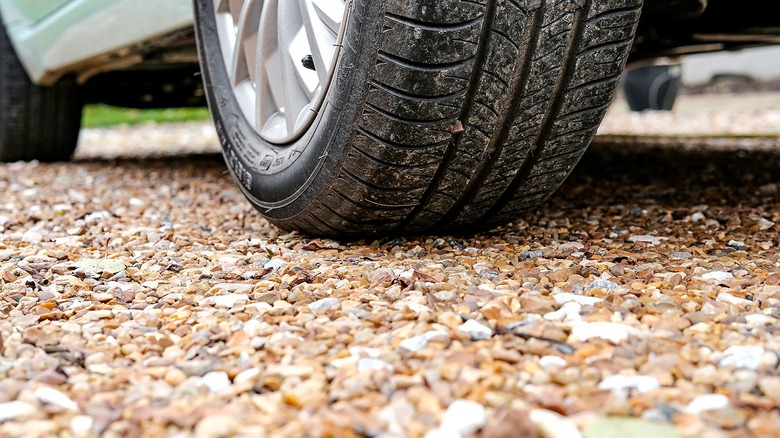
The low-maintenance appearance of a gravel driveway may give its attached home an easy-going, rustic vibe, but that doesn't mean that this feature can remain in peak condition without a little TLC. Gravel driveways put up with a lot of wear and tear from humans and the environment, and without regular maintenance, can start to deteriorate. This leads to potholes and grooves, exposed patches of dirt that collect water, and rocks scattered around your yard. Fortunately, it's easy to keep a gravel driveway looking neat and welcoming; it all comes down to raking and/or replenishing the gravel.
But before we go into the particulars of each, one note: If you notice that your gravel driveway is especially uneven, regularly develops bumps and divots, or collects a lot of standing water, you may be dealing with a faulty base layer. This is a layer of smaller gravel that provides a foundation for the driveway, and if it becomes degraded, it can cause continuous problems.
In the case of a bad base layer, no amount of extra gravel will help, which is why it's important to regularly care for your gravel driveway by raking the stones monthly, replenishing the old gravel as needed, and spraying down the gravel with water (aka, the overlooked tip for keeping your gravel driveway looking fresh). Otherwise, a rogue rock in your garden may be the least of your worries.
Raking your gravel driveway (regularly)
As said, the two primary ways to maintain a gravel driveway are raking and replenishing. These techniques address different states of disrepair, and you can tell which you need to employ by being observant of the issues with your driveway.
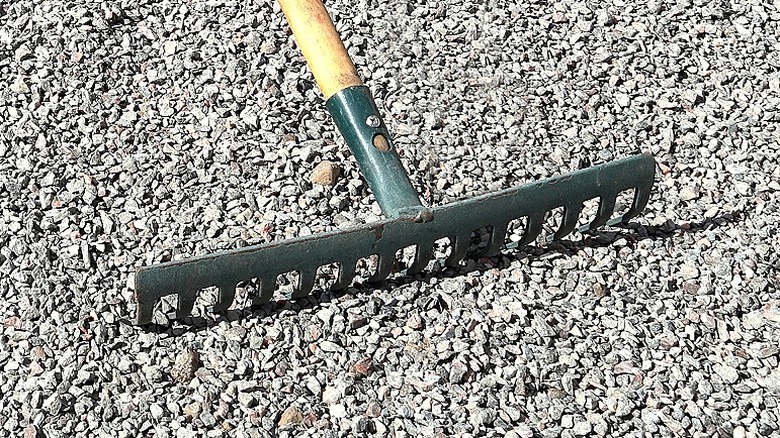
Raking a gravel driveway, while still simple, is a bit different than raking up leaves in the yard. Given that you're dealing with tough rocks, you'll need a specialized landscaping rake that features tough steel teeth that won't get banged up in the process of smoothing out the gravel. You may even want to opt for a leveling rake, which has a flat, rectangular metal head and slats that can sift through dirt and gravel.
Raking the gravel is as straightforward as running the rake along the surface, regardless of which type of gravel you chose for your driveway. This will help you collect any leaves or trash that have gotten mixed in with the pebbles, too. Raking should be a regular chore for anyone with a gravel driveway, as it prevents debris from piling up.
You can also use a gravel rake to deal with small gaps or mounds in the driveway — simply use the rake to smooth out the gravel. A gravel rake is a solution for monthly maintenance and small fixes; for bigger problems, you may need to replenish the gravel instead.
Replenishing gravel is a harder task
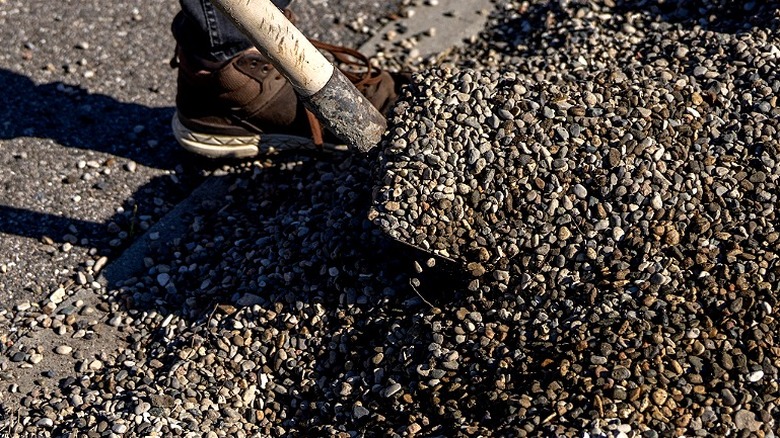
Replenishing a gravel driveway just means adding more gravel, and is slightly more laborious than raking, though by no means a complicated task. If your driveway has lost a lot of gravel, say through flooding or years of heavy use, a few bags of new gravel can quickly refresh it.
Gravel driveways should be at least 2 inches deep and slope down. It's okay if the new layer of gravel is a tiny bit thicker than old areas since it'll eventually become compacted, but be sure not to add too much medium while you're replenishing. To do so, use your landscaping rake to mix up the new and old gravel, then spray the driveway down with water so it's less likely to shift around.
Replenishing gravel is a good choice if your driveway needs an aesthetic upgrade, or if it has a few more intense ridges or potholes. It can also be important if you want to install a driveway apron (the hardscaping feature gravel driveways need). However, if issues keep popping up for your driveway despite the amount of extra gravel you add, they may indicate a bigger problem (the base layer).