

The Overlooked Scrap To Add To Your Silverware Drawer That Fights Mold
We may receive a commission on purchases made from links.
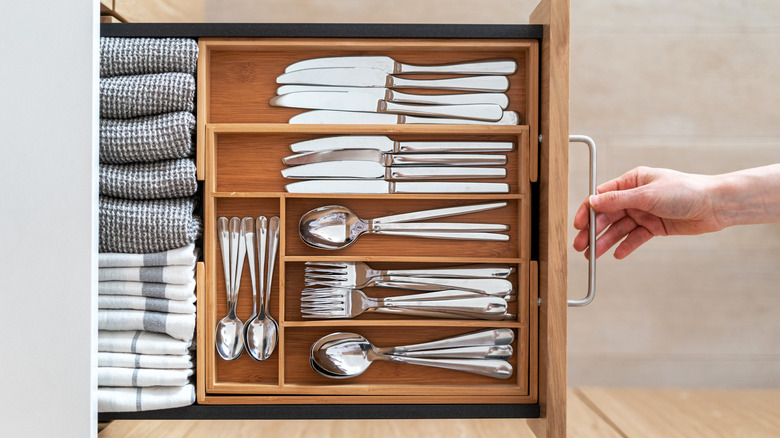
If you live in a humid climate, you've likely seen the impact of too much moisture in your home. Mildew can grow on clothes or bathroom grout, while mold can take over basement walls or the cabinet beneath your kitchen sink. But don't forget about unexpected places where mold may be lurking — like your silverware drawer — that may not typically be thought of as high-humidity areas. A silverware drawer can easily trap moisture and grow mold if utensils are damp. To prevent this, you should always thoroughly dry your silverware before putting them away, but you can go a step further by also tucking a silica gel packet into the drawer to keep moisture — and, more importantly, mold — at bay.
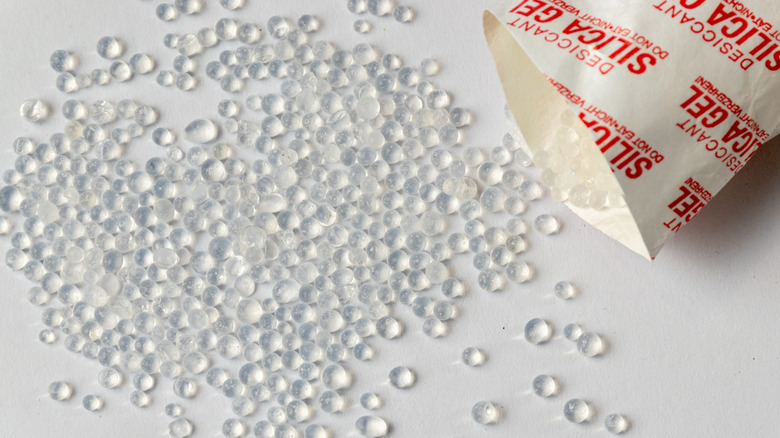
Even if you don't know silica gel packets by name, you likely know them by sight. They are a type of desiccant, and typically come in the form of small porous pouches that contain transparent silicon dioxide beads. The gel beads work through adsorption, a process where atoms, ions, or molecules stick to the surface of another object. Contrast this with absorption, where one material soaks in another. In this case, water molecules stick to the beads, reducing moisture in the air.
Silica gel packets are inserted into packagingof items like electronics, snacks, vitamins, and shoe boxes, so that moisture doesn't affect product quality while they're in transit or sitting on a shelf. There are also creative ways to repurpose them around the house. An added bonus to putting them in your silverware drawer is that a drier environment reduces the likelihood that silverware will get tarnished.
Using silica gel packs to fight mold
While mold does not feed on metal silverware, it will grow on utensils that contain bits of food, moisture, even tiny dust particles. The air within the drawer also can contain harmful mold spores. There are easy ways to clean mold, but the best way to stay healthy is to prevent its growth.
Spread a few gel packs throughout the drawer for full coverage. The packets don't expire but they can lose their effectiveness once they take in too much moisture. Some packs contain a color indicator — either on the packaging or via color-changing beads — but otherwise, knowing when to swap or recharge a pack may take some guesswork. The longevity of the packet depends on how often the drawer is opened, the humidity levels in the air, and if there's any moisture on the utensils.
Unless the packaging is torn or brittle, you can recharge rather than replace it. If you are using resealable pockets, like Wiseorb Breathable Paper Bags, remove and spread the beads into a single layer on a baking tray. Bake them for 1 to 2 hours at 110 to 120 degrees Fahrenheit. Once they're done, leave the oven door slightly open until the beads have cooled. As long as the sachets don't contain metal, sealed packs also can be recharged in the microwave for 2 to 3 minutes on medium power. With either method, avoid overheating them, which can cause beads to crumble. Afterward, store recharged gel packs in an airtight container when not in use.