

Should You Flush Ticks Down The Toilet?
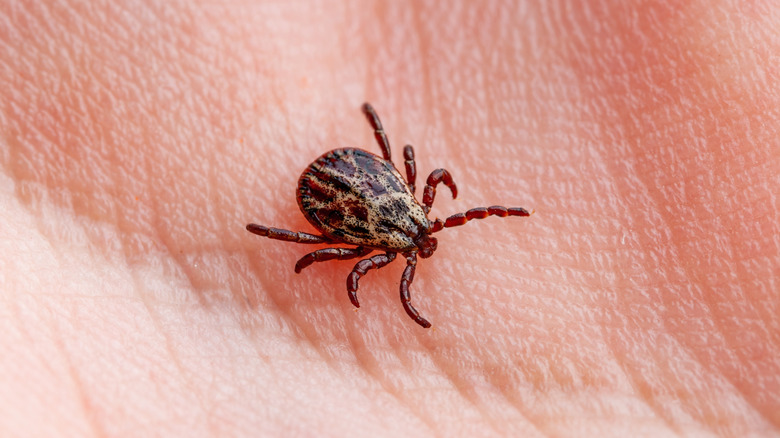
Ticks are a persistent problem in the U.S., especially in April through September when tick populations are typically largest and most active. These tiny arachnids carry several nasty diseases that can infect both humans and animals. There are several ways to repel ticks naturally and to keep ticks away from your home, but what should you do if you find one? Your first instinct might be to squish it, but this can spread harmful pathogens the tick might be carrying.
One option is to simply flush it down the toilet. Although there's some contention around whether this approach is enough to guarantee ticks won't survive, flushing them down the toilet is a Centers for Disease Control and Prevention (CDC)-approved method for getting rid of these disease-carrying pests. However, before you toss that tick down the commode, there are a couple of things to keep in mind. First, you need to make sure that the tick actually goes down the toilet and doesn't crawl back out. Secondly, there are other, equally effective tick disposal methods that can guarantee that pesky little parasite never bites again.
What to do with any ticks you find

According to the CDC, flushing a tick down the toilet is an effective way to eliminate the parasite if you find one. Ticks can survive in water for up to three days, but they cannot swim, and the force of the water is usually sufficient to flush them away. Just place the tick directly in the water before flushing and make sure that it doesn't stick to the sides of the porcelain bowl or try to crawl back out. Although flushing it down the toilet is arguably the easiest and quickest way to dispose of them safely, there are other methods for getting rid of ticks if you don't have a bathroom nearby.
The best alternative to flushing is to submerge the tick in rubbing alcohol in a tightly sealed container. If alcohol isn't available, you can place the tick in a small airtight container and dispose of it. If you do this, the CDC suggests wrapping the container tightly in tape to ensure the tick doesn't escape before it suffocates. Never kill ticks by squishing them with your fingers, as this can spread any pathogens the parasite is carrying. Crushing a tick that's still attached to your skin can also force infectious fluids into your bloodstream.
Should you keep ticks for testing?
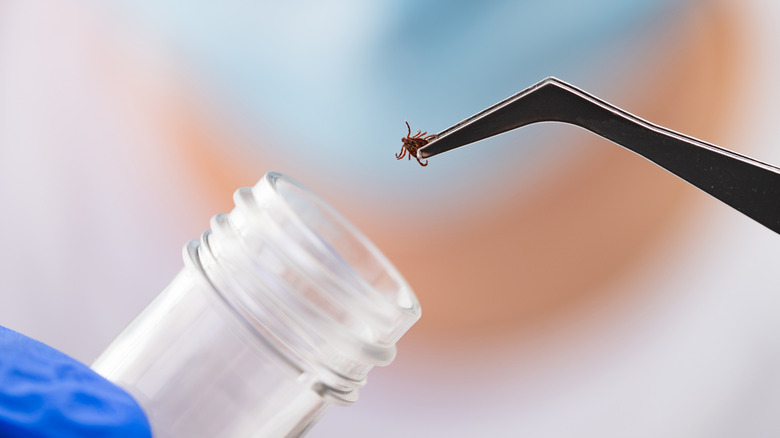
A common piece of tick bite advice is to take the critter to a testing facility to see if it's carrying any diseases. If you do decide to keep a tick for testing, seal it securely in a dry, airtight container, such as a plastic bag, and place it in the freezer or refrigerator. Then, take the sealed parasite to a lab that specializes in tick testing — local university research labs can often help, but if you don't have one nearby, some facilities allow you to pay for a test online and mail the tick. It doesn't need to be alive for testing, but don't mail it while it's submerged in water or alcohol.
Testing a tick can provide helpful information, but the CDC advises against using these test results to determine the appropriate course of medical treatment. First, these tests won't always paint a full picture. Even if a tick is carrying a certain pathogen, it may not transmit it to you through its bite. On the other hand, even if the tick that bit you shows no diseases, you could have been bitten by a different infected tick that went unnoticed. Additionally, if there is an infection, the bite victim is likely to experience symptoms before the test results are available.
Whether or not you decide to have the tick tested, watch for symptoms in the days and weeks following the bite. Signs of infection from tick-borne diseases include rashes, headaches, muscle or joint pain, and fever. If any of these symptoms are present following a tick bite, don't wait for test results. Contact your doctor immediately. Many infections spread by ticks, including the one that causes Lyme disease, are treatable with antibiotics if detected early.