

10 Trees That Shouldn't Grow Next To Your Pool
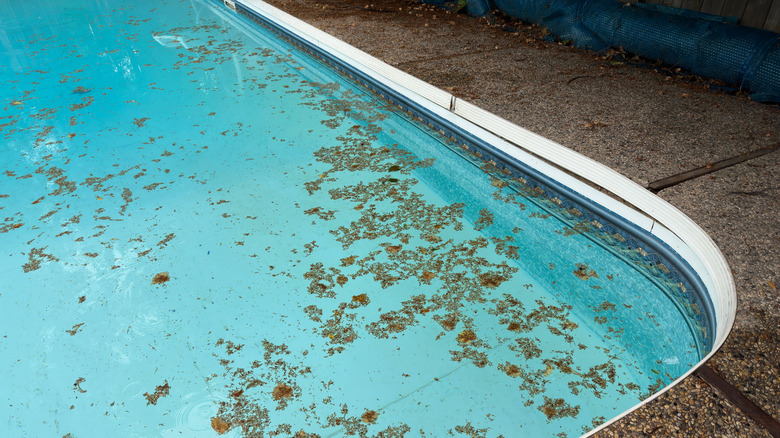
Having a swimming pool as a homeowner means ongoing care and maintenance, but the welcome trade-off is having a great way to cool off in summer heat. One maintenance consideration is landscaping. Specifically, you'll want to avoid certain trees that can cause problems when planted near a swimming pool. The trees listed below are among the most undesirable. If you already have any of these mature trees on your property and are considering adding a swimming pool, try to locate the pool as far away from them as practical.
The main factors to consider when choosing trees to plant in a yard with a pool, or a location for your swimming pool, are mostly to do with safety and maintenance. Trees with fast-growing or invasive root systems can interfere with built-in pools, causing cracks to walkways or pool linings. Trees and shrubs that drop excessive litter or large leaves can clog filtration systems, so be sure to avoid putting messy plants and trees poolside. Trees with fruits or nuts may attract unwanted birds or rodents. Finally, some trees drop seed pods, thorns, or spiky fruit that can be uncomfortable to walk on barefoot.
While pool covers and filters can help prevent or control tree debris in your pool, it's best to try and avoid the problem entirely if you can. Keep in mind that some tree debris such as leaves, needles, or pollen can travel through the air via wind and land near or in your pool even from a distance. Planning your landscaping carefully now can help reduce maintenance headaches later.
Coniferous trees
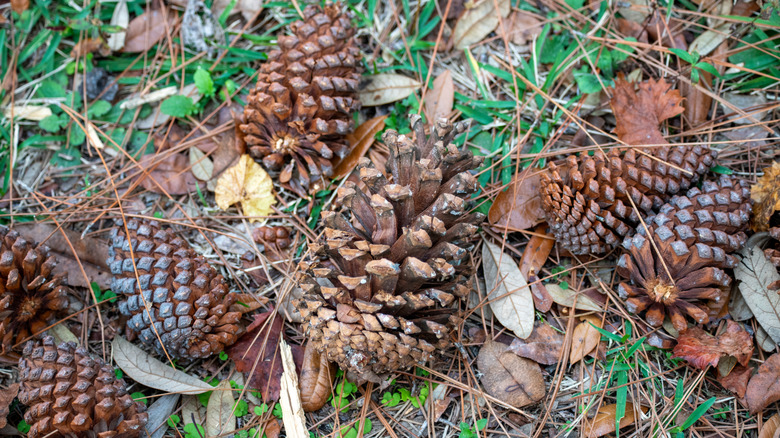
Coniferous trees include the many varieties of pine, fir, spruce, and cedar. These evergreen trees vary in size and shape, but they produce three things that aren't compatible with swimming pools: needles, cones, and resinous sap. Pine, fir, and other needles are tiny and tedious to clean up; they can escape pool covers and sneak by skimmer baskets to clog pumps and filters. Both needles and fallen cones can be painful under bare feet, and the sticky sap produced by these trees can be very messy. It's best to plant these trees as far from your swimming pool as possible.
Sweet-gum tree
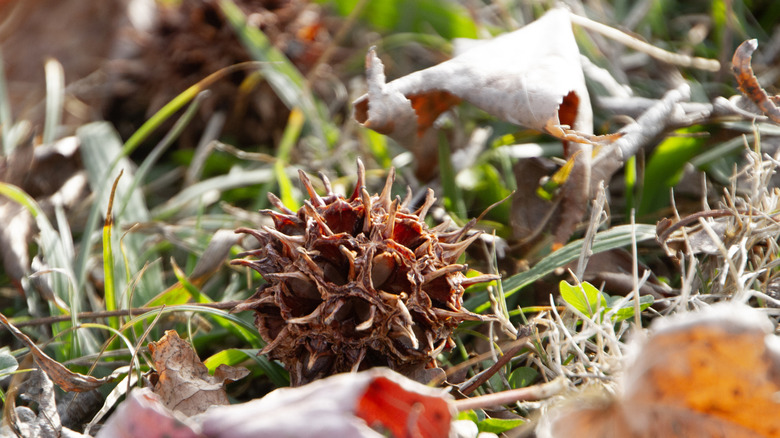
The sweet-gum tree (Liquidambar styraciflua) has attractive star-shaped leaves that turn brilliant colors in autumn. Also known as satin walnut or American storax, this tree from the witch hazel family can grow up to forty feet tall and is considered an excellent shade tree. However, it also produces spiky round pods that can make a mess, as well as be painful for bare feet to step on. The Morton Arboretum recommends planting it far from an area with foot traffic, including your swimming pool.
Oak tree
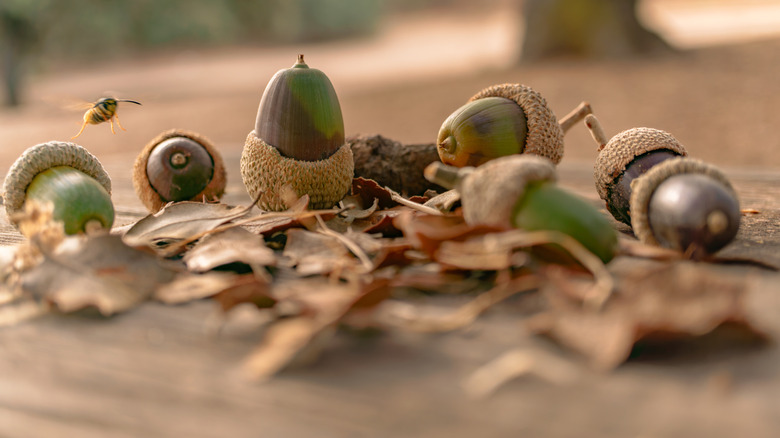
Oak trees are beloved landscape trees for their height, sturdy nature, colorful leaves, and nuts that attract and feed wildlife. White oak trees (Quercus alba) are particularly popular for Northeast and Midwest landscaping. But like other large hardwood trees such as maples and sycamores, oak trees have very deep root systems that can interfere with pool structures and plumbing. In autumn, fallen oak leaves are thick and slow to break down and can clog pool filters. Acorns will almost certainly attract squirrels, chipmunks, and deer, as well as create a mess poolside.
Paper birch tree
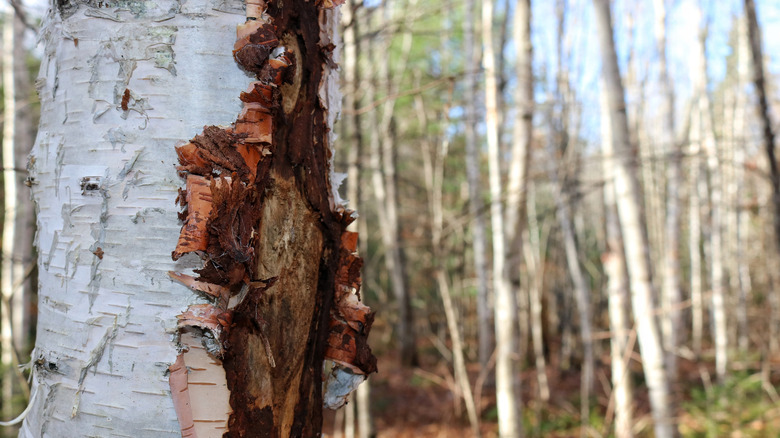
The paper birch tree (Betula papyrifera) is well-loved as a landscape tree for its interesting bark colors and texture and its dangling gold catkins in summer. It grows quickly, tends to have shallow roots, and is not suitable for growing in USDA hardiness zones above Zone 7, according to the North Carolina State Extension. Despite its pleasing appearance, it's considered a bit of a nuisance due to its debris (catkins, seeds, leaves, bark, and branches) that can make a real mess if planted near high-traffic areas. It's definitely a tree to avoid planting near a pool or patio.
Silver maple tree
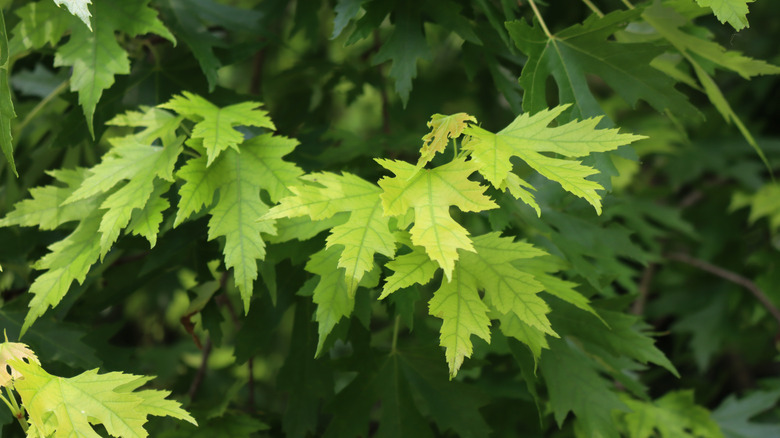
Maple trees are popular landscape trees that come in a wide array of cultivars. Certain maple trees are more suitable than others for growing near your house or a pool, based on their growth habits and root systems. Red maples, sugar maples, and Norway maples are considered moderate growers, but some maple species have roots that may grow above the soil surface and wreak havoc. The silver maple in particular is considered a poor choice to have near a swimming pool. The Nature Hills Plant Nursery recommends planting silver maples at least 30 feet from foundations or septic systems.
Eastern Cottonwood tree
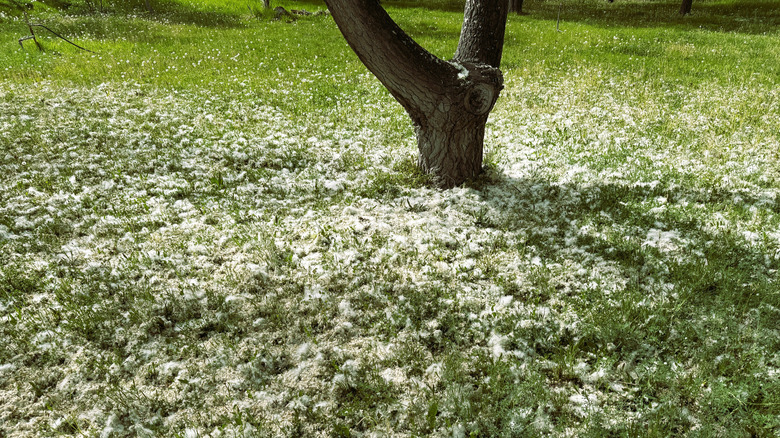
Also known as Eastern poplar, the Eastern cottonwood tree (Populus deltoides) can grow to be 100 feet tall with a trunk up to five feet in diameter. Its roots grow fast and it should never be planted next to your house. The cottonwood produces fluffy, cotton-like seed fibers that float on the breeze and can make it look like snow has fallen! Needless to say, this can be disastrous for your pool and can clog filters quickly. If there's a cottonwood tree in your area, you should cover your filter during the "fluff" season in June to avoid the mess.
Weeping willow tree
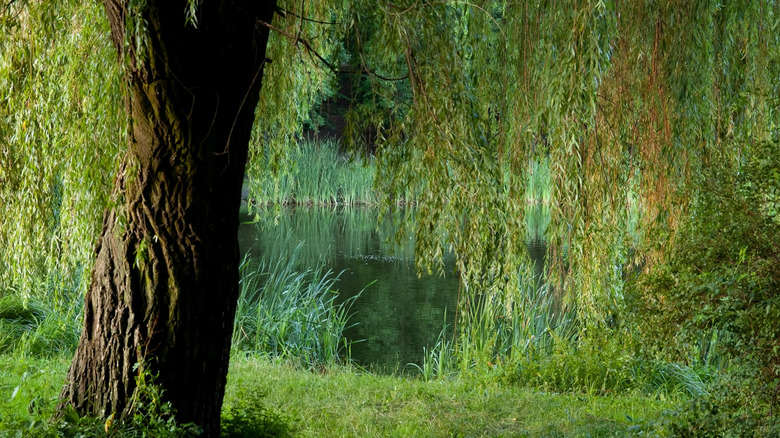
Weeping willow trees (Salix babylonica) are often seen in public parks, creating a stately shape with their huge trunks and curved slender branches that create a "weeping" habit. They grow well near ponds and lakes. However, since the tree's roots tend to seek out water, it's a poor choice to have near a swimming pool. Purdue University recently studied the problems plaguing weeping willows due to increased drought in the Northeast US, which has made them vulnerable to limb dieback and various diseases that can affect their structural integrity and increase the risk of falling limbs.
Mulberry tree
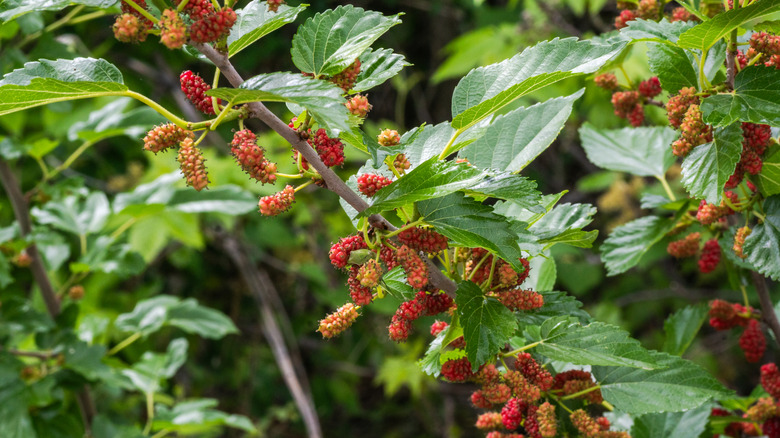
A mature red mulberry tree (Morus rubra) can be a beautiful landscape tree that produces loads of berries that attract birds and wildlife with its delicious fruit. However, the berry litter can stain patios and sidewalks, and after eating the purple berries, birds produce colorful droppings that also make a mess, making these trees highly unsuitable for poolside locations. In recent years, the white mulberry (Morus alba) has become a problematic "weed tree" with fast-growing, invasive roots, and has begun hybridizing with red mulberries. These trees are difficult to eradicate, and can spread around fences and foundations quickly.
Mesquite tree
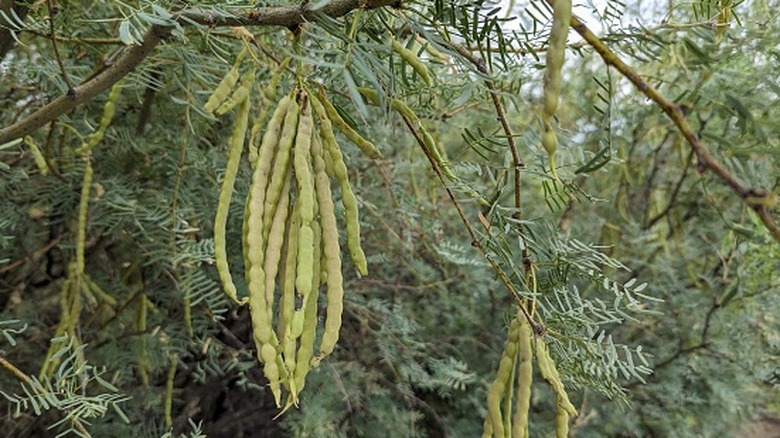
The mesquite tree (Prosopis glandulosa) is valued for its wood, which has become a popular source of chips for smoking or cooking meats. This tree also has a rich history among Southwestern indigenous peoples, who have used its wood, bark, and seed pods for various purposes, including food, beverages, shelter, and medicine. Native to Texas and the Southwest, these drought-tolerant trees have very deep root systems that tend to seek out water for survival. This tendency, along with the long seed pods dropped in the fall, makes them a bad choice for a poolside tree.
Catalpa tree
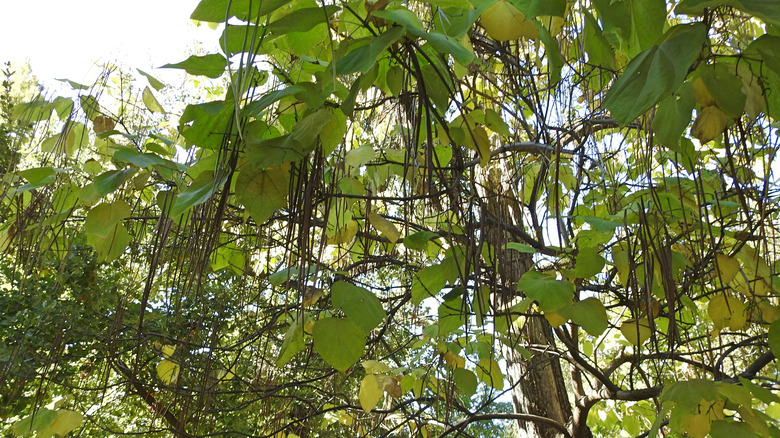
Catalpa trees (Catalpa speciosa) have curvy twisting limbs and enormous heart-shaped leaves that produce plenty of shade. They also produce large white flowers in spring and long seed pods in the fall (inspiring the common name "cigar tree"). Despite their majestic size, these trees are generally short-lived. Their showy appearance makes them desirable to some homeowners. However, they reseed somewhat aggressively, are fast-growing, and the seed pods create a mess over an extended period, making them a nightmare to have near a pool.