

What To Do About A Sudden Fly Infestation In Your Home
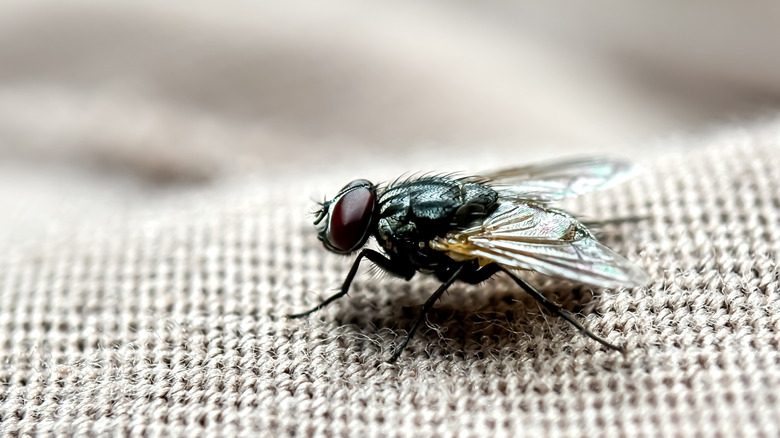
If one fly buzzing around your house is annoying, then an entire infestation is an absolute nightmare. Flies are more than just a nuisance. Depending on the species, they may bite, trigger allergic reactions in members of the household, or spread a number of diseases such as dysentery and salmonella. Having multiple flies in the house only increases that risk, especially if the insects have access to any food in the house. Given these elements — and the simple fact that flies can make a home feel less clean and welcoming — you should take measures to remove the bugs as soon as you notice an infestation.
It's normal to have a fly in the house every now and then, and there's even a type of fly you'll want to keep in your garden for an unexpected reason. However, you will be able to recognize a problematic infestation by the sudden, dramatic increase in fly sightings. Flies breed very quickly and tend to lay their eggs in hard-to-find places. That means that a swarm can seemingly appear in your house out of nowhere. You may hear flies buzzing even if you can't see them. Additionally, maggots and fly droppings (which look like tiny black pinpricks) can indicate an increased presence of these pests. When trying to track down the bulk of an infestation, check the areas of your house with the most food, standing water, or garbage, as these are all attractive real estate options for flies. This includes hiding places like compost bins, or pet food containers. Once you've surveyed the severity of the infestation, you can take steps to eliminate it.
Fly infestations should be removed as soon as possible
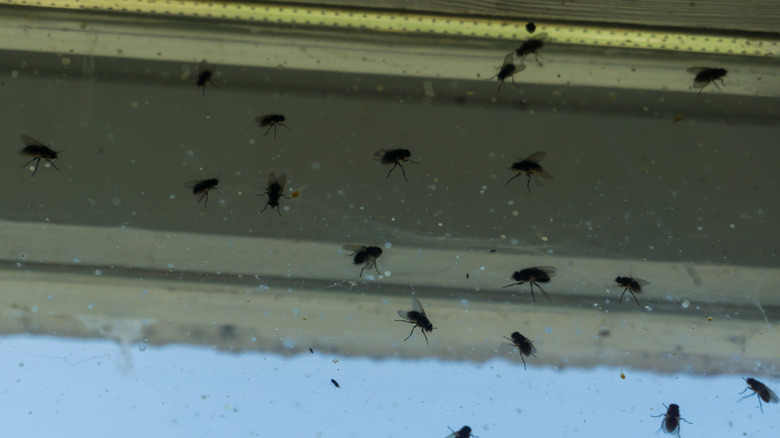
The process of combating fly infestations starts by removing any material they might be feeding on. Make sure that your home is free of organic waste, and that any trash is properly sealed in a bag ready for disposal. You should also do a thorough sweep of your home to clean up any messes that flies might be attracted to, like crumbs or pet stains. That also goes for your outdoor spaces; birdbaths and other pools of still water should be drained, and be sure not to leave dog poop sitting around your yard. There are many common issues in your home and garden that are attracting flies, so be diligent.
Once you've removed the flies' food, you can start taking more aggressive measures against the insects themselves. If you prefer an all-natural route, you could spritz your home with diluted rosemary or lemongrass essential oil, which is known to keep bugs away. Or, you could fill your garden with other fly-repelling plants like lavender. While you're encouraging flies to leave your property, you can trap any pesky stragglers using a fly trap. Those are easy to DIY, so you can avoid some of the worst popular fly traps based on reviews.
If those remedies don't work, you may have to up the ante by investing in a commercial pesticide, or a simple fly swatter. In extreme cases, it may be best to call in the professionals. At the end of the day, the best way to get rid of a fly infestation is by preventing them in the first place. Keep your home clear of organic waste and be vigilant to notice the first few bugs that appear.