

The Refreshing Veggie To Plant In August For A Quick Harvest
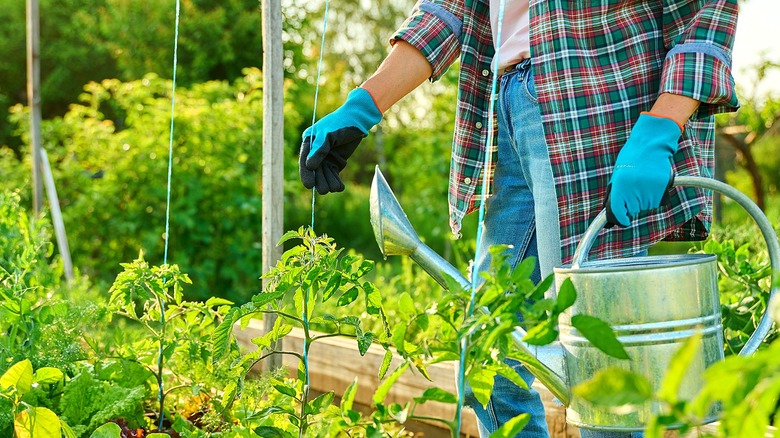
Catching a whiff of autumn on a cool summer morning breeze signals the end of the growing season. But it also says that another season is getting under way, and even though it can seem far too hot and too late to plant anything, this is the perfect time to plant cool-season vegetable crops, like sugar snap peas.
With the first frost date in your area serving as a moving target, late summer is the time to put seeds in the ground. Planting refreshing veggies like snap peas is actually one of the gardening tasks to do in August to prepare for the end of the year — as well as a quick harvest in October.
Snap peas mature in about 60 days, with some varieties being a bit quicker, such as the 'Premium' cultivar, which is available in 51 days. Later varieties, meanwhile, like 'Super Sugar Snap' take up to 65 days to mature. That's why planting at the beginning of August means you'll get peas near the beginning of October. Snap peas can tolerate a light frost, but they still need to be planted about eight to 10 weeks before your area's first frost to ensure a plentiful crop.
No matter which growing zone you're in, you have to count backward from your first expected frost to find the last planting date of the year for snap peas. For example, in regions where the first frosts fall in mid-September, that means planting in mid-July. The only problem with this is that snap peas (like most peas, if not Southern peas) don't do well in hot weather; so, planting as late as possible with fast-maturing varieties is the solution for areas with shorter growing seasons.
How to grow snap peas as a fall crop
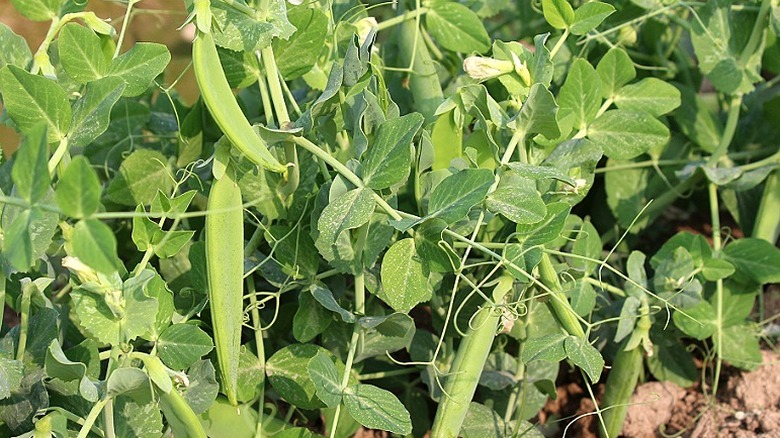
Eating crisp, edible snap peas right off the vine is a refreshing snack in the early days of summer. While many people think of snap peas as a spring crop because of this, they're in fact a cool-season vegetable that doesn't like the heat. In the spring, planting them earlier helps you to avoid that, but when planting them as a fall crop, it's the opposite approach; i.e., you'll want to plant them later.
To plant snap peas in the summer for a fall harvest, keep in mind the soil will dry out faster. Using shade cloth or placing mulch over the seeds protects them while they're sprouting, but you'll need to provide consistent moisture until the seedlings are established. In the spring, this happens naturally with rain, but most climates are drier during the summer so you'll have to keep an eye on them, even watering several times a day. Adding mulch conserves moisture and keeps the soil cool, and this is more important for seedlings because bare soil can reach 140 degrees Fahrenheit in the sun.
Plant seeds in a bed with garden soil in rows, along a trellis (one like this easy DIY pea trellis you can make on a budget). Seeds should be sown about an inch apart; for the depth, dig a hole that's 1 to 1 ½ inches down. Peas are nitrogen-fixers, so using an inoculant (or microbial amendment) will boost your crop. Although you can cover them to protect them from light frost, keep in mind that a heavy frost can happen at any time, and if so, will put a definite end to the growing season.