

How Often Should You Dethatch Your Lawn?
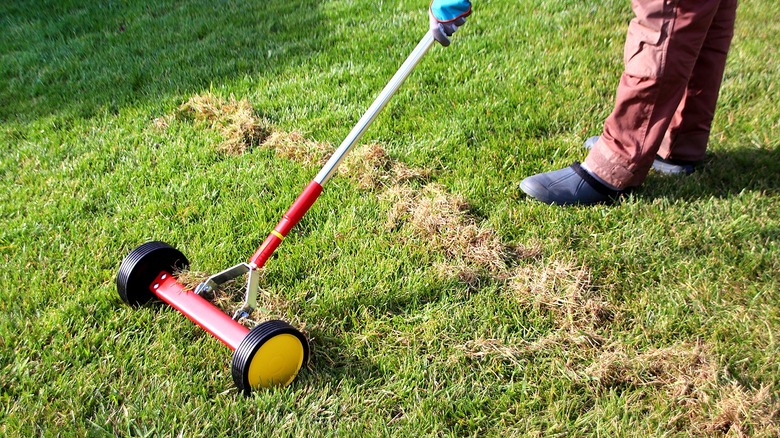
Thatch is the accumulated mass of decaying, dead, and living grassy parts, such as roots, crowns, stolons, rhizomes, and stems at the soil level, just below the green blades. As a thin layer, thatch is highly valuable; it not only protects grass roots from temperature fluctuations, but it also helps soil retain moisture. Like a mat, thatch also enhances a lawn's ability to withstand foot traffic; it's often described as spongy. This said, in excess, thatch can be extremely detrimental to your turf's health and must be removed. But how often? On a strictly need-to basis.
If your home's lawn is healthy and disease-free, you may dethatch it once every two to three years, if the need arises. This will vary across turf variety, soil's pH levels, drainage, pesticide usage, and the overall care regime.
If you fail, your grass may begin to root in the thatch, rather than soil. This may compromise its ability to withstand freezes, droughts, or occasional wet conditions, as thatch isn't as hardy as soil. Moreover, you also risk tearing or scalping your lawn when you mow. Excessive thatch may also serve as habitat for lawn pests and prevent the percolation of essential resources into the soil.
In most cases, dethatching annually might be one of the biggest wastes of money on your lawn. Since dethatching involves making cuts into the turf, it may become stressed or dry out. So, to keep the damage limited and recovery time short, it's advised to dethatch gradually over multiple runs even if it has built up to substantial levels, and complement with preventative practices like core aeration.
Thatch doesn't build up at the same pace in every lawn
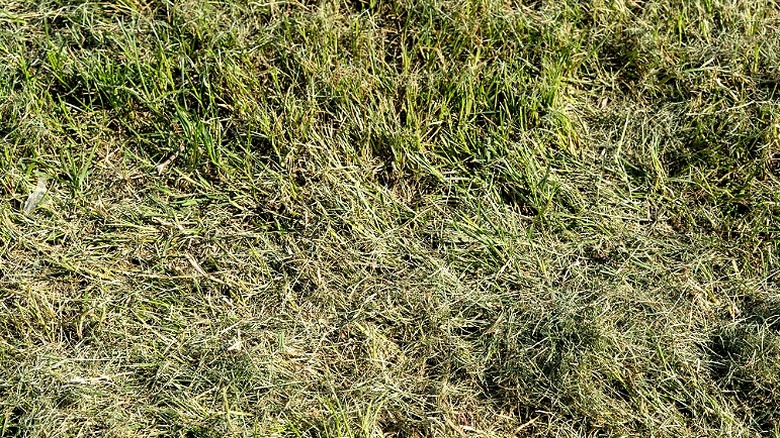
Thatch is primarily composed of cellulose, which easily degrades over time, and lignin, which does not. So, if a turfgrass variety produces lignin-dominant tissues, especially in stems or rhizomes that decompose with great difficulty, your lawn may collect thatch at a faster rate. Primary contenders include vigorous growers like creeping bentgrasses and red fescue, Kentucky bluegrass, and hybrid bermudagrass, as well as slow-growing zoysia.
If the thatch breakdown doesn't keep up with the growth rate, you may have to dethatch annually. In contrast, bunching grass types, such as perennial ryegrass or tall fescue, don't create as much thatch and can thrive without dethatching for over five years if properly cared for.
How quickly your turf builds up thatch also depends on the concentration of decomposing microbes and earthworms in your soil. So, if your soil compacts, drains poorly, or has a clay or soil texture, it may not be able to sustain them in large numbers. Similarly, when the soil is too acidic (pH levels under 5.5), it becomes unfavorable to their survival.
Certain insecticides, when used consistently, may adversely affect earthworms, ultimately reducing the rate of thatch decomposition. Further, if you overfeed your lawn with nitrogen, especially during spring, you may stimulate vigorous new growth which can easily outstrip the pace at which thatch decomposes.
How to know if your lawn is due for dethatching
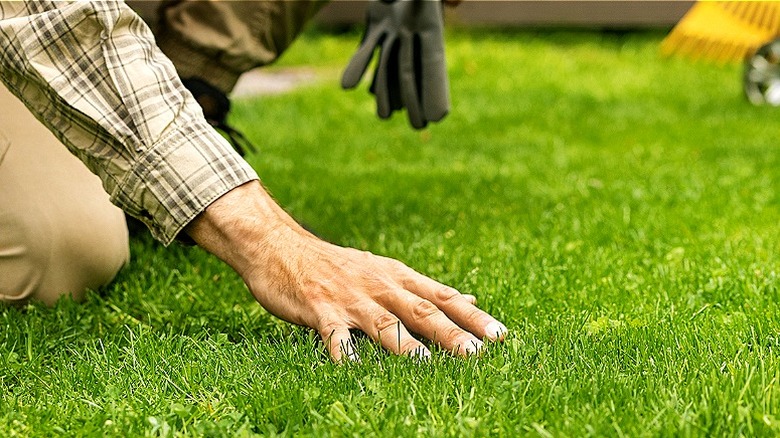
Considering all this, you may wonder how to know when it's time to dethatch your lawn? Well, there are a few telltale signs you should be on the lookout for. To start, if your grass feels bouncy or spongy underfoot, it may be in need of a dethatching session. Moreover, if, after holding the grass at its base, you can pull it in different directions, it likely has excessive thatch. Further, in cases where you can't see the soil at all, take it as your cue that thatch has completely taken over your lawn.
For a foolproof method, you can cut out a small, triangular-shaped wedge – about 3 inches deep — from a discrete area of the lawn, using a shovel or a knife. Once you have the cutting, measure the span between the green and brown growth. If it's more than half an inch, your turf would benefit from dethatching.
That being said, you must pick the timing carefully. You shouldn't dethatch your lawn early in the spring, as it brings up weeds and can spread them throughout your yard. It's also ill-advised if the turf is wet, drought-stressed, or diseased because it may set back recovery times considerably.
Generally, the ideal time to dethatch cool-season turf is during the late summer to early fall transition, when your lawn has adequate time to recover before winter sets in. For warm-season grasses, you must aim for late spring or early summer when they're actively growing, but the weather isn't extremely hot or dry. (Learn about mistakes everyone makes when dethatching their lawn.)