

The Popular Cleaning Product That'll Bring Your Old Baking Sheets Back To Life
We may receive a commission on purchases made from links.
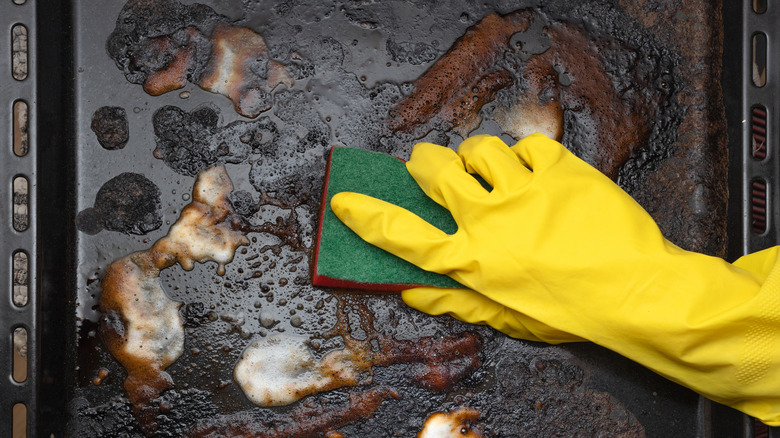
Not everything that comes out of your kitchen's oven looks delicious. Between batches of cookies and all those one-pan dinners, your baking sheets can take a beating. Even with the most vigorous post-dinner scrubbing, the residue from cooking spray, baked-on oil, and any burned pieces of food can leave your once-shiny sheets marred with unsightly brown stains. Thankfully, one of the easy hacks to bring burnt baking sheets back to life is likely already stashed in your cupboards. Sold as a powder, liquid cleanser, and spray, Bar Keeper's Friend is a powerful household cleaner that experts swear by for a wide variety of tasks.
Among the things you could be cleaning with Bar Keeper's Friend: stainless steel cookware, porcelain tubs, glass cooktops, and those dingy-looking baking sheets. Developed by Indianapolis chemist George William Hoffman, his interest was initially piqued back in 1882 when he noticed the pot he was using to cook rhubarb appeared cleaner after he was done. With a bit of research, he determined the oxalic acid that occurs naturally in leafy greens and root vegetables could remove rust, hard water stains, and mineral deposits like calcium and lime. Now it's the active ingredient in Bar Keeper's Friends that breaks down those charred pieces of roasted veggies and grease stains.
How to use Bar Keeper's Friend to clean your baking sheets
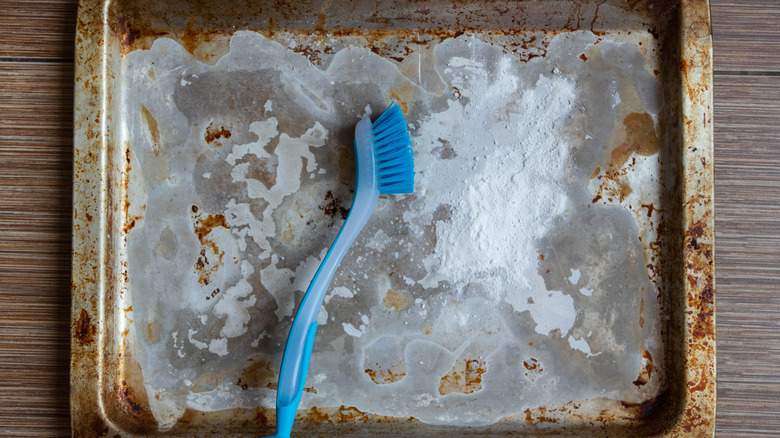
The trick to restore your beloved baking sheets — without having to spring for replacements — is to wet them and sprinkle on Bar Keeper's Friend's powdered version. Put some gloves on, add a little water to form a paste, and rub firmly with a soft cloth. You'll want to avoid using scouring pads or steel wool, which will scratch your pans. Be careful not to let the mixture sit too long — no more than one minute — and be sure to rinse it thoroughly when you're done.
You'll want to keep in mind that the product isn't a friend to all types of dishes. If your cookware is made of anodized aluminum, Bar Keeper's Friend could damage its hardened coating. If you're unsure what type of aluminum you have in your cabinets, do a test on a small, hidden portion of the pan. If the water-and-powder paste leaves a smudge behind, you'll want to consider another affordable cleaning hack to revitalize your cooking sheets. Bar Keeper's Friend can also leave scratches on coated, non-stick aluminum cookware.
If you're looking to avoid cleaning your baking sheets altogether, consider using protective liners (baking mats, parchment paper and aluminum foil) when you cook and always wash up. It's crucial to thoroughly wipe away any lingering grease or oil residue because they can bake into your sheet during the next use and leave a stain. That's why the most important step when cleaning burnt messes from a cooking sheet is to let them soak in hot, soapy water. And be sure to never toss them in the dishwasher as that can permanently discolor them.