

Better Than A Typical Shovel: The Garden Tool That Makes Digging In Rocky Soil Easier
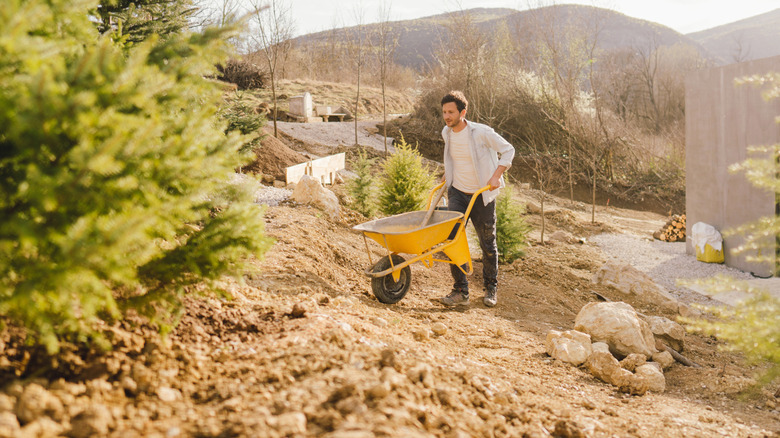
Ugh ... rocky soil. It is no fun to deal with in your garden and around your home. You'd normally grab a shovel to try to maneuver amid the rockiness, only to find that you can't even push the shovel blade into soil, let alone loosen the soil or take out rocks. Time to consider a tool you may not even be familiar with. A digging bar, also known as a pry bar, pinch point bar, tamper bar, or San Angelo bar, is a 5- to 6-foot-long piece of metal with a sharp, flat end for breaking up materials that resist demolition. If you're thinking that the digging bar must be heavy if it's made of metal, you're right. But heavy is a good thing for this tool because it provides the momentum needed to do what it does best.
Its special superpower is prying, so it helps you not only dig in rocky soil, thus loosening the material around stubborn rocks, but also pry rocks out. A short physics lesson explains this capability. The bar's tip wedges under the rock and rests against the ground as the fulcrum, while your hands apply force at the long end — a long effort arm against a short load arm. A shovel works on a different lever arrangement: your hands serve as both the fulcrum and the effort point along the handle, with the load (the soil or rock at the blade) at the opposite end. This setup favors reach and speed over force, so a shovel doesn't multiply your effort into the load the way the bar's ground-anchored fulcrum does.
Get to know the versatile and powerful digging bar for working with rocky soil
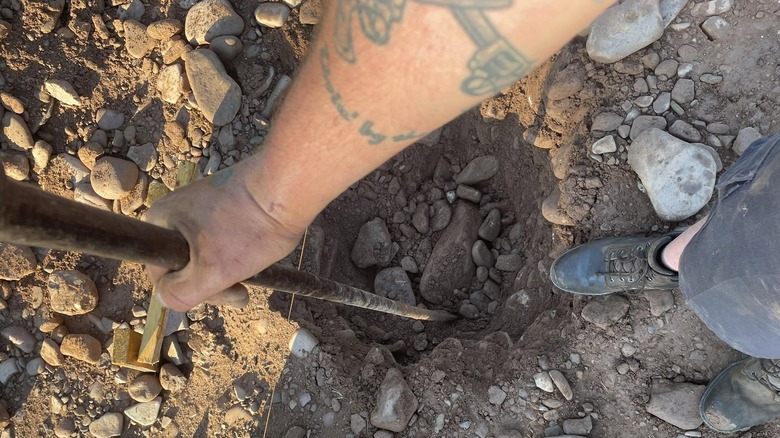
Be sure you're using the right kind of digging bar for rocky soil because they come in two types. You'll want the design with one flat, chisel-shaped end and one pointy end (often known as the San Angelo type) because of the way both ends are made. The other type of digging bar, a spud bar, is suited for tamping soil, not working in rocky soil. It's also worth noting that folks aren't wrong when they call a digging bar a pry bar, but "pry bar" is the overall name of the category that also includes the common hand tool known as a pry bar. You can also use a digging bar for other functions, such as breaking up ice, bricks, and even or concrete. A digging bar is one of the tools you should have handy when installing a fence, as it can help you start fence post holes and tamp down the soil when the post is installed. The spud bar type is best suited for these fence uses. The digging bar may not yet be on your list of most essential gardening tools, but chances are it will be.
To use your digging bar in rocky soil, stand with your feet shoulder-width apart and your hands about a foot apart while grasping the bar. It's best to wear heavy-duty shoes or boots just in case you miss when thrusting the bar into the soil, and wear gloves, too. To loosen soil, pound the pointed end into the ground. The pointed end can get into tight spaces you wouldn't be able to reach with a shovel. Sometimes soil is so rocky or so full of large rocks even the digging bar can't pry them out. In those cases, a jackhammer is needed to break rocks up, but you can still use a digging bar to get holes started.