

This Simple Laundry Hack Helps Prevent Clothespin Marks
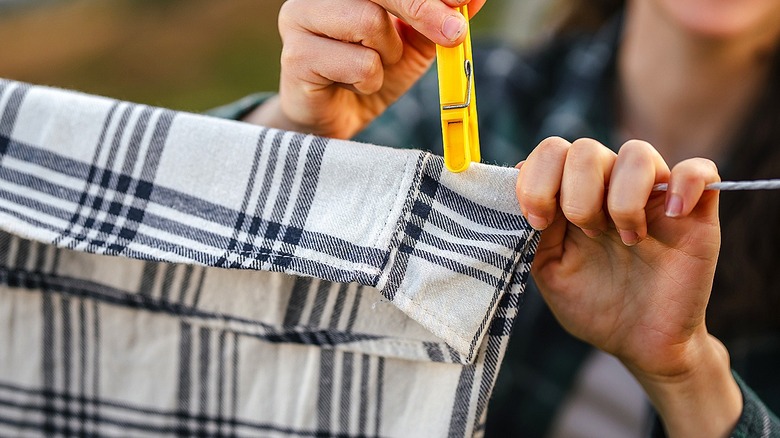
Some household chores seem so self-explanatory that many of us never consider if there's a better way to accomplish them. Whether you've been doing laundry for years or have just taken that task on, drying clothes outdoors seems as simple as sticking them on a clothesline or clothes rack. However, how you use your clothespins can actually impact the way your clothes dry.
As you might have noticed, most clothespins have two holes – a smaller one by the spring, and another larger one in the middle. Like other people, you may have assumed the large hole is designed to pin the clothesline and the item of clothing together. However, by doing this, all of the weight is focused in on that one spot, meaning the point on the fabric where the clothespin is pinned to the clothing item can leave a (noticeable) mark.
Turns out there's a better way. With this pro tip for air-drying your laundry, you use the clothespin holes separately: In the smaller hole goes the clothesline, and in the larger hole, between the jaws, goes your item of clothing. While this may take a little getting used to, this trick comes with a variety of benefits. For one, it spreads the weight out, which means the clothespin is less likely to form a deep mark onto the garment.
In addition, it means you won't be draping your clothing over the clothesline. Secured between the clothespin jaws, the clothing piece will instead dangle from the pin, allowing air to flow through and over the fabric. Of course, you also won't have to deal with undoing an annoying crease from drying clothes in a folded position. It's another way to dry clothes and linens more efficiently.
Tips for using clothespins effectively
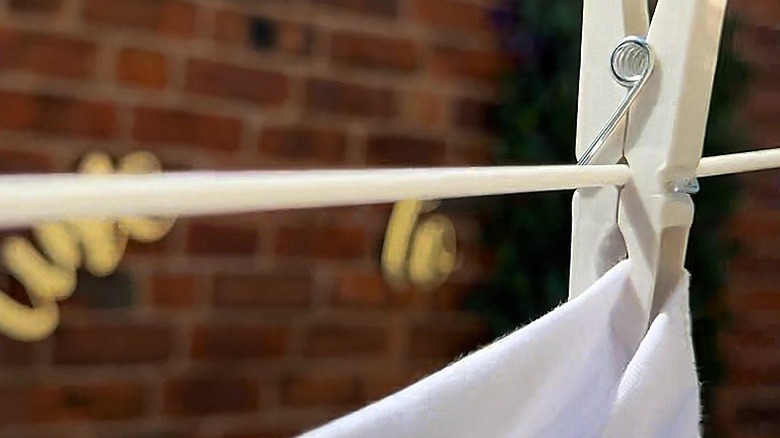
While this clever laundry tip is relatively simple, there are a few key strategies you can employ to make hanging clothes up outside more efficient. You can also take steps to further mitigate any marks left by the clothespins on your clothes.
First, one way to save time when hanging clothes on a clothesline is to hang all your clothespins up first. Fill a basket or apron pocket with your clothespins, then attach them along the line using the small hole. When you're ready to hang clothes, you won't have to pause to clip a pin to the line. Also, when adding clothes to the line, shake them out first, or, more specifically, shake out any wrinkles from the wash cycle.
Even though putting the clothesline in the smaller clothespin hole prevents you from folding your clothing piece over the line, another tip to help make marks less of an issue is to consider the type of garment and how best to hang it. For example, hang your T- shirts upside down so that any pressure marks that do appear from the clothespin will be on the bottom hem and therefore less noticeable. For pants, again, you'll want to choose a place that is less conspicuous; for pants, that means the waistband. The same goes for skirts or nice shorts.
When it comes to button-up shirts, one approach to keeping the shirt's shape is to put it on a hanger first, then hang that up on the line. Just make sure your clothesline can hold the added weight of a hanger, particularly if it's a heavy wooden one. The natural curve of a good hanger mimics a person's shoulders, so it'll be more likely to dry in the correct shape.