

This Quick Maintenance Step Keeps Mulch Looking 10x Fresher Year-Round
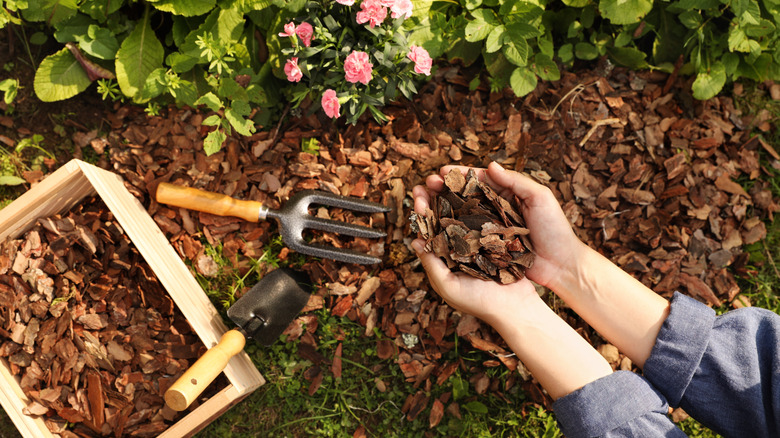
Who doesn't love a gorgeous new layer of mulch in the garden? If only you could keep it looking that nice all year long. Turns out, there's more to it than simply knowing the best type of mulch for your garden. You also need to know how to maintain it. As you've probably learned from experience, mulch can get tossed around, clumped together, and compacted by rain. Whether it's a full rainy season or just a random summer storm, it often leaves the mulch looking a bit unsightly. Like your hair matted to your head after getting caught in a downpour without an umbrella, you need to dry it out, fluff it up, and get it back into place. Just as you'd take a comb to your hair, taking a rake to the mulch is what's needed after the rain has washed through the garden.
Raking after a rainstorm might seem like an unexpected time to refresh your mulch, but it's one of the most useful times to do it. But it's an important step because compacted mulch doesn't just look messy. If it stays wet and matted for long periods, it can encourage mold and fungal growth. And you don't need to be a rocket scientist to know mold in the soil is bad news for the garden. Raking it gets that nice even layer back into place if it's been tossed around, so the mulch can do its job properly. Raking also breaks up compacted clumps, improving airflow so the mulch can dry more evenly. Plus, the raking process can help you see where any problem areas might be hiding.
How to successfully rake mulch after rain for a fresh garden
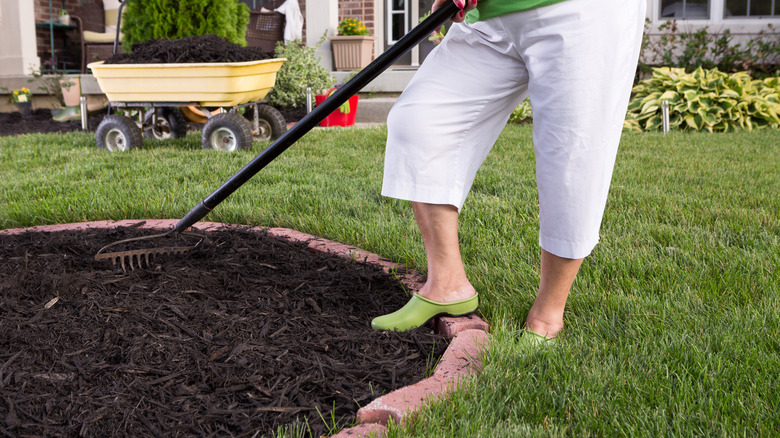
After the rain comes through and makes a mess of the mulch, you might be tempted to just throw a fresh layer of mulch down. Adding more mulch on top of compacted, moisture-soaked mulch can trap excess moisture and increase the risk of mold or fungal problems. That's when your rake comes in handy. Use the hard tips of the rake to break up the clumps. Then brush them back and forth with smooth motions to loosen everything and spread it more evenly across the area. Only add more mulch if you have less than 2 to 3 inches remaining after working it over with the rake. While it probably won't be necessary, there are times when the rain might have washed enough of the mulch away that you'll need to add more.
Now it's helpful to know which type of rake to use when trying to work the mulch. If you're using the same rake you use to sweep up leaves, you've been using the wrong rake, and it shows in your garden. A leaf rake isn't going to be strong enough to really break up the messy mulch, especially if it's really compacted together. For this, you'll want a garden rake. Also called a bow rake, these have sturdy metal heads and short spikes that are perfect for tearing through clumpy mulch and breaking everything up. So, keep a sturdy garden rake in your shed so you can quickly fluff and redistribute mulch after heavy rain.