

Ditch Landscape Fabric: There's A Common Yard Scrap To Use Instead
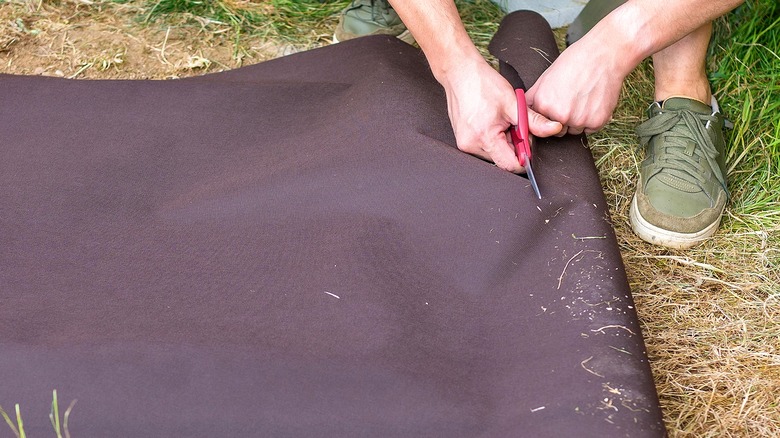
For many gardeners, landscaping fabric seems like an obvious addition to their horticultural arsenal. It's used to make areas like flower beds look neat and tidy by preventing weeds, but over time, those weeds can start growing on the fabric anyway. Additionally, working with landscaping fabric can be difficult, especially if you want to remove or adjust previously installed sections. Worst of all, the plastic fabric will never degrade, adding microplastics to your garden soil. Luckily, there are various alternatives to using this fabric, including an extremely common lawn scrap most folks are likely to have in abundance: grass clippings.
Grass clippings are a versatile, free option to use anywhere you would otherwise add landscaping fabric or mulch. It's one of the ways you can repurpose your lawn clippings for a healthier yard and garden; the clippings will help retain moisture in the soil, and suffocate any burgeoning weeds.
Additionally, grass contains nutrients that help plants grow, such as nitrogen and phosphorus, that will transfer into your flower bed. And since there's no netting holding the grass together, changing up the landscape is as simple as sweeping away the clippings. With the average pack of landscape fabric going for $15 or more, it's almost hard to believe you can get the same benefits from something that might have otherwise ended up in a landfill.
Grass clippings as an alternative to landscape fabric
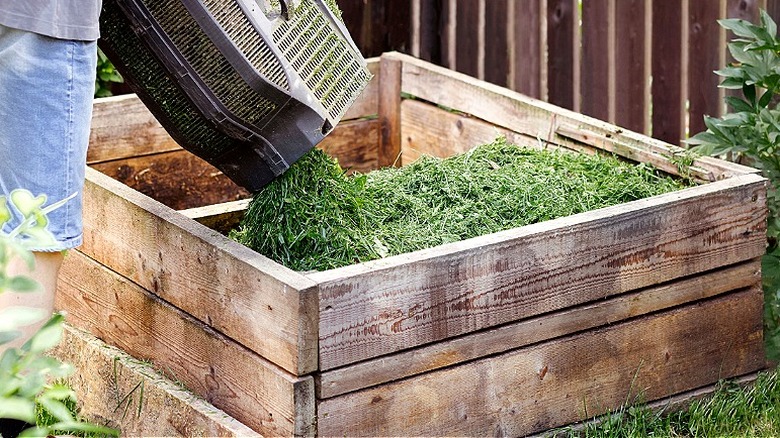
You may already have a few bags of grass clippings ready to go, but before you start using them in your garden, there are a few things to consider first. For one, any treatments that you have done to your lawn before mowing will stick to the cut grass, so don't use clippings exposed to herbicides or pesticides. This also applies to grass that contains a lot of weeds, since the seeds can get mixed in with the clippings. The grass clippings should also be completely dry, otherwise they can attract fungi.
When gathering the clippings, you could try this easy trick to bag cut grass from your yard, where you'll use your feet to keep the bag in place while you shovel or rake the clippings into the bag. But however you collect enough suitable clippings, using them as natural mulch/landscape fabric is as simple as scattering a layer wherever a bit of moisture control or weed suppression is needed.
Don't add too much clippings at once, though; keep the first layer around 1 inch. Let the layer completely dry out over the weeks before adding another similar layer. Again, keep a light hand; if the grass is too thick, it can hurt the soil quality, and it can even start to smell if it starts to trap moisture.
The initial layer of clippings should last a couple of months, however, be sure to regularly inspect your garden to ensure your DIY landscape fabric hasn't formed any clumps, or is holding in too much moisture. (Find out why you should start leaving grass clippings on your lawn after mowing.)