

The Flowering Bulbs You Should Buy At The End Of Summer
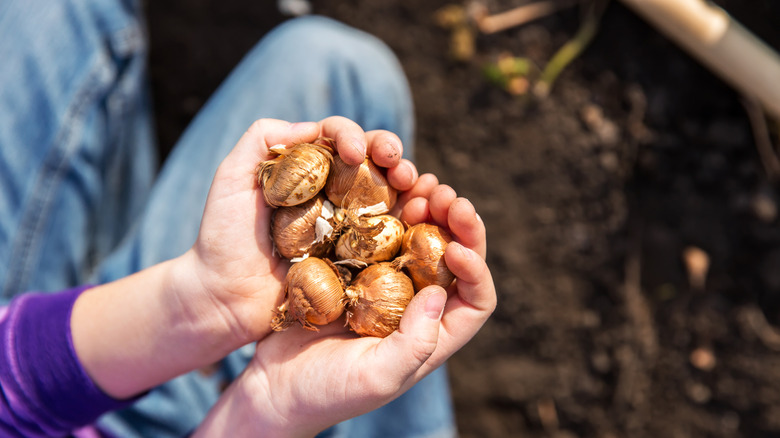
Imagine planting a bulb in late August and seeing flowers by October — no winter wait, no spring guessing game. It sounds like a trick, but a handful of low-maintenance bulbs actually work this way, rewarding an end-of-summer planting with color just as the rest of the garden starts winding down. These bulbs, colchicums and fall-blooming crocus, extend your growing season, but you may want to tap into a sense of urgency about nabbing these bulbs before summer's end. They are only sold for a short window of time, and they sell out fast. They also need to be planted quickly, as they will start to grow whether planted or not.
Although these bulbs are from different genera, they confusingly have similar common names — both are often known as "autumn crocus." And just to add a bit more confusion, both colchicum and true crocus are technically not grown from bulbs, but from corms. Fall-blooming species of true crocus include showy crocus (Crocus speciosus), hairy crocus (Crocus pulchellus), and saffron crocus (Crocus sativus), while the majority of colchicums are fall-blooming, including the popular Colchicum autumnale and Colchicum 'Waterlily'.
The reason the corms, especially colchicums, may be hard to find is that they are typically only available in garden stores in August and early September. Low availability may also be linked to limited use in gardens since they're planted long before most fall bulbs are. Ideally, buy them at a time that allows you to plant by late August for dazzling fall blooms. You may have better luck buying them online if you can't find them in stores.
How to grow crocus and colchicum bulbs for fall blooming
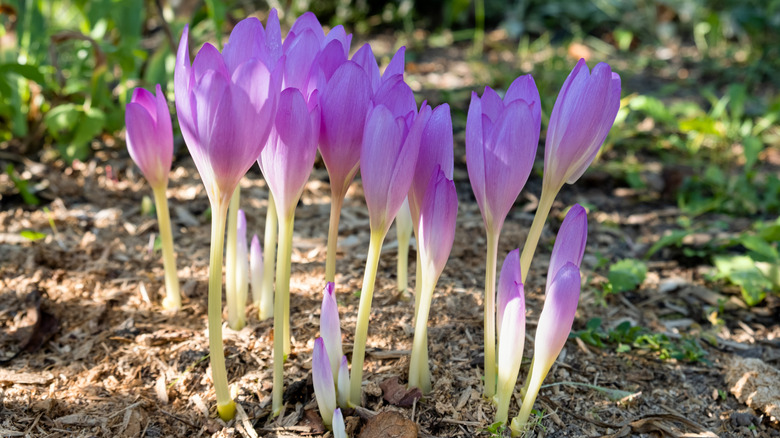
If you are fortunate enough to get your hands on bulbs of these beautiful flowers that can grow under trees, plant them as soon as possible. Planting instructions are similar for both colchicum and fall-blooming crocus, but colchicum is cold-hardy in USDA Hardiness Zones 4 to 9, while zones for crocus range from 3 to 8. Depth of planting is another difference between colchicum, which should be planted 4 to 6 inches deep, and crocus, which prefers a depth of 3 to 4 inches.
Plant corms in well-draining, silty soil in full sun. Corms may rot in soil that doesn't drain well or clay soil. Consider amending the soil with compost, bone meal, or high-phosphorus fertilizer to promote blooming. Colchicum corms should be spaced farther apart — 6 to 10 inches — than crocus corms, which can be planted 3 inches apart. A layer of up to 2 inches of mulch will help suppress weeds and assist the plants in holding onto moisture. After planting, water whenever the soil is dry, and expect blooms in four to six weeks. While the plants are blooming, avoid watering altogether, and after flowering is complete, water more frequently to keep the soil evenly moist.
Be aware that while colchicum is a gorgeous purple perennial, it packs a downside: All parts of it are highly toxic to people, cats, dogs, and horses. Severe symptoms, including vomiting, diarrhea, organ damage, or even death, can result from ingesting any part of the plant.