

How To Cool Down Your Garage During The Summer With An Easy-To-Install Solution

When you use your garage for anything other than parking cars, spending time in it during the sweltering hot months can be unbearable. If you've tried ways to keep your garage cool this summer without using A/C but they haven't been effective, it may be time to consider a more permanent solution. A ductless mini-split is one such option. Since it doesn't require extensive ductwork, it's often easier to install than a traditional central HVAC system, although professional installation is typically recommended because of the electrical work and refrigerant lines. It involves two main units: an outdoor compressor unit and an indoor air handler, which are connected by a conduit. Best of all, these systems typically only require about a 3-inch hole drilled into the exterior wall for installation, making this a pretty convenient choice for a garage.
The top-rated mini-split brands to consider for your home could be a saving grace for keeping your garage temperatures regulated. Plus, if you live in an all-season climate, you can choose a mini-split that both heats and cools, making your garage comfortable year-round.
What to consider before installing a ductless mini-split in your garage
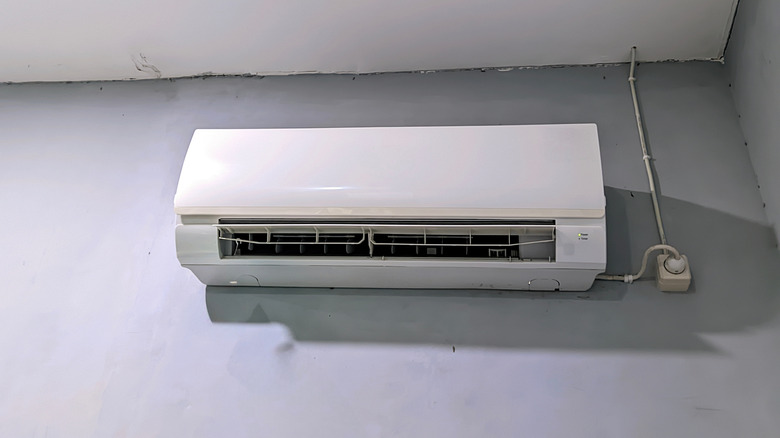
While a mini-split can be a smart climate control choice for a garage, like all things in life, you need to consider the pros and cons. The benefits are fairly straightforward: if you need to cool your garage quickly, many single-zone mini-splits can be professionally installed in a day. Mini-splits also don't require ductwork and can efficiently heat and/or cool a garage, depending on the model. However, there are a few disadvantages of mini-split systems you should know before buying to ensure you're not disappointed with your purchase.
One of the bigger ones is price. While costs vary by model and capacity, you're going to shell out a lot more money for a mini-split compared to a window air conditioner, for example. You can expect to pay from $3,200 to $8,500 or more for the unit and installation depending on its size and features. It's worth comparing models that are appropriately sized for your garage and offer the features you need. But perhaps the biggest consideration to make is the current insulation levels in your garage.
If your garage lacks proper insulation, you may need a larger-capacity unit than you expect to keep the space comfortable. Speaking to an HVAC professional about your specific situation is among the best ways to ensure you get an adequately powered unit. Alternatively, you could make a few insulation adjustments, sealing air leaks and adding insulation to walls and ceilings where needed.