

How To Prevent White Film From Building Up On Your Glass Stovetop
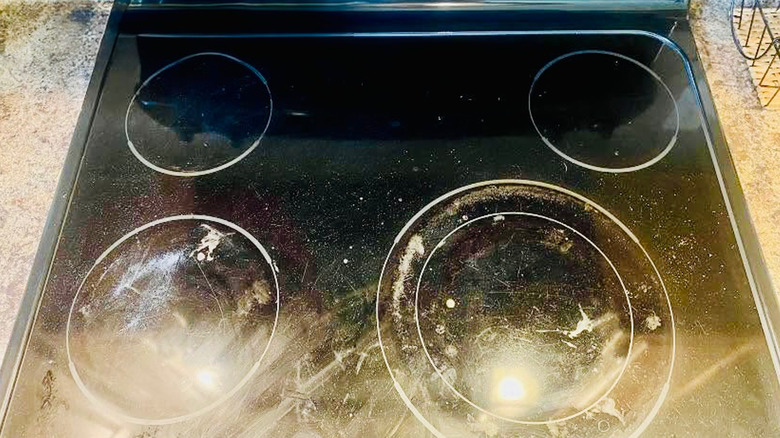
Does it seem like no matter how often you clean your glass stovetop, it always seems to develop a hazy, white film? Regular cleaning is important, but so is prevention. You may be unwittingly engaging in practices that perpetuate the buildup of that white film and other blemishes on what should be a gleaming glass stovetop.
Knowing how and why this white film forms can help you prevent it. Residue from food and mineral deposits from water are significant causes. If not cleaned promptly, food left behind (especially if it contains sugar) can actually become baked onto the stove surface. Water spilled on the stovetop evaporates and, exacerbated by heat, leaves white mineral deposits.
Sometimes, what looks like white film is actually a collection of tiny scratches left by abrasive cleaning tools, such as scouring pads. You may also be surprised by the role of cookware in contributing to residue formation. Microscopic metal particles from cookware transfer onto your stovetop's glass surface under friction and heat. Fortunately, it's not difficult to avoid and counteract these assaults to keep your glass top stove in tip-top shape.
Cookware and cleaning choices help keep white film away
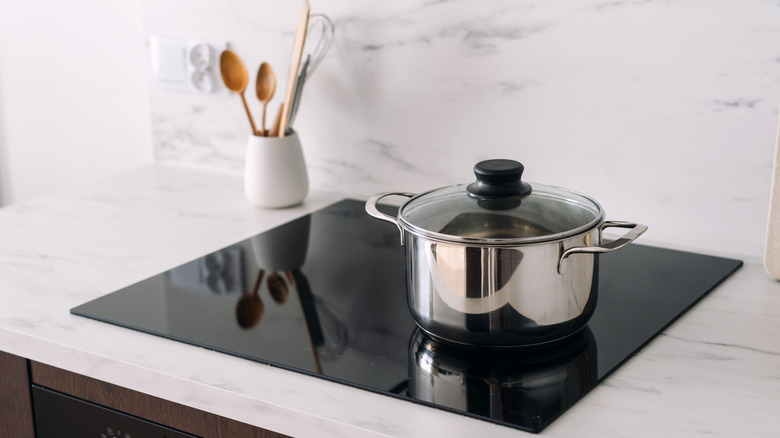
Cleaning up stovetop spills as soon as you can is almost a no-brainer, but remember to wipe up even water when it boils over to avoid those mineral deposits. Cooking water can spread more residue if you're cooking, for example, pasta or rice with their starchy content. Importantly, wait until the stovetop is completely cool before wiping. You can prevent cleaning scratches on your glass stovetop with simple solutions, like avoiding steel wool, abrasive powders, or abrasive pads. Don't use bleach and ammonia-based cleaners, as they will leave streaks and can even damage the stovetop. Follow the manufacturer's recommendations for cleaning products.
Choose cookware with the least potential for scratching or transferring metal to the glass top. Avoid damaging your glass stovetop by using only pans with smooth, flat bottoms. The smoothness of stainless steel makes it a top choice for use on glass stovetops. The way you handle cookware can also go a long way toward protecting your stovetop. Don't drag a pot or pan over the glass surface — always lift the cookware to relocate it. Ensure the bottom of your cookware is clean so it doesn't distribute crud to the stovetop. Be especially careful with heavy cookware, such as cast iron – you may need two hands to lift it off the surface.
To ensure your glass stovetop always looks its best, wipe down its cooled surface with a damp cloth after after each use, and give it a regular deep clean with a manufacturer-recommended product. Rinse off the cleaning product with water, and dry the surface with a cloth or towel.