

Ditch Garden Shade Cloths: Replace Them With An Overlooked Solution You Already Have

As an experienced gardener, you know that certain crops flourish in warm weather; the sunnier, the better. But just like an SUV driver glaring at soaring gas prices, even plants will eventually pump the brakes. Longlasting heatwaves don't do any favors to the plants struggling in our veggie patches, and when temperatures remain in the triple digits week after week, you won't be surprised to find yourself looking into the benefits of shade cloth. But before you make a tidy investment at your local garden supply shop, consider another way to give those cucumber and tomato plants a helping hand until cooler weather arrives. Sheets may be designed for the beds inside your house, but you can repurpose them for outdoor garden beds, too. In fact, bed sheets are among the overlooked items you can reuse to build a garden shade solution on a budget.
Those who have never tried shade cloth in their gardens will want to familiarize themselves with this gardening approach before attempting the substitute. Using shade fabric can keep your crops cooler throughout the day, as well as prevent them from getting sunburned. It may actually seem counterintuitive that less sun equals more growth, but giving your garden some cover can truly improve your yield. Plus, when fall temperatures bring cooler weather, using shade over your crops can also help prevent cold damage. A new 8-by-11-foot shade sail can cost in the realm of $40 from stores like Lowe's, but for a DIY sun shade to keep plants cool on those extra hot days, all you have to do is unfurl an old set of bed sheets.
Substitute shade cloth with bed sheets for cheaper garden protection
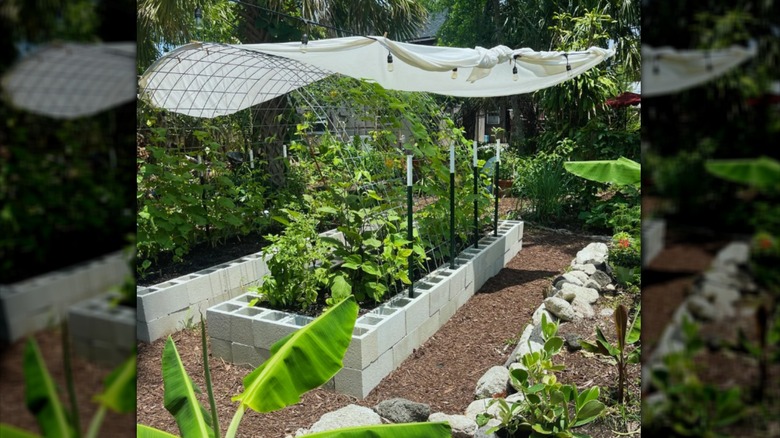
When getting started, your goal is to install the sheets horizontally above the crops. As with shade cloth, make sure to keep the sheet attached to a structure held above the plants rather than just tossing it directly on them, since this can actually transfer heat and damage small plants. You can clip or tie your repurposed linens onto a frame, poles, or a cage that arches over your garden beds. Both flat and fitted sheets should work, and you can even float pillowcases over your small container plants.
Another important point to remember is that when using this technique on crops like tomatoes, peppers, and cucumbers, you should wait until the fruits form before providing the shade of a bed sheet. This approach is great for helping summer crops, and it can also be useful in late summer when you're trying to get cool-season, fall vegetable seedlings established. While a sheet won't offer the durability of a shade cloth (not to mention a rating for sunlight and UV filtering), it's still a great help when your plants are suffering during times of extreme heat.
Repurposing a sheet you no longer need for your bedroom or scoring one for a few dollars at a thrift store can allow you to keep a large growing area cool with a negligible impact on your bank account. In addition to the cost benefits, some growers will appreciate using 100% cotton sheets because they are plastic-free. Shade cloth, like many gardening products, is usually made from synthetic plastics, and can introduce harmful microplastics into your soil as they degrade over time. And if you find using old sheets to improve your garden to be a fulfilling and fun DIY project, guess what — there are other creative garden uses for old bed sheets – like using them as weed barriers.