

Keep Solar Panels Running Efficiently With An Overlooked Solution
We may receive a commission on purchases made from links.
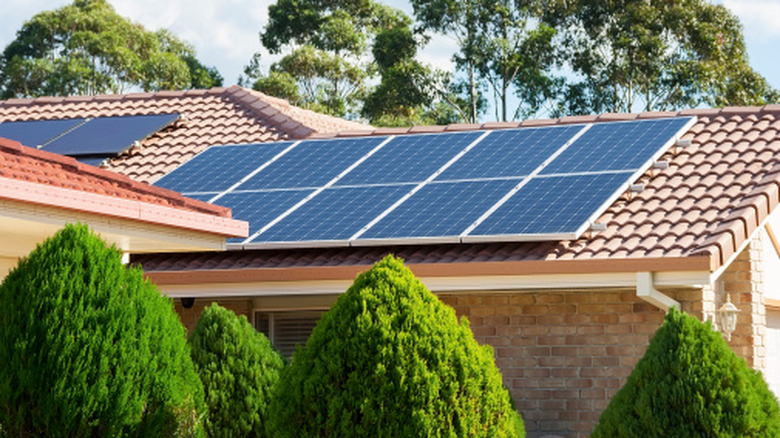
More and more people are installing solar panels to make their home more eco-friendly, and given the rise in electricity prices, it definitely seems like the smart move. However, many people notice just a few years after installation that their solar panels are generating less electricity than before. Fortunately, it's often not an indicator of a serious problem. In many cases, the panels are just dirty, and all they need is a gentle cleaning with a biodegradable dish soap solution.
This is important, as solar panels need unobstructed sunlight. If something is blocking it, like dust, pollen, bird droppings, and other grime, it will drive their efficiency down. This is especially important in dry or dusty climates where debris can accumulate over long periods since there's not much rain to wash it away. Just make sure that when using a dish soap solution, it is mild. Don't reach for anything that contains harsh chemicals, as they might damage the solar panels or their protective glass layers.
Biodegradable dish soaps like Uncle Todd's Wild Wash Biodegradable Soap will work well. That said, cleaning will not always make your solar panels function better. For instance, when solar panels are reaching the end of their life, no amount of cleaning is going to increase their efficiency, and you will need to replace them to keep your system running.
Cleaning your solar panels to maintain their efficiency
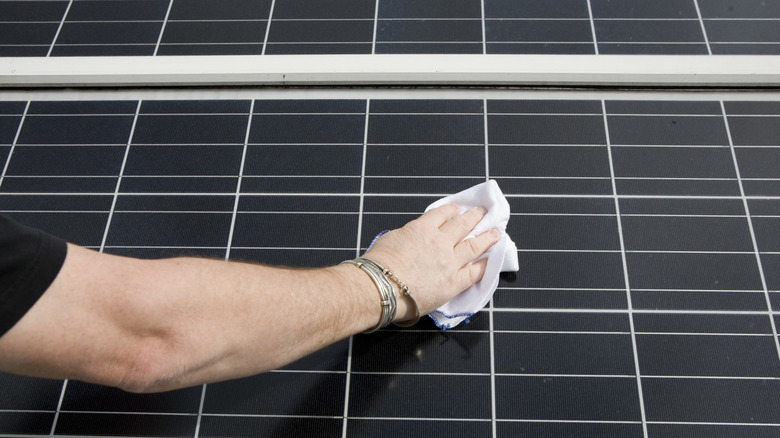
Before you start hosing down your panels and rubbing them with dish soap, make sure you shut everything off. Also, it is better to clean solar panels in the morning or evening, as solar panels are also cooler during this time. If you spray your solar panels with cold water when they are hot, it can lead to thermal stress, which in some cases can even crack their glass. Avoid pressure washers, too, since the force from these machines can easily damage seals, connections, or other components of solar panels. Hard water can also leave efficiency-reducing stains on solar panels.
Create your cleaning solution by adding a bit of biodegradable dish soap to a bucket of warm water and allowing it to fully dissolve. But before you start scrubbing, rinse the solar panels, as any dust or sand sitting on their surface can leave scratches if you start wiping. Once rinsed, take a soft-bristled brush, sponge, or other nonabrasive cleaning tool and use it to scrub the solar panels with the biodegradable dish soap solution.
Make sure that you rinse away every trace of the dish soap. If you leave any residue behind, it can create a sticky film which will attract more dust and grime, defeating the whole purpose of cleaning. Also, always put your safety first. Use a long brush and sprayer to wash your solar panels, because climbing on the roof can be dangerous. Lastly, wash your solar panels every few months.