

Not Banana Peels: The Other Fruit Scrap You Should Consider Adding To Compost
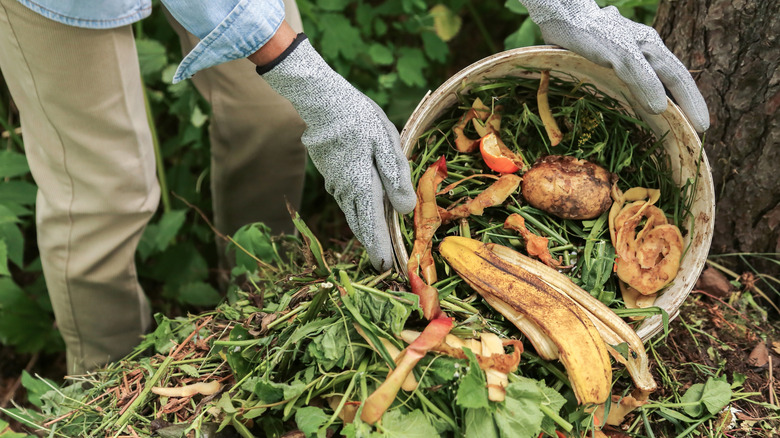
It's fruit season, and your backyard or local market is flush with the juiciest of apricots, peaches, plums, nectarines, and cherries. Any fruit peels you don't eat will typically end up in the compost pile. However, a common question amongst even avid composters is: what do you do with the fruit pits? Well, just like you should not throw out that banana peel but put it in your freezer for your future garden, the same applies to those pits, pips, and kernels. While the fruit stones may seem like they're too hard to break down, they are still plant material and therefore compostable. So, here's what you should know about composting rock-hard fruit pits and stones.
First, the hard wood-like shell on these seeds comprises cellulose and lignin, the same components that make wood rigid and strong. So those hard pits can compost naturally over time, just like wood rots out in the wild. Which also goes to say that, while fruit pits are biodegradable, they do take a long time to break down. For instance, peach pits may break down over a period of one to three years through cold composting. However, other composting methods like hot composting, bokashi, and vermicomposting can speed up this process. That's because hot composting brings organic matter to a steaming 130°F to 140°F, creating the perfect temperature for microorganisms to break down even the toughest organic matter.
How to turn stone fruit pits to compost
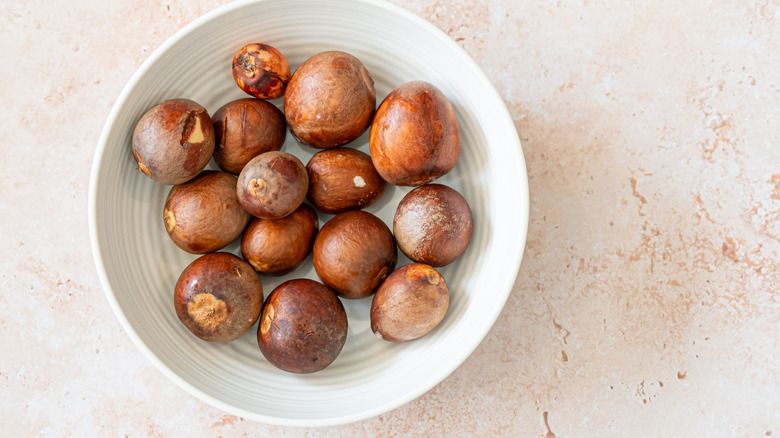
Here's how to turn fruit pits into black gold, along with other compost ingredients you likely already have at home. First, crush the pips and stones' outer hard casing with a hammer. After that, layer them in your compost alongside your greens and other browns like yard trimmings, coffee grounds, dry leaves, and wood chips. If you have a good number of fibrous stone seeds like mango, also snip their tips to make way for worms. This will help the composting process along. Grinding avocado pits further into smaller pieces and then layering them with luscious greens and dry browns also quickens their decomposition time. Some composters also suggest pre-soaking or boiling the hard seeds in water to help their decomposition along.
Remember, turning your compost pile is a must, since it aerates the pile and provides the compost microbes with adequate oxygen and nutrients. Also monitor the heat with a compost thermometer and moisture levels with a soil moisture meter to keep the microbes active for quicker decomposition and black gold formation.
After exercising a lot of patience and noticing your pile looks ready for use, ensure you screen the compost first. Don't be alarmed if you find the fruit pits still intact when all other components of your compost have broken down. Just throw them back into the next batch of compost and allow them more time to break down. Eventually they'll disappear and turn into precious black gold for your garden.