

The Frank Lloyd Wright Home Design Technique That Americans Still Rely On Today

Frank Lloyd Wright was an American architect who became known for developing a variety of fascinating architectural techniques and practices, such as incorporating landscape into a house and creating practical, affordable buildings.
While you may be familiar with his long, low prairie buildings or his simplified Usonian architecture, you may not have heard of one of his other long-lasting design techniques: compression and release. This practice is built around the idea of contrast: exiting a small, low-ceilinged room and entering a larger, more open space will enhance the expansive feeling of the latter. Does that sound like an effective approach to you? If you think so, then you're not alone.
This technique of compression followed by release is still utilized by designers today to increase the impact of certain spaces. Architectural Digest, for example, reported in 2025 about a home in Minneapolis in which designer Anne McDonald used this technique to make the den or "snug" in the house feel more impressive. To do this, she contrasted the low ceilings of the entryway, living room, and home office — which you pass through first — with large, floor-to-ceiling windows in the snug. After emerging from the relative tightness of the previous spaces, guests are therefore more impressed by the openness of the bigger windows and the high ceiling of the larger space.
So, if you like the idea of emphasizing certain rooms in your home and making them feel bigger and more awe-inspiring, you may just want to consider utilizing this Frank Lloyd Wright design trick yourself.
Incorporating compression and release into your own home
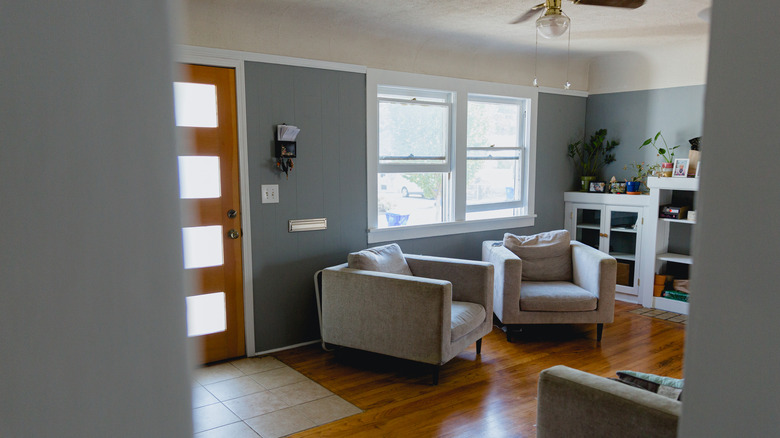
While this technique may sound like something that needs to be built into a house from the very beginning, there are actually multiple different design tactics you can employ to get the same effect without having to change the layout.
In the above example from Anne McDonald, the ceiling in the room the designer wanted to accentuate was lined with birch, a light-toned wood that draws the eye upward rather than compressing the space downward. However, if you don't care for wood-paneled ceilings, you could always try recreating this Frank Lloyd Wright trick and transforming the ceiling in your largest room by painting it a light, airy color to enhance the feeling of height.
In rooms that you want to feel cozy, such as hallways or entryways that lead into larger rooms, look for design techniques that help to draw the walls in. One potential way to do this, for example, is to incorporate lots of soft furnishings. Whether it's a hanging tapestry in the hallway or fluffy pillows on the mudroom bench, these softer materials can help to create a cozy, dense atmosphere without actually compromising much on space.
You can also utilize dark colors in these rooms, particularly on the ceiling, to help emphasize the feeling of tightness that is then relieved by the larger rooms that come after. Don't worry, though, this doesn't mean lining your rooms with boring gray or brown — incorporating jewel tones into a small space is a great way to make a space feel cozy and intimate while still offering a sense of visual interest and luxury.