

Not Stain Or Seal: The Retaining Wall Upgrade That's More Durable And Water-Resistant
We may receive a commission on purchases made from links.
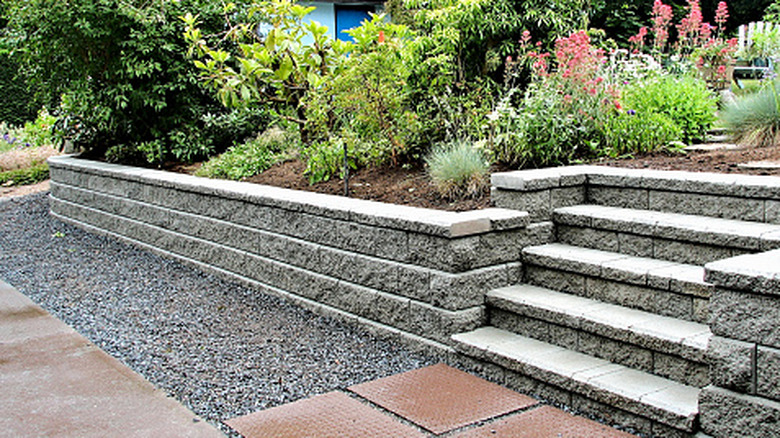
Gardens are not always perfectly flat. As a result, backyards on a sloping piece of land will often have a retaining wall — some are referred to as gravity walls — which essentially holds back the weight of the land that sits behind them and prevents slides or sloughing. If you're currently designing a sloped outdoor space, choosing your retaining wall material can be a tricky task. You can pick from a few different materials, including concrete, wood, or even a stone retaining wall, depending on the purpose and location of your wall. If you opt for concrete walls, they will require some form of waterproofing and sealant to protect their structure from weather damage. Rather than using a stain or a seal, a more durable option for retaining walls made of concrete would be to render them.
What is render and why would you use it? Essentially, render is a plaster-like coating that is used on external walls or structures. It can be made out of cement, acrylic, or silicone. The most common reasons to use render is to protect your wall against water damage and to create a smooth, professional finish. Rendering a retaining wall is a process that has several benefits compared to staining or sealing. It's a much better option if your main concerns are water resistance and durability, as it provides a thicker, more hardwearing coating. A seal has to be reapplied every 3 to 5 years, whereas rendering a wall should protect it for up to 30 years.
Using render to protect your retaining wall
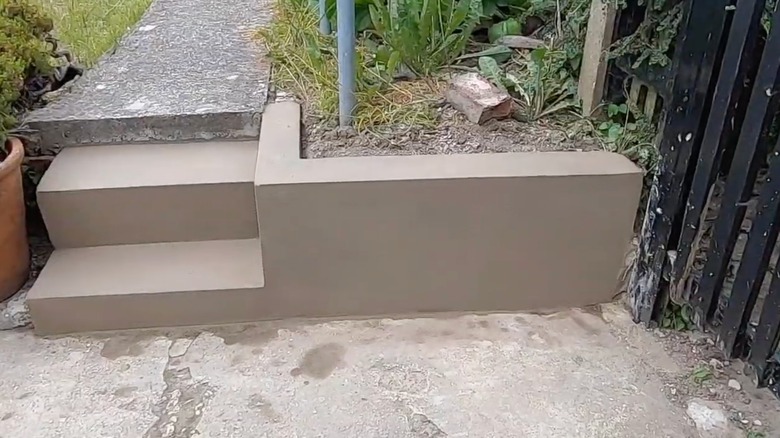
There are a few different types of material you can choose from when rendering a retaining wall. Cement is the most popular but not the best at waterproofing. Silicone render is known for its durability and water resistance. It is a mixture composed of both cement and silicone. The silicone makes the render more resistant to water damage, meaning it's likely to last longer without cracking.
Another type of render that is known for its water resistance is acrylic render. The addition of acrylic makes the render extremely flexible, meaning it's less likely to crack. Just bear in mind that acrylic can reduce breathability, which may cause damp issues further down the line.
Once your retaining wall has been rendered, you may want to think about painting it to improve its water resistance even further. Painting the exterior of your home like a pro — whether it be your whole house or just a retaining wall — takes time and effort, but it's worth it to achieve a clean and sleek result. Painting render requires special masonry paint, like this Kilz Self-Priming Masonry Paint from Amazon. Masonry paint contains water repellent qualities to stop water from entering the structure of your wall, as well as having a level of breathability, in order for water vapor to pass through and not sit on the surface.