

The Vintage Table Decor Dishware That's Worth Finding At The Thrift Store
We may receive a commission on purchases made from links.
A bright white, durable, glazed earthenware known as ironstone once enjoyed popularity in North America. Influenced by fine Chinese pottery, ironstone was produced in the early 19th century by many English manufacturers, most of them based in Staffordshire. Nowadays, ironstone pitchers, platters, and more are vintage kitchen items at the thrift store with rustic charm that double as decor. One beautiful example of ironstone that you may consider seeking secondhand is from the beloved Elsmore & Forster brand. They were known for producing large, all-white platters with lovely patterns, along with other dishware. Adding one such platter to your dining table could be the piece de resistance in your latest tablescape scene.
Elsmore & Forster, based in Tunstall, Staffordshire, produced ironstone dinnerware from the 1850s to the 1870s. The original makers were Thomas Elsmore, Thomas Forster, and Richard Blackhurst, but after Blackhurst left, the manufacturer became known simply as Elsmore & Forster. Although Elsmore & Forster made a name for themselves creating clown-decorated puzzle jugs, they also made plenty of elegant, all-white dishware. For their American audience, this company mainly marketed plain white ironstone, which was popular for its durable, clean design.
Identifying quality Elsmore & Forster ironstone platters
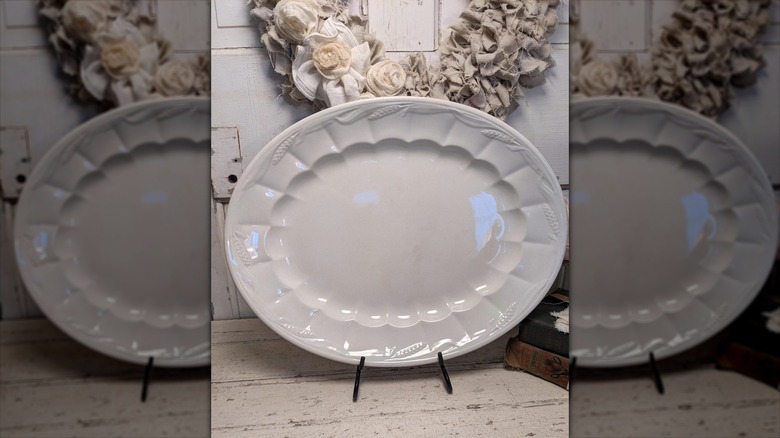
Keep an eye out for platters with certain special motifs, like the Ceres shape. One of the more iconic Elsmore & Forster patterns, the Ceres style features a wheat design inspired by the Roman goddess of agriculture. Once you have found a beautiful Elsmore & Forster platter, you have the fun task of deciding how to decorate a dining table using your chosen piece or pieces. A lone platter with some greenery, flowers, and candles is a simple option, or collect a vase or pitcher in the same pattern to create a table display of antique ironstone.
Identifying authentic ironstone from England takes a good eye. The white of the dishes often has a blue look to it, which is an indicator that it is an older piece of English ironstone. Ironstone, being heavier than either earthenware or porcelain, feels weighty to hold.
Another major tip on how to tell if thrift store dishware is valuable is always to check for special markings. In the case of Elsmore & Forster, the bottoms of dishes and platters would be stamped with the names Elsmore & Forster. Sometimes the mark used a three loop knot called the Stafford knot, which indicated a Staffordshire potter. Other marks from this specific manufacturer were printed with the royal arms and a banner indicating that the piece was "Warranted Ironstone China." A mark using the royal arms indicated that the manufacturer was essentially certified by the British royal family.