

Why Is Clover Taking Over Your Yard?
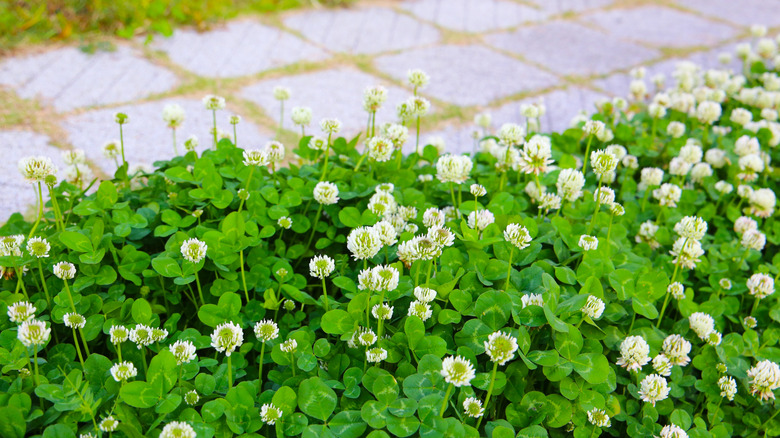
Homeowners have a love-hate relationship with clover (Trifolium). In fact, until the 1950s, folks appreciated lawns full of the plant, and white clover (Trifolium repens) in particular was even included in lawn seed mixes. Today, homeowners know this herbaceous perennial can be beneficial and may even like how it looks, but when it takes over the yard, concern begins to grow. If you experience a sudden clover explosion, you're right to be concerned — but maybe not for the reasons you think. Excessive growth of this benign weed in your yard may mean your soil is using clover to send you a distress signal.
Because clover is a legume, it takes nitrogen from the air instead of soil. So while other plants and grasses in your yard may be barely limping along in low-nitrogen soil, clover will flourish. This low-nitrogen warning may be the most significant message clover's presence is sending, but it's not the only one. A clover bloom in your lawn can also mean the soil is compacted, you're cutting your grass too closely, or you're not watering enough. The presence of clover can signal soil that is too acidic or alkaline, as well.
Clover offers several benefits that you should consider before getting rid of it. In addition to providing nitrogen to neighboring plants, clover attracts pollinators, which feed on the nectar of clover flowers. This fast-grower has a dense root system that crowds out less desirable weeds. It's also drought-tolerant and holds up well in low-water environments. However, if you're really not a fan, there are a few ways you can prevent clover weeds from taking over your lawn. Or, if it's already established, you can get rid of clover in your lawn in ways that also answer the distress calls from your soil.
How to get rid of clover
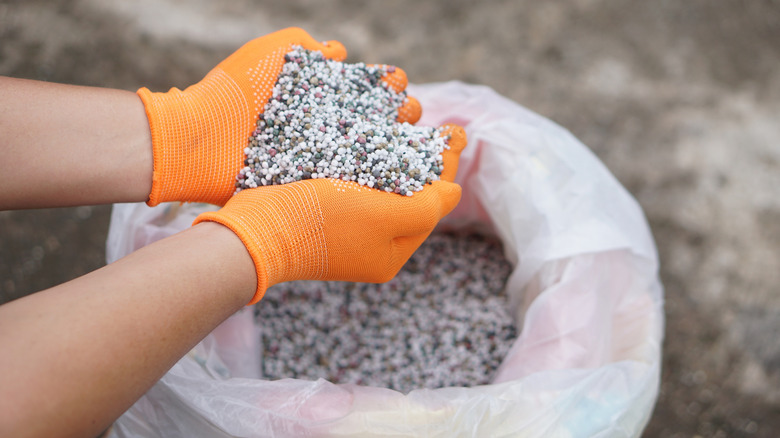
For a balanced approach to clover in your lawn, you can take several steps that don't completely eradicate it but should keep infestations in check. First, get your soil tested to confirm low nitrogen levels. If nitrogen levels are indeed the issue, feed your lawn with a nitrogen-rich fertilizer. Studies have shown that supplemental nitrogen is successful at decreasing clover population while promoting grass growth. If you want to encourage grass growth immediately, use a fast-release nitrogen fertilizer. Achieve sustained turf growth with a slow-release product. Be sure to follow label instructions for fertilizers. Soil acidity matters as well, and it's important to fix imbalances you find when testing pH levels. There are a few ways to adjust these levels, like sulfur for overly alkaline soil and ash for overly acidic soil.
If the nitrogen levels and pH balance of your soil are normal, start targeting other sources of clover growth. You may have been cutting your lawn short; if so, set your mower for higher grass that shades out clover. If the earth is too dense, there are a few ways you can fix your compacted soil, like aeration or adding organic matter. Make sure you're also adequately irrigating your lawn with infrequent, soaking waterings to help it compete with clover. Look out for bare spots in the lawn as well — they can be clover magnets, so plant grass seed to keep clover from moving in.