

Switch Things Up And Stop Garden Pests In Their Tracks With An Overlooked Solution
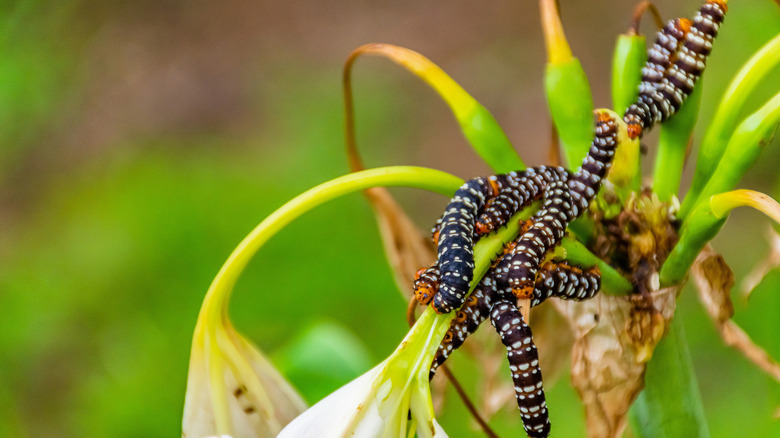
Who knew that confusion is an effective way to control garden pests? When we grow the same crops in the same place every year, insects adapt to their locales, growing quite comfortable in this familiar territory. Seemingly, they also invite their friends, resulting in large accumulations of unwanted pests. They can also grow resistant to those same insecticides you're putting on the same places. The key is to confuse pests. Known as one of the most eco-friendly ways to keep bugs out of the garden, rotating your crops deprives pests and diseases of their hosts, effectively cutting off their life cycles.
Suddenly, they find themselves in a habitat with no host plant to feed from. An insect that feeds on a given host will lay eggs, but larvae emerge and starve without their food source. It doesn't hurt that crop rotation offers additional benefits, such as supporting soil health and fertility. Rotating crops has also been shown to increase crop yields.
Rotate your crops for effective pest control
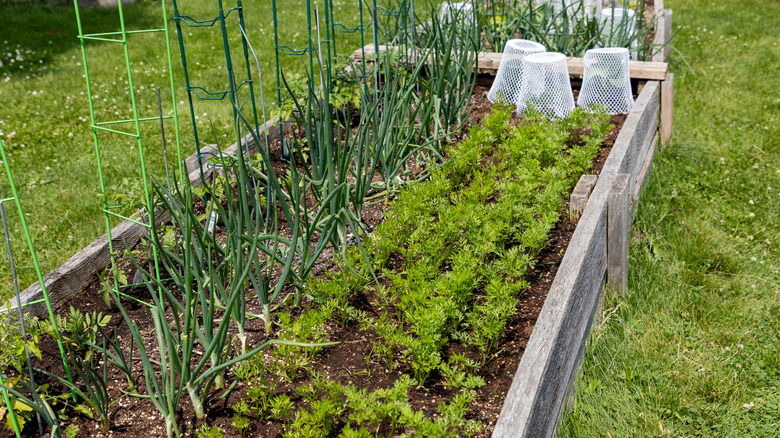
Rotating your vegetable garden crops is incredibly easy. It's best to start with several distinct garden beds or a garden that is divided into sections. Because insect pests often gravitate to plants in the same family, it makes sense to group your vegetable crops by family. For example, any Apiaceae-related crops like carrots, parsnips, celery, and parsley should be planted together, while eggplants, peppers, potatoes, tomatoes, tomatillos, and other members of the Solanaceae family should be planted solely among each other. Set up a rotation cycle across three or four beds or sections, moving each family to a new spot every year so that it doesn't return to its original bed for up to five years (three to four years is common).
Some practitioners of crop rotation believe you can create even more pest confusion by using stacked rotation, in which the same crop is grown for two years, followed by a four-year break in growing that crop. Consider including pest-resistant crops, like onions and rhubarb. Make a plan for where each crop will be located next and monitor the effectiveness of your rotation program.
Crop rotation can be even more successful when you combine it with otherintegrated pest management, especially using row covers, which place a physical barrier between pests and plants. Attracting beneficial insects also pairs nicely with crop rotation for pest management.