

Put Away The Bucket: The Drill Attachment That Can Move Water With Less Mess
We may receive a commission on purchases made from links.
Moving around water isn't always easy. To transfer a lot at once, you are often stuck hauling heavy buckets around. While you may maneuver a bucket or two, it's a labor-intensive exercise that isn't possible for everyone and can lead to a lot of spilling and mess. Thankfully, if you have a drill, there is a much easier solution thanks to one of many handy attachments you'll wish you bought sooner. Known as a drill-powered water pump, what once took hours to haul around can be done by just holding down a button.
The drill itself powers the pump with the circular motion. Depending on the kind you buy, you may need to prime it first by removing air from the pump. Then, place the intake into your water source, and the other side to your final destination. Attach your drill to the pump itself, turn it on, and watch the water go, without the extra labor.
Every drill attachment is a little different, so you may want to do some research, specifically on how much water it can handle per minute and the head pressure if you're trying to move uphill at all. The Trupow Drill Powered Mini Hand Water Transfer Kit is a good option from Amazon that can transport about 12 ½ gallons per minute.
When and why you should use a drill-powered water pump
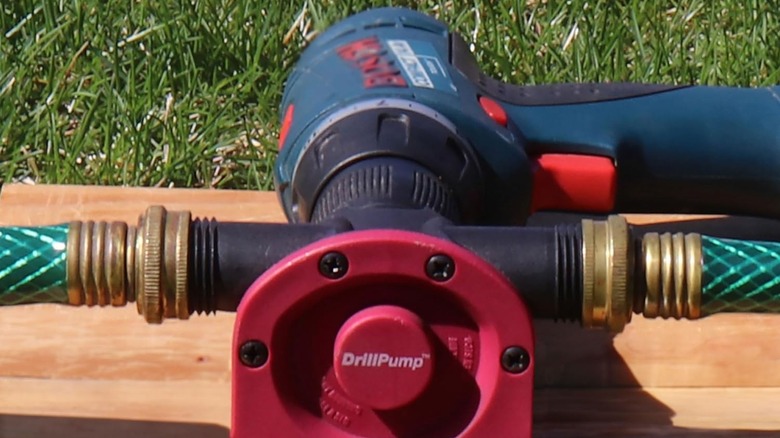
While this is a neat tool, drill-powered water pumps aren't meant to replace a constantly running pump or to clean out a large amount of water in one go. In those cases, you would want a submersible pump that can run continuously without monitoring. They also aren't made to transfer thousands of gallons of water at once. Instead, these are meant to help with short transfers, such as draining water out of something that's hard to reach with other tools, or moving liquid into a new container.
However, that doesn't necessarily make them a limited tool. You can use them for all sorts of transfers. On the surface, it's great at emptying pools, picking up large spills, or emptying out your above-ground pond that's attracting all types of wildlife if there's a place you need to make repairs. You can even use it to clean out your aquarium, draining the gross liquid before adding new, fresh water.
However, these drills have even more purposes. Because they use thin hoses that can fit into narrow places, they're also good for emptying out tricky areas, like clogged sinks. You can even use some drill pump attachments for non-water-related transfers as well, like moving oil to your boat or other vehicle without lifting a big container.
What to know before using a drill-powered water pump
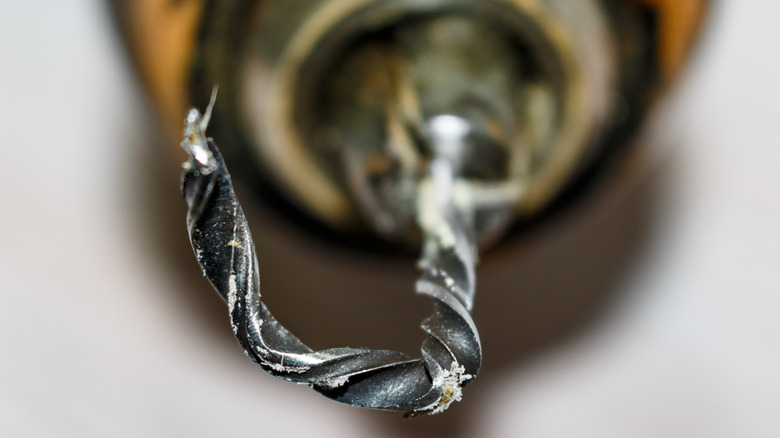
You need to be careful with these attachments, though. Drills are generally meant to be used in short bursts. That means, if you're using this to move a lot of liquid, you may need to take breaks to stop your drill from overheating. Additionally, it will add wear and tear to your tool, which may mean you need a replacement down the line. It could be worth buying a cheap drill to use specifically for this pump, so that if it does cause problems, it's not your nice, primary tool. In fact, there are a lot of things you can do with an inexpensive alternative, like a genius hack that makes pulling weeds faster, that you may not want to subject a nice tool to.
Another problem is that water and electricity don't mix. If you're going to be using this drill pump, you must be careful that all hoses are attached properly and that the ends are turned away from the drill and battery. Don't run it if it's dry, either. Pumps aren't meant to go a long time running without water to keep the parts cool, or it could get damaged.