

Gardener Uses Concrete Blocks To Make An Incredibly Easy-To-Build Garden Bench
We may receive a commission on purchases made from links.
A garden needs a comfortable spot to sit. It's a place where you can relax and admire the fruits of your labor. After all, there's nothing quite like taking in a gorgeous landscaping idea that you've brought to life. A thoughtfully placed bench can also become a focal point, inviting guests to slow down and enjoy the space. What better way to do this than by adding a conveniently placed garden bench? YouTuber gardener Jonathan Kuhn inspired us with his take on constructing an affordable DIY garden bench. It has an organic-industrial design and requires only two wood planks, a few wood scraps, and four cinder blocks, which serve as the sturdy base that holds the whole thing together.
A couple of interesting notes about the design: one, the demonstrator didn't need to use any additional tools outside of a caulk gun and saw for this project. Two, because the cinder blocks aren't actually glued to the wood planks, the bench can easily be taken apart and moved around if needed. Its layout is simple, and it has a rustic vibe that'll blend perfectly into a leafy backdrop or other classic garden design styles.
The straightforward design also translates into low building costs. For example, the two 2-by-10-by-8-foot wooden planks can be purchased from Home Depot for roughly $10 each, and the four 6-by-16-by-8-inch cinder blocks for $2 apiece. Construction adhesive is available on Amazon, such as this Loctite PL Premium Polyurethane Construction Adhesive, for around $7. The four scrap wood pieces can be created from one 2-by-4, which is available at Home Depot for about $4. It'll need to be cut to about 8 inches long to fit comfortably inside the hollow centers of the cinder blocks. If your bench will remain outdoors year-round, consider using pressure-treated lumber or naturally rot- and pest-resistant wood like cedar to better withstand the elements.
Steps for constructing wooden-concrete bench
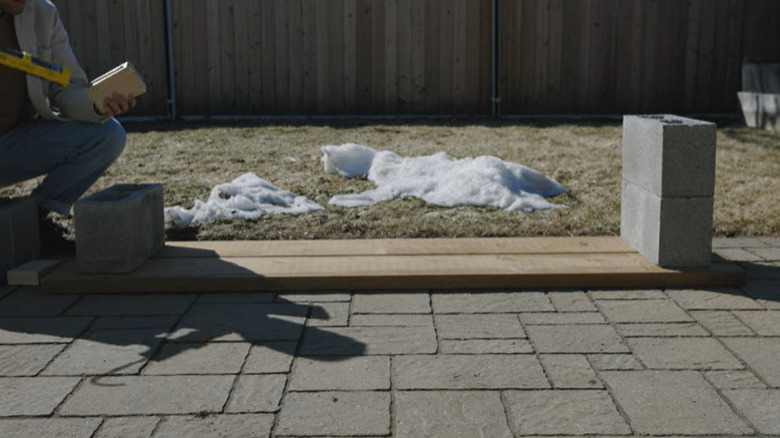
The wooden planks in the video were cut down to 6 feet, but you can keep them longer if you prefer. The first step of this DIY is determining the alignment of the concrete blocks with the wooden planks for the seating area. To do this, lay them on the ground face-down, running parallel to one another. Leave about ¾-inch of space between the two pieces. You don't want a big gap here, as it'll make the seating uncomfortable. Next, stack two cinder blocks lengthwise, one atop the other, onto one end of the planks.
Center the blocks horizontally, but space them about 3½ inches from the end. Repeat this step on the other end, using the other two blocks. Now, take a few minutes to examine the design layout, confirming that everything is aligned to your preference. This is where you'll use the cinder blocks as placement guides for the planks. Place a straight, clean line of adhesive along one side of a scrap wood piece, then set it inside the cinder block hole so it makes contact with the plank. Press it down firmly while ensuring the adhesive doesn't make contact with the block.
Then, glue another wood piece on top of that one. Repeat this step on the other end. Once the adhesive dries, you should be able to pull away the cinder blocks, leaving you with just the planks and the attached scrap pieces. Set the blocks in the bench's final destination and place the planks on top, positioned so the attached scrap pieces fit easily into the hollow centers.
Creative ways to customize the bench design
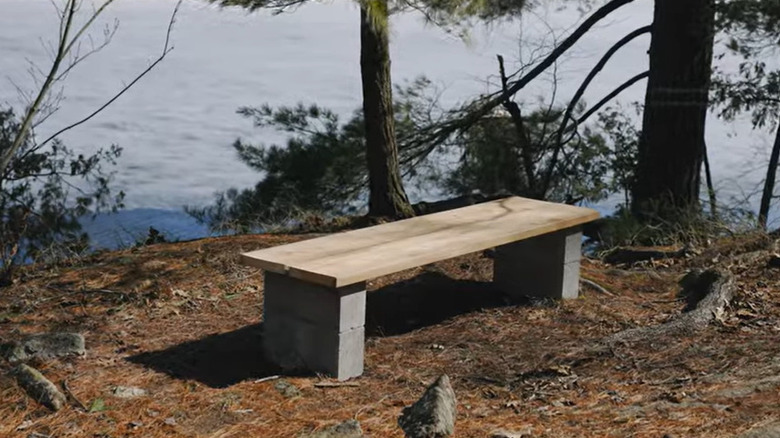
Now that you've got the bones of the bench design down, why not elevate the look by adding upgrades such as paint or stain, trying different cinder block setups, or rearranging the wood planks? Try applying a coat of paint to the cinder blocks, such as black, for a more modern look. Or try using orange tones on the wood planks, if you want to inspire a more vibrant theme in your garden area.
You can even incorporate more cinder blocks or another piece of wood into the back for a backrest, giving the design a little extra comfort — and transforming the simple bench into a cozy garden loveseat. Go even further by pairing the design with weather-resistant, cushioned seat pads on the bottom, and then you can even place pillows on the back.
And why let the area surrounding the bench stay empty? Add a couple of large planter pots to both sides of the bench (and beneath it), filling them with your favorite tiny succulents that can improve your health, focus, and mood while you're outside relaxing. If you really want to add a finishing touch and a little sparkle to your outdoor bench, include some mosaic tiles. Use them to create cool patterns along the bench's sides, or place them all around the cinder blocks for a shimmer that catches your eye as soon as the bench comes into view.