

What To Remove From Your Yard Or Garden To Keep Skunks Away
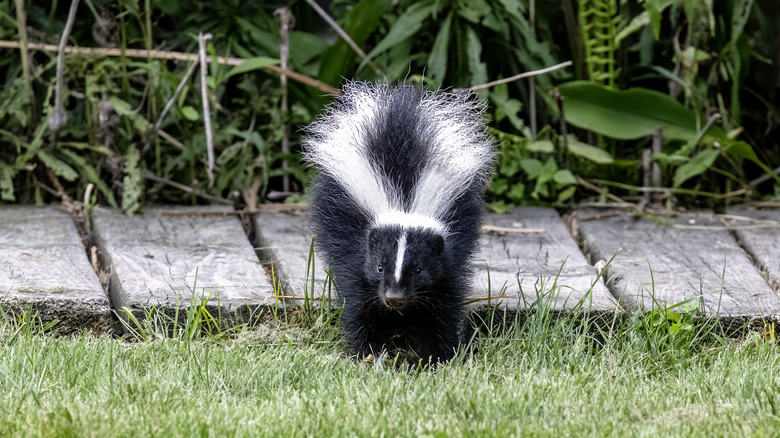
If you've tried all the different tricks to repel skunks from your yard and are still seeing the telltale signs, then ask yourself: what's drawing them there in the first place? Like any creature on Earth — humans included — skunks are drawn to the places that provide the things they need to survive. For example, they need shelter and a fresh water source. Just as importantly, they need food. If your yard has a bevy of snacks waiting to be discovered, then those are sure to pique the interest of any black-and-white bandits sniffing around your neighborhood. And if you happen to find shallow, scraped-up patches of lawn in your yard, that's one of the dead giveaways that there's a skunk patrolling your garden after dark.
As for what they might be digging for, it could be one of several things. Skunks eat both plants and animals in equal measure. They prefer insects whenever they can get them and will go to great lengths to root them out. In fact, during the summer and early autumn, insects make up the bulk of their diet. If your yard happens to have an abundance of things like earthworms and insect larvae — and especially grubs — then skunks will quite happily tear up your beautiful lawn in order to find them. And the thing is, since even healthy lawns can support large populations, it can be hard to know whether you have grubs in the lawn until skunks point them out for you.
How to remove skunks' food sources from your yard
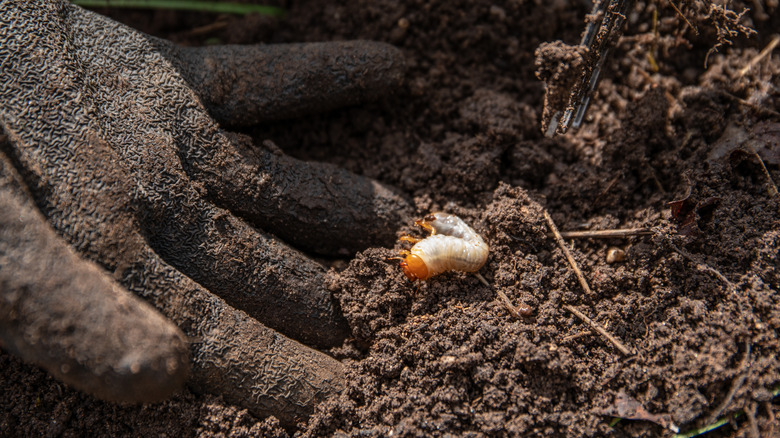
Beyond clearing up things like garbage and ensuring your pet's food is sealed away, you should also aim to address any underlying food sources in your garden. This is easier said than done, and once skunks begin ripping your grass to shreds, it can feel like too little, too late. With that being said, if you've had problems with skunks in the past — and you're hoping to avoid them in the future — there are things that you can do to save yourself future headaches.
For example, one of the ways you can combat grubs in your garden is by encouraging more birds to visit, which in turn will help to root out pests without tearing up your yard to do it. Alternatively, for a quicker — and, arguably, more effective — fix, you could harness the power of beneficial nematodes. These are especially effective against things like Japanese beetles, European chafers, and other grubs that skunks like to eat. And they're super easy to apply. They're often supplied in packs as a powder or gel, each containing millions of microscopic living organisms. They're free of chemicals, which is a bonus for environmentally mindful gardeners, and they're harmless to the other wildlife around your yard.
Once applied, nematodes work their way into the soil, effectively seeking and destroying any grub that they manage to find. It's not a one-time fix. In fact, for best results, you'll want to apply nematodes once during the spring and again in the autumn. It's usually best to mow your grass down to around two inches, ensure that the soil is nice and moist, and avoid applying them during the hottest part of the day.