

Take The Guess Work Out Of Planting Seeds With A Garden Tool That Makes Life Easier
We may receive a commission on purchases made from links.
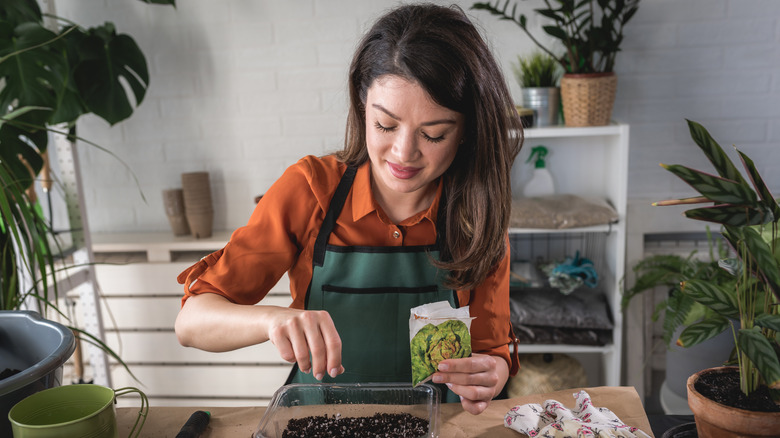
Seasoned gardeners understand there are some tricks to increasing seed germination and boosting their ability to grow into healthy, mature plants. From choosing the right seed-starting mix to painstakingly amending the soil for direct-sow varieties, plus the planning required to start seeds for a specific harvest time-frame, it can be downright exhausting! By the time you're actually ready to sow them, the desire to actually get it done may result in less-than-precise planting depths compared to what was outlined on the seed packet. However, the right planting hole measurements are crucial, since planting depth can influence everything from strong root development to whether a seed germinates at all. Even when you do try to sow seeds at the right level, how can you ensure that you're creating uniform, accurate measurements? That's where having a dibber (sometimes called a dibble) tool really comes in handy.
You can grab the Frossia Garden Dibber for under $3 at Walmart — a steal of a price compared to products from other retailers, which can be tens of dollars. Not to mention, those expensive alternatives are usually made with wood or metal materials that could rust or rot over time. In contrast, this cheaper, plastic model gets the job done and stands up to weather elements. Unlike some dibbers that consist of a short stake, this one has an ergonomic handle to make it easier to hold and push straight into the soil. This product also has measurement markings to take out the guesswork and ensure you plant seeds at the right depth. Because of its size, it can make holes for seedlings that are being sown outside or transplanted into bigger pots. You can even use it to plant certain bulb plants as well.
This garden dibber from Walmart plants seeds at the correct depth
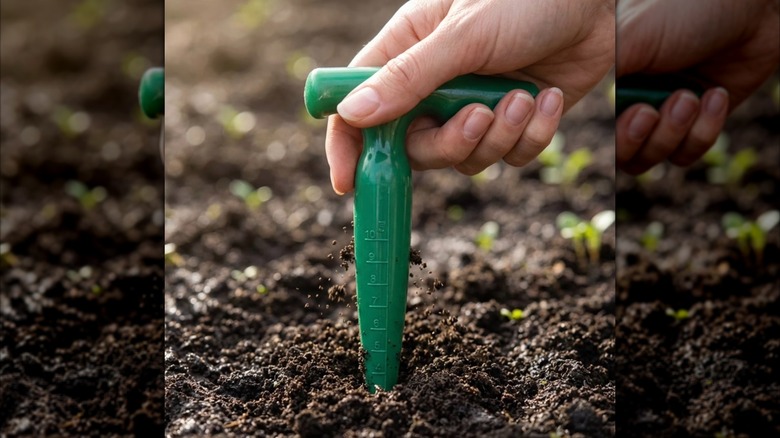
While this plastic garden dibber is good at creating consistent holes, you need to give it the right foundation to work properly. For seed-starting mix or potting mix, make sure the soil is evenly moist and lightly pressed down to remove any air pockets that seeds could slip into. Wet soil may also hold the shape of the holes better than dry soil, which could crumble or fall in on itself before you've even started planting. Similarly, you may have difficulty implementing this tool effectively if you try to insert it into untilled soil that has a rocky or heavy clay composition. For the best results and a healthier garden, fix compacted soil by loosening and amending it beforehand.
After that, using the dibber is easy; just push the pointed end into the soil until you reach the desired depth, then pull it up and move on to the next spot. Even though this dibber is made of plastic that won't rot or rust like other materials, leftover soil could harbor pests or bacteria that could transfer to nearby soil. For good measure, you should wash it before moving between seed trays, directly sowing seeds into the ground, or transplanting seedlings into your outdoor garden beds, especially if you've recently experienced pest damage or fungal diseases like powdery mildew.
It's important to note that this garden dibber has set measurement markers that may or may not align with the seed planting depths you need. This Darzheoy Bulb Planter Tool looks almost identical and is also available through Walmart. You can get it for the same price range, but it has both inches and centimeter markings, which could be useful, especially if you're ordering seeds from international gardening companies.