

Upcycle Broken Concrete To Create A Patio With A Cobblestone Look
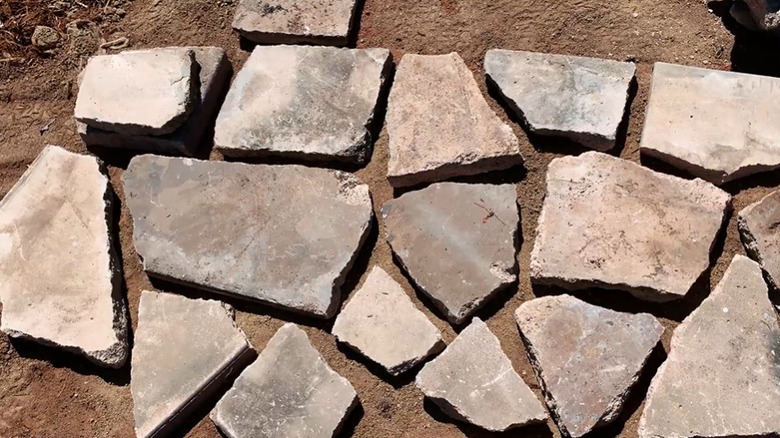
There are times when your favorite interior design show can spark trendy ideas for your own home decor. Other times, inspiration can come from unexpected places, like watching contractors haul slabs of broken concrete, also known as urbanite, away to a dumpster. Instead of cruising by, ask if you can haul a few pieces away yourself and upcycle them into a unique home patio. Not only does this give the discarded concrete new life, but it's also a wallet-friendly way to design a stylish patio. Rather than paying anywhere from 78 cents to well over $6 per paver for individual slabs, with a little effort, you can use the oddly shaped pieces from broken concrete into a paver pattern that'll add texture to your patio. This will give it a cobblestone look that'll make it feel like it's straight out of a 19th-century European courtyard.
Consider using decomposed granite, also known as DG in landscape spaces, to create a smooth, level surface for your urbanite pieces. DG is a commonly used landscaping material that'll work perfectly to fill the spaces around and beneath the pavers and level any uneven areas. DG also hardens when compacted, making it ideal for daily foot traffic and vehicles.
If you're having trouble sourcing urbanite, try contacting local construction and demolition recycling centers or landscape supply yards. Some of these companies may sell scrap pieces for low prices, which is usually per piece or by weight. Salvage yards or concrete contractors likewise may be willing to part with leftover demolished materials. For this DIY, you'll need gardening gloves, a hammer, a broom, and a shovel. You'll also need a cart for hauling the urbanite and the concrete.
Build a cobblestone-style patio with urbanite
Start by clearing out any grass and roots, if you haven't already. Laying a base directly on grass or topsoil will lead to an uneven patio and potential sinking later on. Make sure you put down a foundational layer of 6 inches of gravel first. Then, add an inch-thick layer of paver sand. Level out any uneven spots and make sure the base is compacted before laying your pavers, as this can also cause sinking or tilting over time. If you're laying your own base, make sure to compact the gravel and sand before adding the pavers.
To start laying the pavers, take your biggest urbanite pieces and use them to line the perimeter of your patio area. The largest pieces are the least flexible in placement, so it's easier to use these pieces on the edges first, then fill in the remaining spaces and any narrow gaps with the smaller pieces. As you work your way around the space, use your hammer to break down any larger pieces that may be needed to fill tightly packed areas. When laying the urbanite, keep consistent spacing of no more than a few inches between the pavers.
Make sure your large pavers along the border sit slightly away from the outer edge to maintain visual consistency. After laying the pavers, apply a thin layer of decomposed granite. You can use this material to level out any lopsided pavers. Just make sure it's spread evenly between all the pieces. For the best results, lightly mist your newly laid patio with a hose, and then compact it with a rubber mallet. You can even walk around the area a few times to ensure it feels solid underfoot. And just like that, you've built an outdoor patio idea that can revamp your space.
Creative design options for the broken urbanite patio design
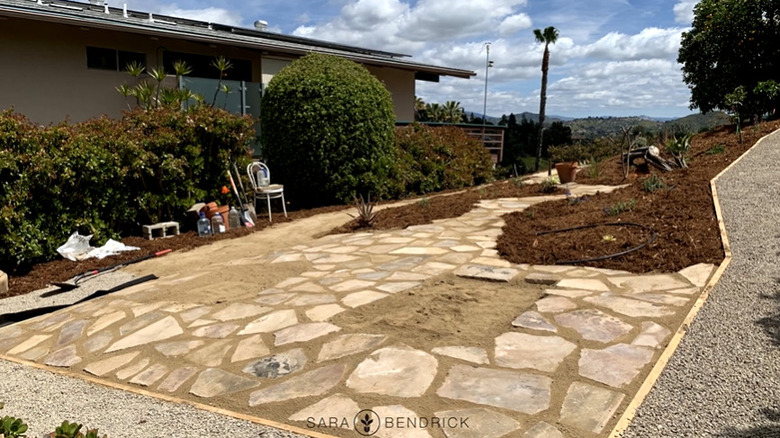
Once your pavers are laid, you'll be impressed with the organic, timeless look of your new cobblestone-style patio. However, you can always level up the idea by staining a few of the urbanite pieces for a bit more depth and uniqueness. For example, try adding a coat of concrete stain (which holds up better outdoors than paint) to the pavers, and place them sporadically throughout the patio. They'll work as perfect standout accents and can help break up the solid tone of the urbanite.
Or, if you have a few multi-toned or differently colored pieces, these work wonderfully to break up the visual monotony and add focal points to the patio. If you have enough of them, you can even construct a perimeter of pavers of one color. For gray-toned pavers, a contrasting hue like terracotta will stand out. This may require more work, but you can also experiment with whitewashing or limewashing techniques if you want to transition slightly toward a more Mediterranean feel, while still keeping the old-world charm of the design idea.
Putting down different patterns is another great way to add visual depth and interest. For example, try arranging them so they gradually get smaller toward the middle. You can also give the patio a more natural look by swapping out the decomposed granite completely and using pea gravel instead. It has natural brown and beige tones that'll blend in easily with almost any outdoor decor style. Finish off the final look by incorporating a few solar path lights around the patio perimeter for increased visibility after sundown and for a warm ambiance during those summertime soirees.