

Use This Bathroom Staple To Descale Your Pool Without Harsh Chemicals
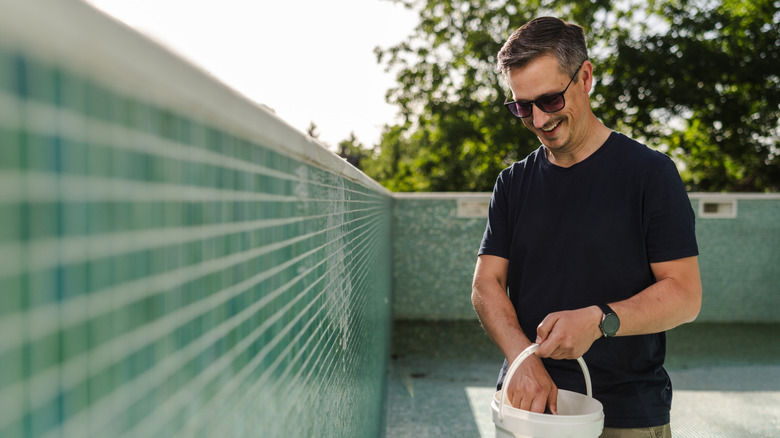
Have you started to notice a chalky white line that appears around the edge of your pool? While there could be a few reasons for this, one of the most common that pool owners deal with is a buildup of calcium. One type, calcium carbonate, is easier to stay on top of by cleaning it off the sides of the pool regularly. However, if left for too long, calcium carbonate can become much more difficult to remove. Don't worry, though; you might not need to call in the professionals just yet. You can actually use a simple bathroom staple to help scrub off that unsightly white residue: a pumice stone.
While you can buy special pumice stones made specifically for cleaning pools, you can also use a pumice stone you already have for cleaning your pool, reducing your waste and making better use of what is in your home. However, due to its rough, abrasive nature, there are many spots you should never clean with a pumice stone, and it can only be used on pools made from certain materials. Pools made from fiberglass, plastic, over-glazed tiles, or glass can become scratched and even be heavily damaged by abrasive brushes and pumice stones. But if you have a pool that is made of hardier materials such as tile, plaster, or concrete, then using a pumice stone is a great way to tackle that hardened build-up while enabling you to ditch the store-bought chemicals.
How to use a pumice stone to descale a pool
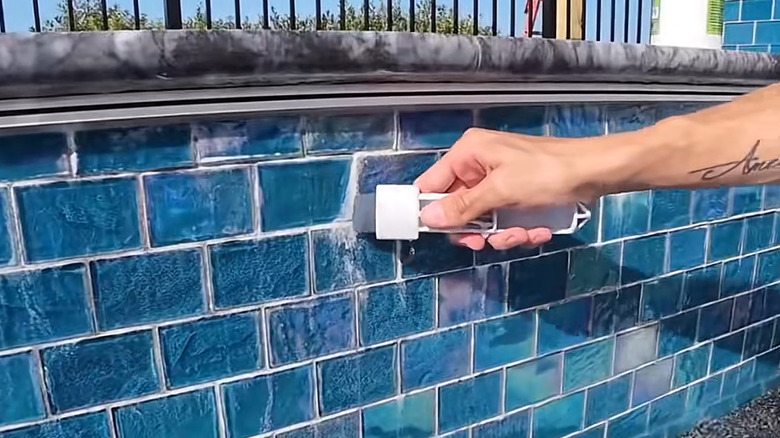
To get started on this at-home project, grab your pumice stone. If you are worried about adding any extra chemicals to your pool's water that could alter its makeup, then you may want to stick with an all-natural pumice stone rather than a synthetic one.
The key to using a pumice stone on your pool is to ensure that both the stone and the pool surface are wet at all times. This allows you to take advantage of the stone's natural rough texture without scratching up the surface. Nevertheless, because there are so many different materials that can potentially be damaged by a pumice stone, even when wet, it is generally advised to do a test on a small area of the pool to check if it scratches the surface at all.
Afterwards, you can then begin working your way around the pool, cleaning off the built-up calcium carbonate. Move the stone gently across the pool's surface in smooth, circular motions. Make sure to wear gloves to protect your hands while you do this, and remember to rinse off the stone occasionally to get rid of the particles that the stone will likely shed. After the white calcium residue has been removed, rinse off both the pool surface and the stone itself. If you notice that the shavings from the pumice stone have come off and settled in your pool, you can try vacuuming your pool or using an automated cleaner to pick these up.