

Here's What The Holes In A Wooden Clothespin Are Really For
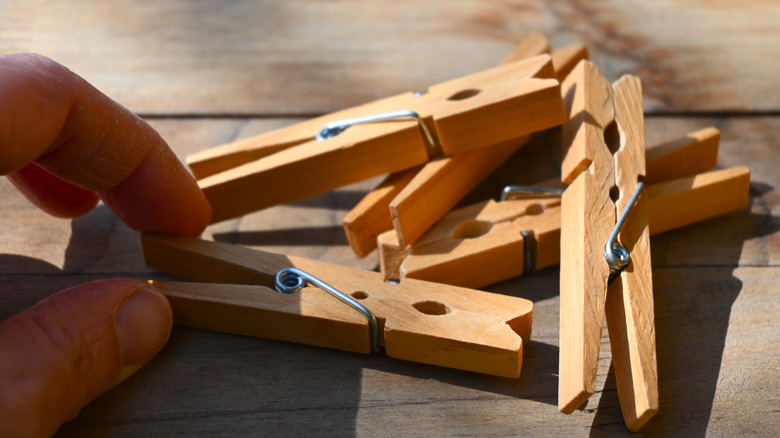
If you're on team air-dry-laundry, you're probably familiar with the wooden clothespins used to hang clothing on the line. (And even if you just use a dryer, you've probably still used such clothespins in a craft or two). But when's the last time you gave much thought to the design of a standard wooden clothespin? It has two wooden arms connected by a spring in the middle to create the tension that holds clothing on the line. Those arms create two holes when they come together, one small and one big. And that design was no mistake. There are some helpful pro tips for air-drying your laundry, but here's one you might not have considered before: Know how to utilize the holes in a wooden clothespin.
The small hole is where the clothespin should clasp onto the clothing line. Then the larger hole is where the clothespin grabs onto the item of clothing. This spreads the tension to different parts of the clothes pin, with one section holding onto the line and one section holding on to the clothes. This particular design was patented by David M. Smith in the 1800s and, with the exception of the coiled wire added in the center by Solon E. Moore, has remained relatively the same in over 150 years. So it would make sense that we don't really think about the design; that's just the way clothespins look. But it came with some very specific intentions, and if you've been out there hanging clothing on the line willy-nilly, it might be time to adjust your methods. While it might not offer complete solutions to all of your line-drying problems, it will certainly bring its own benefits.
Why you shouldn't overlook the two-hole design of a wooden clothespin
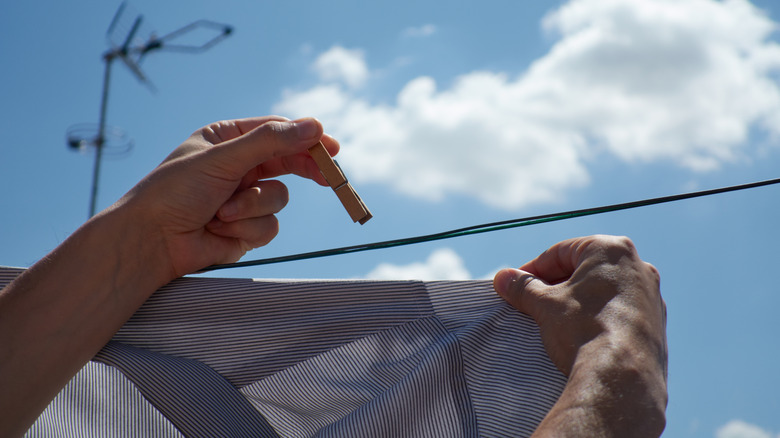
While there are plenty of benefits of adding a DIY clothesline to your yard, knowing how to use the clothespin on that line can optimize your how your clothes dry. The humble clothespin becomes a workhorse when used as intended. For starters, it helps everything stay on the line better. Attaching the small hole directly to the line allows it to hold more securely, so it's not competing with holding the clothing itself in place when it gets breezy. Using the larger hole to keep clothes further away from the center hinge creates tightness that holds the clothing in place better. No more watching your nightgown fly across the yard when a gust of wind kicks up.
Using the two holes for their own intended purposes also makes room for better airflow, which helps speed up drying time. Plus, you can stop folding your clothing over the line or snapping it directly across the line to avoid ruining their shape. The two-hole design optimally holds the clothing in place while leaving the least amount of impression, so you won't see much of those little marks where the clothespin was attached. To take optimal care of your wooden clothespins, don't leave them out on the line. Instead, bring them inside with the laundry so they are not constantly exposed to the elements. This will help them last longer and keep your laundry drying process moving along as smoothly as ever.