

What's The Difference Between Hard And Soft Water?
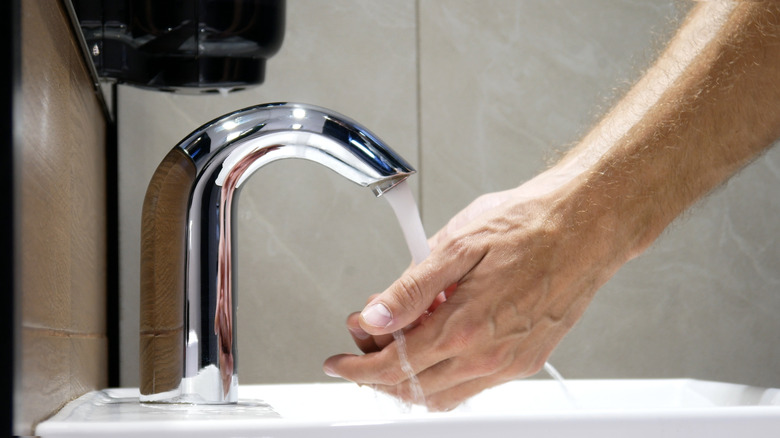
Have you ever heard of water being referred to as "hard" or "soft" before? While the terminology may sound strange, water hardness actually has nothing to do with its durability. Instead, what differentiates between hard and soft water is its mineral content. Hardness is a measure of water's concentration of dissolved calcium and magnesium — the higher the concentration, the harder the water is considered. Most of the time, these minerals come from groundwater, where water penetrates the soil and picks up minerals from dirt and rocks before entering the water supply. Because of this, hard water is commonly found throughout nature, while soft water often involves either direct rainfall or softening systems to help remove the minerals.
Although knowing the differences can help you tell hard water from soft water, identifying it in your home may be a bit tricky. That's where knowing the effects of water hardness around your home can come in handy, whether you judge its hardness by the signs you may see and experience, or by taking samples and performing objective tests.
How to tell if you have hard or soft water
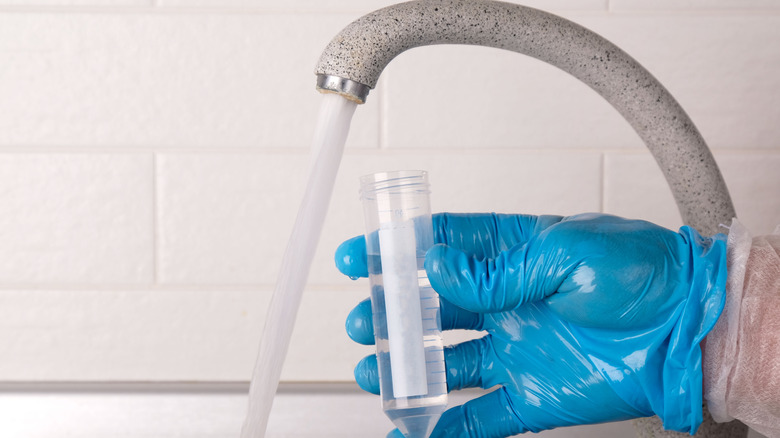
Sometimes, telling the difference between hard and soft water in your home is as simple as observing how the water feels. However, when you're dealing with moderate hardness conditions, symptoms may not provide enough information, and you may prefer more objective testing methods to decide the type of water in your home's pipes.
Hard and soft water both have very distinctive feels, especially when it comes down to how it interacts with your hair and skin. Due to its lack of minerals, soft water may feel smooth, slippery, or even slimy. It may also cause thicker lathering with soaps and detergents. While softer water is gentler, its texture may leave you feeling like you have leftover residue after showering. Hard water, on the other hand, may feel rougher with more visible signs. Hard water can damage your laundry, leave skin and hair feeling drier, and cause a white buildup of scale on surfaces like sinks and showers. If you're having trouble with hard water, you may wish to invest in a water softener system for your home.
You can also use a DIY water hardness test kit or have a water sample taken from your home professionally to test for hard water. There are three levels of hard water — moderately hard, hard, and very hard — beginning with 61 parts per million (ppm) and going up to over 180 parts per million. Soft water includes anything water with 60 or less parts per million.