

Why Electrical Tape Comes In Different Colors
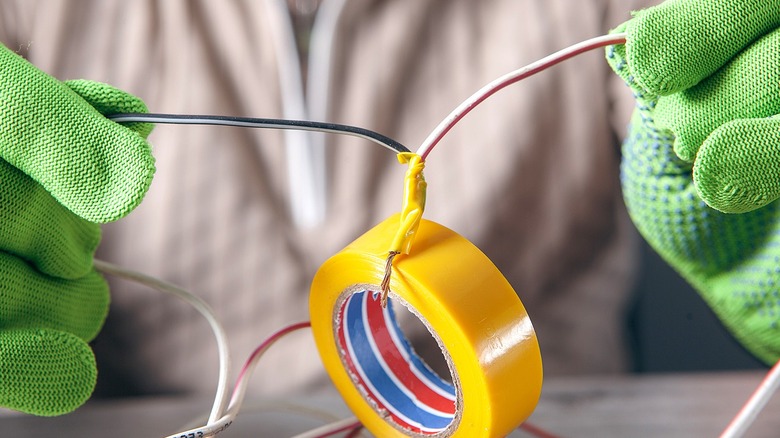
If you're like most people, chances are you just buy a roll of black or red tape at a hardware store, use it on a DIY project, and call it a day. However, that rainbow wall of tape you see at the hardware store isn't there for looks only. Electricians use different tape colors to mark conductors, circuits, and phases, and this helps them know what the function of an electrical wire is without tracing it to its origin. In other words, the colors work a little like labels. They help workers understand what they're looking at and, more importantly, stay safe when troubleshooting or performing repairs.
For a typical U.S. home, the most important colors are black, red, white, and green. Black-colored tape, for instance, is used to insulate electrical wires or cable connections. It can, however, also be used to mark low-voltage phase A in households. Red electrical tape, meanwhile, is used when electricians want to mark the low-voltage phase B wire in electrical circuits. As for the white and green electrical tapes, they're used to mark the earth ground wire and low-voltage neutral wire, respectively.
Also note that the above-mentioned colors are mostly used in 120/240-volt single-phase systems, which are what you'll find in residential buildings. However, there are 277/480-volt systems, too; these higher-voltage systems are used in commercial setups, like for a retail store. And while most homeowners will never come in contact with such systems, learning about the tape colors used in them is still worth it (in case you ever need to fix a broken outlet at your office or warehouse).
Practice caution no matter the electrical tape color
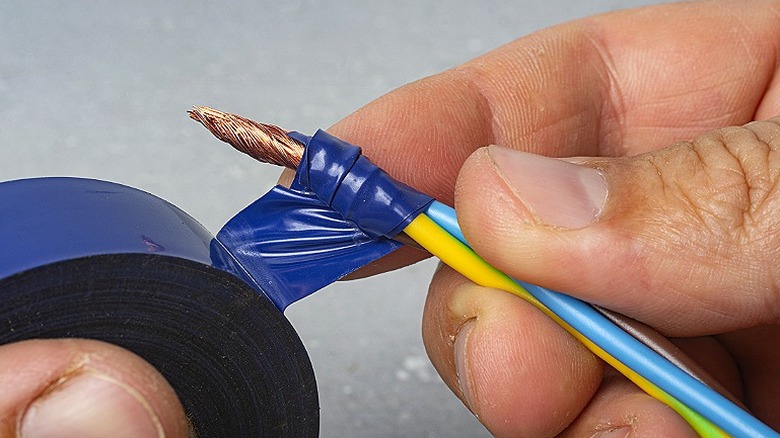
In case you even have to work on a 277/480-volt system, keep in mind that brown colored tape is used for phase A, orange tape is used for phase B, and yellow tape is used for phase C. You might sometimes also see green tape with a yellow stripe. That is used when electricians want to mark an isolated earth wire, which is used where the electrical conduit may come in contact with metallic components of the building structure.
It's also important to note here that electrical tape colors shouldn't be treated like unquestionable instructions. For instance, a previous worker or homeowner could've used whatever tape they had available. And so, whenever you're working on a DIY electrical project, it's much better and safer to switch off the appropriate breaker instead of just assuming it's safe to touch a wire because it has white-colored tape on it.
Use a non-contact voltage tester before touching any wire, even if the circuit is off and even if it has appropriate colored tape on it. Also, make sure you're aware of the electrical home projects you shouldn't attempt unless you're a professional.
On that note, keep in mind that color is only part of the electrical-tape equation when choosing a tape to use. Not all electrical tapes are created equal. Some less expensive electrical tapes lack the voltage rating and temperature resistance of professional-grade tape, so even if you buy the correct color, it won't serve you well. Such tapes can crack, peel, or fail over time. Even worse? These tapes that are lower in quality can become hidden fire hazards in your house.