

What Do Homeowner's Insurance Inspections Look For?

As a first-time homeowner, you may be surprised when your insurance company calls to let you know your house is due for an inspection. Even if your maintenance is up to date and up to code, the possibility of losing your homeowner's insurance may have you spiraling. After all, if you've taken on a mortgage, your lender can penalize you for leaving your home uninsured. Worse, you must foot the rebuilding expenses in their entirety if you lose your home in a natural disaster.
To ace a home inspection and successfully renew your policy, you may want to be prepared for what a homeowner's insurance inspection entails. The short of it is that insurance companies evaluate your property's overall condition to ensure that the underwritten risk is properly accounted for. Basically, if any part of your property is damaged or due for replacement (think moisture, roofing, or fire issues), the insurance company will factor those into the premiums or coverage.
Generally, if they encounter any major concerns, they may raise the premiums or demand necessary changes within the stipulated time. Failing that, they may refuse to renew or cancel the policy. As for inspection specifics, know they may vary widely across insurance companies and your home's vintage, value, and overall condition.
You can expect a drive-by or a self-inspection

Every insurance company is different, with some being stricter than others. For a relatively new build, they may simply conduct a drive-by inspection, focusing on the exterior. This means they may scan for any visible damage on the roof, siding, soffit, fascia, windows, driveways, and sidewalks. They may also look into the safety and maintenance of backyard features, such as swimming pools, fences, decks, patios, trampolines, chimneys, and the yard.
Across locations — for instance, in Utah — they may check whether you've built handrails on your stoop. Any overgrown tree limbs that may pose a danger to the roof or the home's structure are also accounted for. Usually, you don't have to be there or be notified about such inspections, and inspectors will not enter the premises.
Some insurers are increasingly relying on satellite and drone images to inspect a home's exterior since aerial surveys are becoming cheaper. This holds especially for homes highly susceptible to natural hazards, especially storms. However, this practice raises privacy concerns andproduces unreliable results compared to physical inspections. Some insurance companies, like Pemco Insurance, may allow homeowners to conduct self-inspections. They list their requirements for photographic evidence, which can be uploaded via an app or the company's portal, dispensing with the need for a physical visit altogether.
A four-point or full inspection isn't off the table
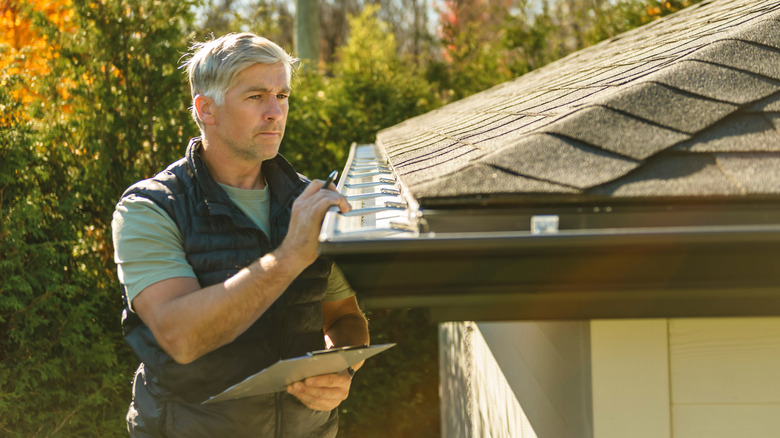
If your home is older and hasn't been inspected in a few years, or is of high value, insurance companies may conduct a four-point inspection instead. Apart from the roof, your HVAC, plumbing, and electrical systems are the four things home inspectors look for first during a visit. To avoid dealing with unsavory consequences, be sure to scan the roof and plumbing for leaks or corrosion, as well as any exposed wires. You may also want to stay updated on their useful life, as your insurer will want to prepare for any expected repairs or replacements down the road.
Some take it a step further and turn the whole affair into a full-blown inspection. This mostly happens when you have significantly remodeled or updated your home. New constructions that are applying for an insurance policy for the first time may also be treated similarly. In addition to the four points, they might review your home's safety features, such as carbon monoxide detectors and smoke alarms. They may also check the locks on your doors and windows to see if they seal shut.
Water damage and cracks on the walls, ceilings, attics, flooring, and crawl spaces are all fair game. Don't be surprised if they take multiple photographs or videos of every unit inside and outside your house. If the insurance company contracts these services out to local inspection companies, they may let you know in advance how they'll be examining your home.