

Keep Gravel Debris-Free Using This Highly-Rated Harbor Freight Tool
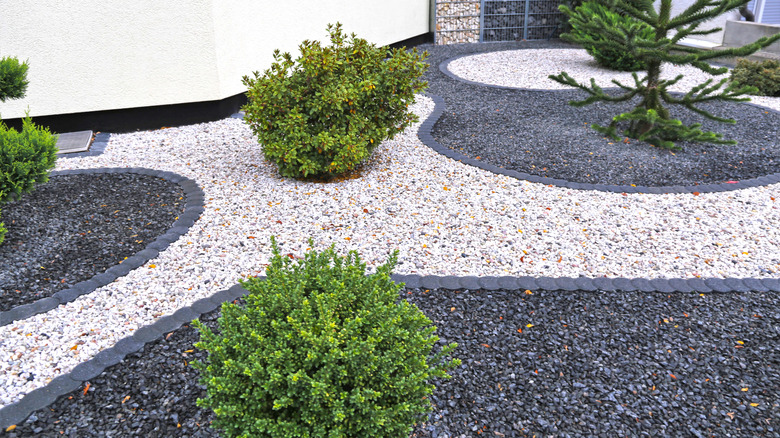
Many home and garden enthusiasts rely on a limited number of tools to get most jobs done. That's why if you've ever been advised to use the right tool for the job, you already know that sometimes that just means using a regular old hammer or saw. Instead of buying a fancy new tool designed for a chore so specific that it can't be used for anything else, sometimes you just need to reach for one you already have. That's why instead of buying a stone rake, which is the best specific tool for raking gravel walkways, you can keep the gravel spaces in your yard debris-free using a regular bow rake.
Although you can purchase a more expensive stone rake if you want, Harbor Freight has a 62-inch One Stop Gardens Bow Rake with 4.5 stars from 920 reviews for $19.99, at the time of writing. That means you can save about $50 if you skip the expensive stone rake.
The bow rake is also called a garden rake, an iron rake, or a level-head rake. Useful for many different yard chores to keep yards pristine, it has a flat, level head on one side, and short, parallel tines on the other. The rigid tines point down at a right angle, perfect for grabbing debris when you rake lightly. The tines are also sharp and strong enough to pull loose gravel back onto the hardscaped surface. The tines are also easier to control than the flexible tines on lawn and leaf rakes.
More about using bow rakes for gravel
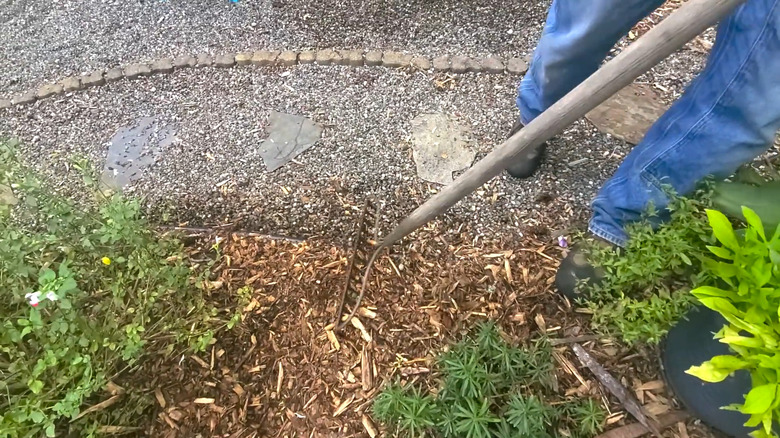
In 2026, gravel is the garden trend that promotes smart water usage, and if you're considering swapping out parts of your yard with gravel paths and flower beds, a bow rake is a good all-around tool to have. Not just cheaper, bow rakes are also typically narrower and more lightweight than landscaping rakes, making them easier to wield. The bow rake was designed for spreading and smoothing heavy landscape materials like dirt, gravel, and mulch. The material is pushed and pulled with the tines, then smoothed out with the back of the rake, which is the flat part.
While the tines on a leaf rake are the part that's flexible, on a bow rake, it's the bowed metal braces that flex under heavy loads. If you're raking gravel out of the grass, you can turn the head of a bow rake slightly at an angle to get to the gravel and rake it back to your path, driveway, or patio. Then, once you have it on the path, you can rake the debris out of the gravel into a pile for disposal. To finish it, flip the bow rake over, and level it with the back side of the rake head. For the small leaves and tiny bits of debris that no rake can get out of gravel, consider using a leaf blower at low speed, using just the right angle to lift the debris without moving the gravel.