

How To Repel Moths With An Overlooked Solution From Your Herb Garden
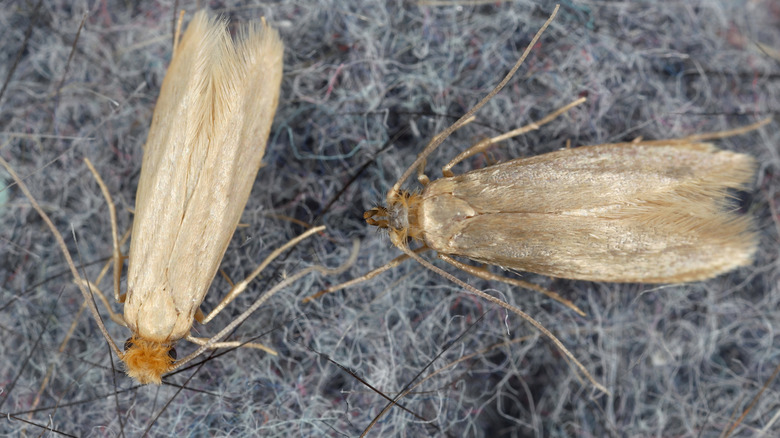
You know you've got a problem when your closet smells more like a dusty attic than freshly-washed clothes. Moths aren't anyone's idea of a good time, but there may be a much nicer-smelling alternative to mothballs. Thyme, usually associated with roast potatoes or a bowl of soup, actually contains aromatic compounds such as thymol and carvacrol which are thought to interfere with the behavior of some moth species.
In particular, one study published in Scientific Reports tested thyme essential oil and several of its main compounds on two pest moth species. Researchers found that thyme oil disrupted the male moths' response to female pheromones, while thymol reduced the number successfully reaching the pheromone source. So, there is a very real and scientific reason that thyme could be the solution you're looking for. The study didn't examine clothes moths, but it's still an easy, low-cost idea to experiment with.
There is much anecdotal evidence online to suggest dried thyme can make for good moth repellent, and there are other common herbs that can be used to deter moths. To try it yourself, place some dried thyme in sachets in drawers, closets, or containers. Alternatively, mix some thyme essential oil with water in a spray bottle to spray in moth-prone areas, or drop it onto cotton balls or dryer balls to keep it with your clothes during laundry day.
Thyme may be better suited to prevention than moth removal

Note that there's a big distinction between repelling moths from your home and killing moths that have already moved in. While the aroma of thyme and other herbs or essential oils may make an area less appealing to moths, it cannot reliably kill the eggs and larvae hidden among clothing fibers. Those are responsible for the mysterious little holes appearing in your clothes, as the larvae feed on animal fibers containing keratin – including wool, fur, feathers, and silk.
So, if you suspect moths may have gotten into your belongings, skip the thyme sachet and instead inspect your vulnerable items carefully. University of Kentucky entomologists recommend laundering or dry-cleaning affected clothing and vacuuming all your closets, carpets and baseboards. And there's another caveat to bear in mind – repelling moths from your garden isn't actually recommended. Outdoor moths are a very different matter from clothes moths and many species play useful roles in ecosystems, including as pollinators or as food for other animals. Keep this thyme trick focused indoors, where it may help discourage the moths that set their sights on having your clothes for lunch.