

The Drought-Tolerant, Old-Fashioned Flower Gardeners Have Forgotten
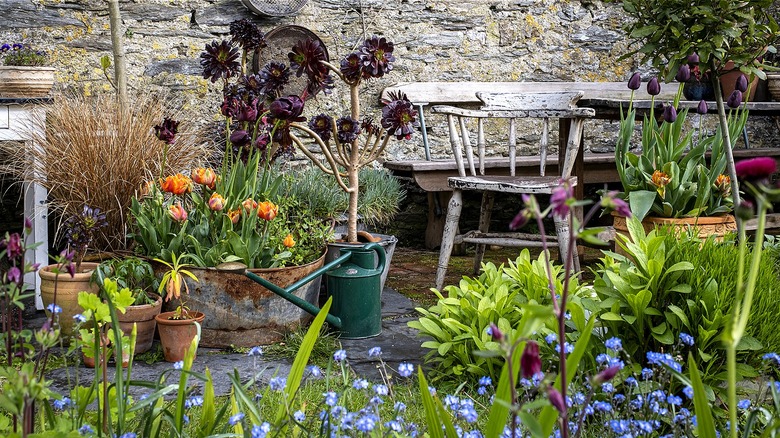
It's hard to know why certain flowers fall out of favor. Flowers lose popularity when they become invasive, vulnerable to diseases, or are simply a pain to deal with in the garden. None of those issues, however, seem to apply to a stunning red perennial that's not only drought tolerant, but also rabbit and deer resistant. The fact that it was awarded the Royal Horticultural Society's Award of Garden Merit in 1993 belies the idea that the plant is problematic. This flowering plant is the Maltese cross (Silene chalcedonica), which has been around for centuries and even grows at George Washington's Mount Vernon estate.
The Mount Vernon web site notes that botanist John Bartram offered this plant in a 1770 catalog. And George Washington wasn't the only Founding Father to plant it either; Thomas Jefferson grew it at Monticello. One contemporary gardener, meanwhile, recalls seeing ubiquitous Maltese cross in the 1960s and '70s, but today, it seems to have faded in popularity.
If you're looking for a tall and cold-hardy plant that does well in dry conditions once established, Maltese cross has a lot to offer, starting with it being among the red flowers that will look perfect in your flower garden. It attracts all kinds of pollinators, including hummingbirds, and lives for a long time.
Maltese cross brings brilliant color to gardens
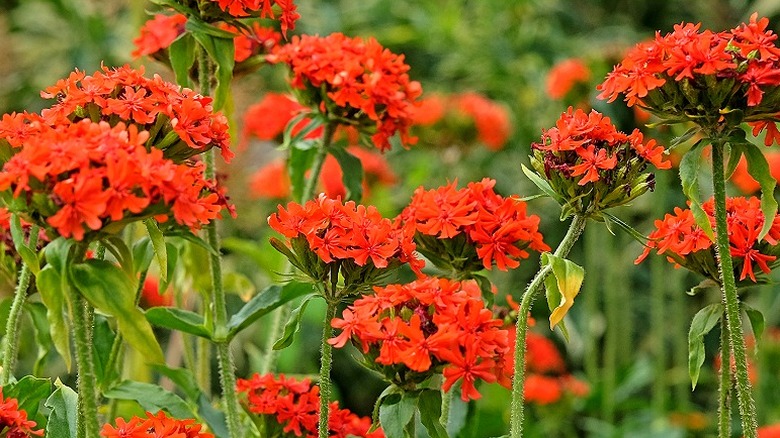
Maltese cross is quite cold hardy, growing in USDA zones 3 to 9. Plant it in spring from seed in well-draining sandy or loamy soil in a spot with full sun. It requires light for germination, which you can expect to happen within two weeks, followed by a medium rate of growth.
You may have to wait a bit for Maltese cross to become established to attain its drought tolerance. For the first several months, you should water the plant regularly. Though it can take dry spells, it appreciates being watered during drier times. To help it retain moisture, add mulch around the plant. Maltese cross can function without fertilizer, but consider amending the soil with compost in the spring. Prune at the end of the season by cutting it back in the fall to half its height.
The herbaceous perennial is among the self-seeding flowers to plant for continuous color in your garden year after year. If you let Maltese cross go to seed, you can collect the seeds to grow more gorgeous red flowers the following year, but you can also deadhead flowers to keep the plant from dropping its seeds and spreading. Also, collecting seeds isn't the only way to propagate Maltese cross; you could also take basal cuttings or divide its rhizomes. The plant isn't vulnerable to diseases, though aphids and slugs may visit.
Since Maltese cross grows to a minimum 20 inches and can reach up to 40 inches, you may need to stake it, especially if you garden in a windy locale. Expect the plant's brilliant, clustered red blooms in the summer. (Discover more flowers perfect for a cut flower garden.)