

What Is The Minimum Distance Between A Stovetop And A Microwave?
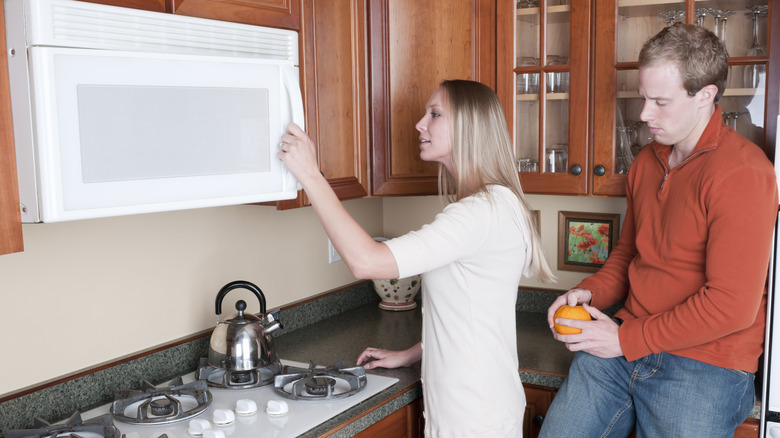
One of the best ways to use vertical space in a small kitchen is to put your microwave over the range. It lets you keep a microwave without sacrificing counter space you don't really have to spare. This is a great trick if you don't have much available counterspace. You do need to think about the logistics, though, because you're putting a fairly bulky, heavy appliance directly above boiling pots, spitting pans, hot burners, and the occasional unintended flambé. So it's important that the microwave is a safe distance above that cooking surface, but still at a comfortable height to reach into and remove burning-hot food without spilling it or hurting yourself.
According to the National Kitchen and Bathroom Association (NKBA), the bottom of a wall-mounted appliance should be 54 inches off the floor. And, given that a standard counter is 36 inches from the floor, that leaves a space of 18 inches between the cooktop and the bottom of the microwave. But you have to consider whether you are able to comfortably lift food in and out of a microwave at that height. The NKBA also suggests that the bottom of the microwave be around 3 inches below your shoulder for safe, comfortable use. But manufacturers' installation instructions specify different clearances depending on the microwave and range, and those instructions should always take precedence. GE, for example, says that its minimum mounting height for over-the-range microwaves is 13 inches between the cooking surface and the bottom of the microwave mounted above.
What happens if you install a microwave at less than the minimum clearance?
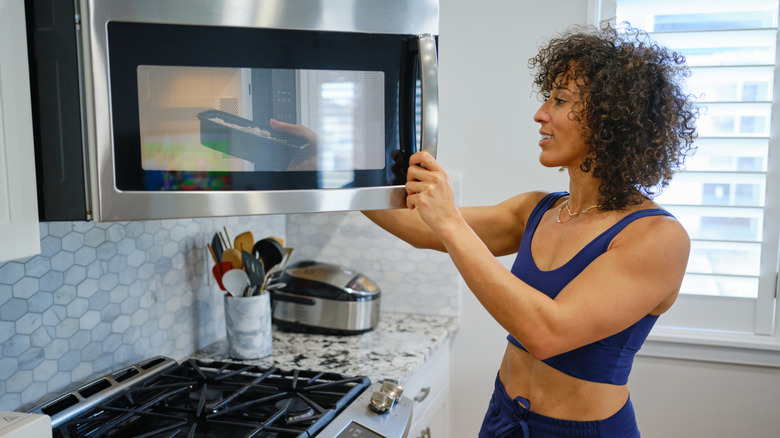
Even though some people think an over the range microwave makes your kitchen look dated, installed properly, they are invaluable for small space cooking. But proper placement is essential. It is definitely not advisable to install a microwave above a range with less clearance than the minimum recommended by the microwave manufacturer. You'll also need to double-check minimum clearance requirements depending on whether you have a gas burner or an electric one. Gas ranges can create different heat and clearance concerns than electric or induction cooktops, so check the installation requirements for both the microwave and the cooking appliance before mounting anything. Some manufacturers like GE recommend against installing an over-the-range microwave if the cooktop has a combined BTU of 60,000 or more.
You will end up shortening the lifespan of the microwave and you could potentially cause a fire as it is a significant safety hazard if there's not enough room between the cooktop and the bottom of the microwave. Plus, in terms of daily use, if the microwave is mounted too close to the burners then the cooktop becomes more challenging to use. You may not be able to comfortably get larger pans, such as a stockpot, on and off the cooktop. If you just can't make the logistics work, you may need to consider a smaller appliance that can replace your microwave altogether.
How to make sure the mounting height is best for your kitchen
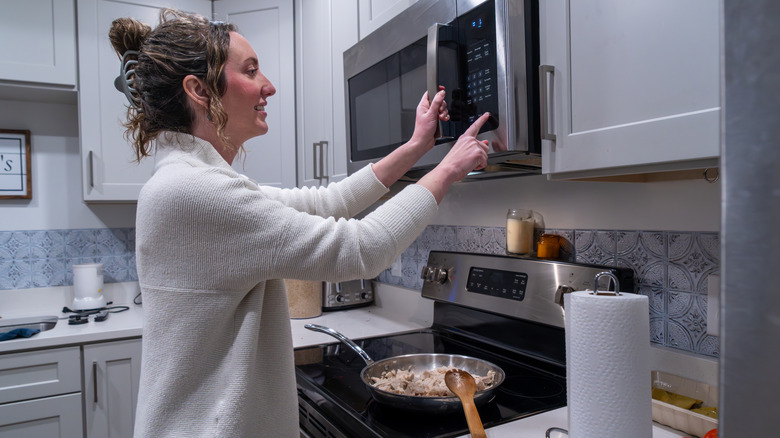
Before you go and buy a microwave, figure out how much space you've actually got to make sure you choose a microwave of the right size. If you find you don't have enough space because the cabinet sits too low to allow proper clearance, you can then consider a low-profile microwave, which is usually only about 10 inches tall instead of the standard 17. If kitchen counter space is tight, sacrificing a few inches of the height of the microwave is a good option even though it may limit the size of microwavable containers you can fit inside it.
Next, choose the microwave you want and check its required mounting clearance, since the exact distance varies by model and manufacturer. To get a feel of just how much room you'll have for cooking, tape a piece of scrap cardboard into the space the microwave will eventually inhabit. It's much easier to get a clear idea of whether you'll have enough space to work comfortably if you have a visual aid rather than just trying to eyeball it.
Take the tallest pan that you use most often, such as your Dutch oven or stock pot. Put it on the stove beneath the cardboard mock-up and see whether you can lift the lid, stir, and move the pot comfortably without hitting the cardboard. If you don't want a low-profile microwave and are still having trouble working comfortably in the space between the cooktop and the microwave bottom (even though it meets minimum clearance requirements), you may need to speak to a contractor about reconfiguring the cabinets to give you more space.