

Every House Had One In The '40s — Now It's The Retro Cleaning Tool To Add To Collage Walls
We may receive a commission on purchases made from links.
Before electric washing machines took over, the washboard was a common cleaning tool found in many U.S. households. Washboards typically had a wooden frame and corrugated metal face, where users would manually scrub dirt out from clothing or linens. By the 1950s, when washing machines became more accessible, consumers were able to pivot away from the washboard. However, these hand tools were made to last, and vintage washboards can still be found secondhand, perfect for adding to a collage or gallery wall.
The structure of a vintage washboard makes it one of the more beautiful pieces of Americana that you can hang on a wall. The wood surround looks like a frame, and the ribbed metal center reflects light in a way that adds warmth to a room.
That said, washboards are still used today to clean clothes, and even to make music. These manual cleaning boards may have become less common, but they never really went away. Of course, they're also used today as home décor. In 2020, Smithsonian Magazine did a story on the Columbus Washboard Company and the popularity of washboards, with an article titled "Only One Factory in the United States Still Makes Washboards, and They Are Flying Off of Shelves."
How to find a vintage washboard today
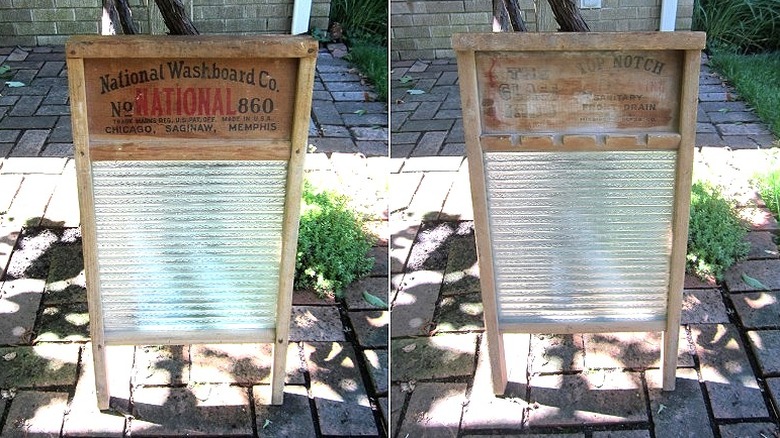
Some of the most popular antique washboards were made by the National Washboard Company (of Chicago, Saginaw, and Memphis), though other brands still offer plenty to like about their boards. You can typically snag a vintage washboard today for not too much money, though plenty are above $50, too. However, budgeting for about $15 to $40 apiece should give you a good selection to choose from, at antique shops and places like eBay and Etsy. At yard sales, you can try haggling for an even lower price.
Galvanized zinc was a common surface for the washboards, but you may find ones made from brass (like the "Brass King"), giving it a warmer tone against the wood panels. You may also find glass-faced washboards, which were typically made for humid locales to prevent metal corrosion. According to the National Parks Service, there were even vintage washboards made entirely of carved wood, but these were not as durable, and few are found today. (The National Museum of American History has one example in its collections, circa 1800-1900.)
Alternatively, you can get a new washboard that looks completely vintage. In its 2020 report on the Columbus Washboard Company (as the last U.S. company to make washboards), Smithsonian Magazine reported the company's typical annual sales were 80,000 units. Further, the company shared that about 20% of the washboards it sold were used for decorative purposes.
What to do with a vintage washboard
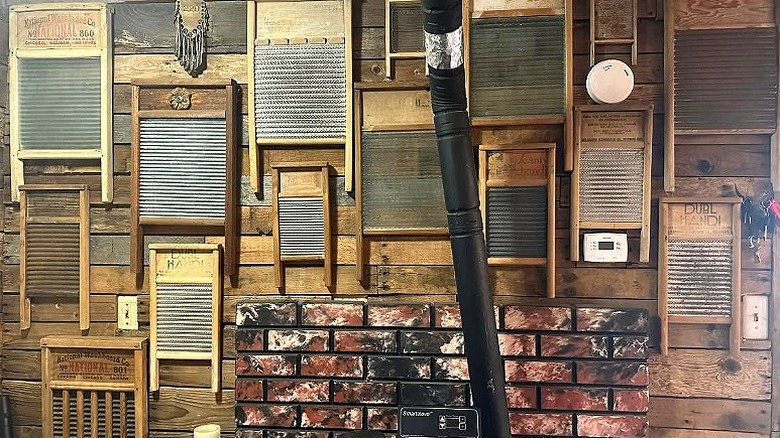
With National Washboard Company boards, you'll find stamped names, such as Zinc King, Brass King, and Top Notch, often in block lettering. Some will also include the brand's slogan: "Do not rub hard/ The board will do the work." The slogan and the interesting lettering variation is why washboards like these can work together grouped as a collage.
You can hang washboards anywhere in a home. For instance, if you're thinking about a laundry room remodel, a wall of washboards is a cheap yet durable way to style it. The boards also add charm to a mudroom or back hallway. They're easy to hang, too, since they are at most a few pounds. Usually all you need is a single nail or a heavy-duty adhesive strip. If yours has a handle cutout at the top, hang it from that instead of adding hardware to the frame.
They also mix well with other flat, unframed objects, like vintage felt pennants or old hand-painted signs. That gives you a range of shapes without fighting over color. Also, though, if your find is a little too beat up to hang up, there are plenty of other uses for this retro cleaning tool you can try as well, like a plate rack, a drying rack, or shelf back.