

Do Old Cinder Blocks Contain Asbestos?
Cinder blocks have been around for well over 100 years. The name comes from the original use of coal ash (cinders) in their construction. Their lightweight made them easy to use, but they had limited strength. By the early 1960s, they were largely being replaced by what are technically called concrete masonry units (CMUs). These are the same shape, and so the name stuck, although modern cinder blocks support a great deal more weight. Fortunately, asbestos is no longer used in their manufacture, but the material was present in all kinds of building products until as late as the 1980s. So the simple answer is that yes, old cinder blocks are likely to contain asbestos.
It's impossible to say exactly when the use of asbestos in cinder blocks stopped. Surprisingly, there is still no complete ban on asbestos in the US. That said, a combination of stricter regulations and awareness of the health risks means it has largely been phased out. However, old cinder blocks are not the only potential problem. Asbestos was also present in the mortar that bonded cinder blocks together, even if the blocks themselves didn't contain it.
What to do if you suspect the cinder blocks in your home contain asbestos
Asbestos produces almost invisible fibers known to cause lung cancer and other severe health problems. The trouble usually begins when these particles are inhaled. However, it may not be necessary to remove all the asbestos from your home. If the cinder blocks are undamaged, it is usually safest to leave them alone.
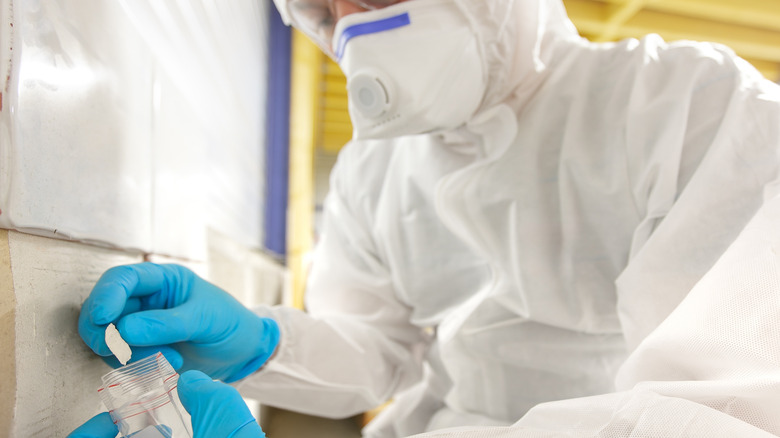
The situation changes if you spot cracks or chips or you want to do renovation work. Unfortunately, it's impossible to tell whether cinder blocks contain asbestos just by looking at them, unless there's a label. That's unlikely, so any that you suspect need to be tested by experts. If the results are positive, it is legal to remove the old cinder blocks yourself, but it is strongly recommended that you don't. Even with appropriate protective clothing, airborne particles will linger if not properly cleared, posing a health risk to the whole family. Calling in a professional is the safest and most sensible course of action. They will also know how to dispose of the hazardous waste, which can only be done at sites that hold a proper permit.
If your home was built since the year 2000, it is extremely unlikely the cinder blocks contain asbestos. If you own a period property, or anything built until the end of the 20th century, there are a number of places asbestos could be lurking in your home. Getting it checked professionally before you do any work is a very good idea.