

Be Warned: This Berry Bush Is Like A Magnet For Ticks In Your Yard
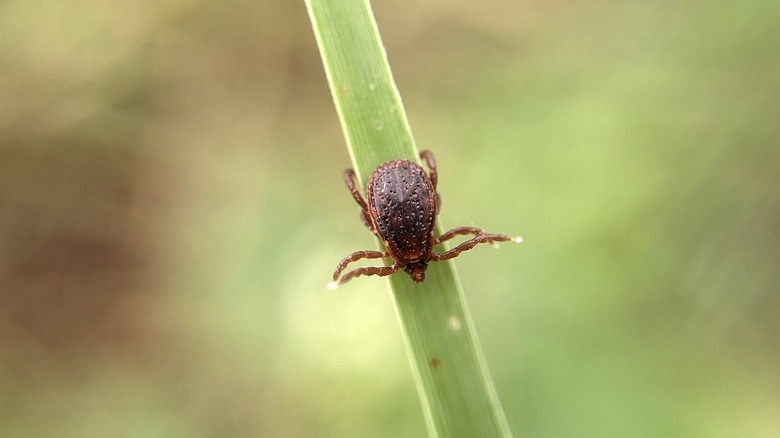
You may think you're only exposed to ticks — and the diseases they can carry – when out hiking in the woods or mountains. However, one recent study, published in the journal Ticks and Tick-Bourne Diseases, has found that ticks may be more prevalent in other areas, including urban areas, which have a specific type of shrub: wineberry (Rubus phoenicolasius), also known as wine raspberry.
Wineberry is an invasive shrub in the United States which grows dense foliage. That thick growth could be what causes the increase in tick populations for a couple of different reasons. Firstly, ticks prefer humid conditions with relatively stable temperatures, which is why they can often be found in places like creek beds and leaf piles. Given this, the thicket of a wineberry bush is a perfect environment for them to thrive in without drying out.
In addition, the plant's foliage is attractive to small mammals who look to it as a place to hide from predators. These mammals mean the ticks living in the wineberry bushes have more options for food, allowing them to thrive even more. Therefore, the presence of a wine raspberry plant could be one of the things luring ticks to your yard. So, it's important to learn how to identify an invasive plant like the wineberry and how you might remove it (and the ticks living in it) from your property.
Identifying and removing wineberry bushes
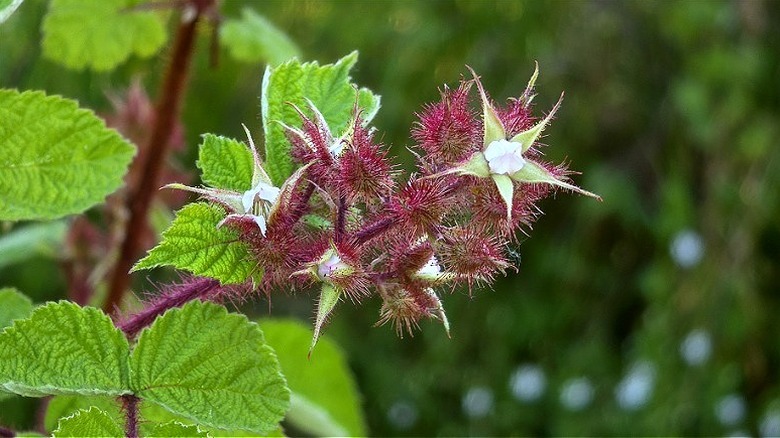
Wine raspberry bushes often prefer moist soil, such as areas near a ditch or a pond. This invasive plant also thrives in full sunlight, so it may take off in spots which benefit from plenty of sun. Don't rule out the shadier parts of your property, however, as wineberry plants can be shade tolerant if needed.
To correctly identify this plant, look out for lime-green leaves in three sections, each one in the shape of a heart. In addition, the bottom of wineberry leaves have a distinctive silvery color which contrasts with the green on top, making them easier to identify.
If you spot wineberry bushes on your property, the first thing you should do is harvest the berries. While this may sound strange, consuming the washed berries of this plant prevents the seeds from spreading and increasing the plant's numbers. Once you've removed as many berries as possible, put on some gloves to protect yourself from the small, fuzzy spines along the plant's stems and then pull up the plant by its roots.
Wineberry plants often spread by a process called "tip rooting," which is when its stems reach the ground and form their own roots. So, when pulling up the plant, be prepared to keep going, pulling up each rooted stem as you go.
If you have limited mobility or are short on time, another potentially effective way to get rid of this invasive plant and keep ticks out of your yard is to simply mow over it. Remember to cover as much of your skin as possible with long sleeves, pants, and thick socks while doing this to protect yourself from any ticks living in the wineberry bushes.