

The Perennial Ground Cover You Don't Want To See Blooming In Your Lawn In August
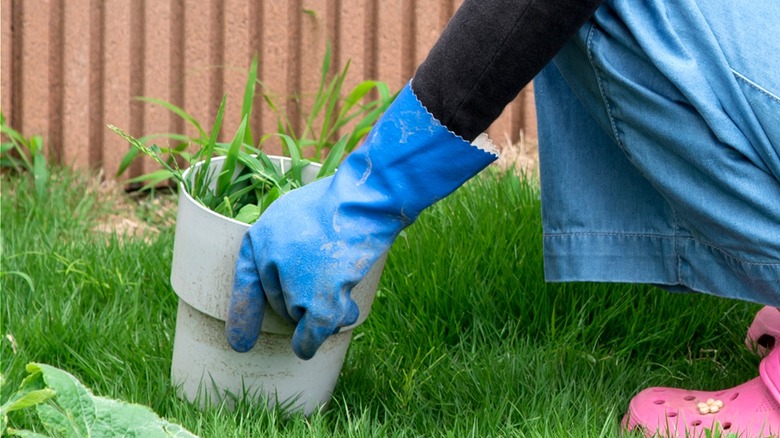
When striving for the perfect lawn, you don't want to find any plants growing besides what you grew, whether it be grass or an unusual alternative like clover. However, some weeds and ground cover are especially problematic to find in your yard. Aggressive spreaders, once they establish themselves, can be almost impossible to get rid of. One such plant is the birdsfoot trefoil (Lotus corniculatus). A part of the pea family, this weed often starts seeding in the spring or late summer, which means you may notice it blooming in August.
The plant gets its name from its seed pods, which grow in clusters that look like bird feet. It also produces flowers that are bright yellow, with hints of red, while its leaves tend to look a little like clover. Eggs and bacon, cat's-clover, and devil's-claw are just a few of its other common names. The plant is a perennial ground cover that may reach up 2 feet in height.
It can survive the winter in USDA hardiness zones 4 to 9, making it a sturdy plant that isn't likely to go away on its own without some serious intervention. Birdsfoot trefoil is native to parts of Asia and Europe, but was introduced into the U.S. to help manage erosion and to fix nitrogen as other peas and legumes do. Unfortunately, the plant grew out of control. While it is mostly considered just an annoying, aggressive species, there are some states, such as Wisconsin and Missouri, where it is invasive.
How to prevent birdsfoot trefoil from spreading
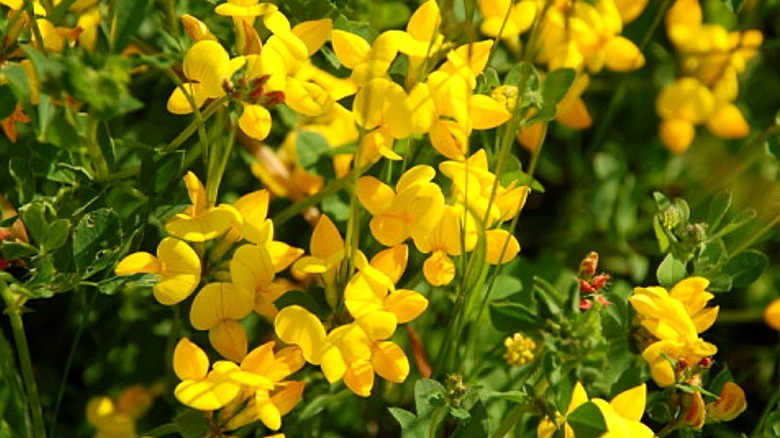
Unfortunately, though this plant is gorgeous, its aggressive growth means it's something you don't want to find in your yard, especially in August when your lawn is already fighting against drought and the summer heat. It's a durable plant, able to handle dry spells, wet soil, and compaction without much of a problem. It also tolerates salt and mowing, and fires only increase germination. The plant spreads from a mix of seeds, stolons, and rhizomes.
You can, however, work to help your lawn actually outcompete this aggressive weed. To start, focus on cutting your grass to the right height. This is a simple mowing technique that will help minimize weed growth in your yard, including birdsfoot trefoil, since mowing too short or too long can lead to unhealthy grass. The ideal heights are between 2 and 4 inches for cold-season varieties, and 1 to 2 ½ inches for warm-season ones.
Usually, birdsfoot trefoil starts to gain ground when the quality of your soil is poor. So, to prevent that, you want to make sure your lawn's soil is well-draining and fertilized properly. You also need to ensure you're watering the right amount. Note that it's possible to remove some of these plants by hand. However, you have to try to destroy most of the rhizomes when weeding; otherwise, the plant will continue to grow and reproduce. Broadleaf herbicides may also have the ability to cut back its growth.
Alternatives to birdsfoot trefoil you can grow
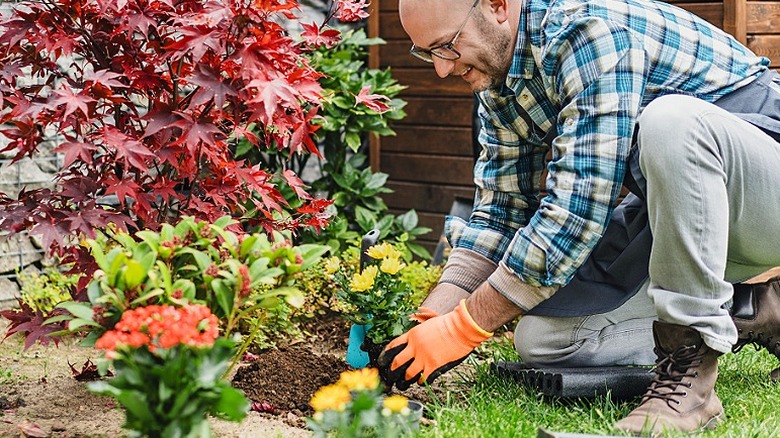
While this plant is problematic, it does have some benefits, such as a source of food for wildlife and nitrogen fixing. It's also great for erosion control because of how it spreads and holds onto the soil. If you find you like the idea of a pretty plant like this in your yard, or the benefits it provides, while avoiding aggressive and invasive species, you can look at planting alternatives.
By doing so, you fill in the niches that this aggressive plant did, but without having to worry about your lawn being taken over. For example, if you do need a bit of help keeping your dirt in place, you can look at some beautiful ground covers that are great for preventing soil erosion, such as creeping phlox and ostrich fern.
If supporting wildlife is your goal, you can look at the best plants to grow for a biodiverse garden, as well as native options to better support your local pollinators and cute visitors, like serviceberry and evening primrose. Other, non-invasive legumes can help with nitrogen fixing, including clover and alfalfa.
When you make the choice to grow some of the plants above, not only are you helping your local environment and your soil, but you get the choice of where to plant them. Instead of taking over your lawn, you can use them as border plants, in your garden, or in bare patches — and your grass can thrive.