

The Retaining Wall Maintenance Step You Shouldn't Skip To Prevent Failure
We may receive a commission on purchases made from links.
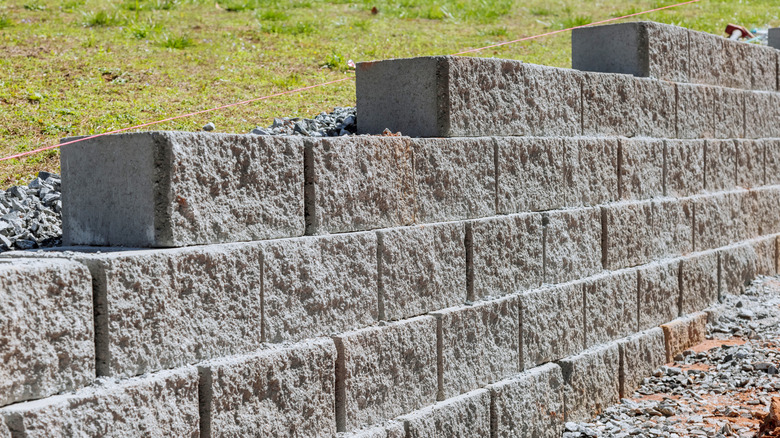
Retaining walls are an interesting design feature that also serve a practical purpose. They allow you to turn a gradual slope into two flat plains. For instance, you can use this space to set up a backyard patio that will overlook your children's playground. A sound retaining wall will also redirect drainage, which can prevent water from flowing toward your house, disrupting the foundation. Whether they are built out of stone, concrete slabs, or wood, retaining walls must be able to drain properly. Without proper drainage, the soil behind your wall will become oversaturated, and your wall could collapse. You can solve this problem quickly by clearing the drains, which are commonly and technically known as weep holes.
Weep holes are often evenly spaced across the face of your retention wall. They can be along the base or higher up. For a tall retaining wall, you may need a stepping stool or a ladder to reach them. Weep hotels typically appear as vertical slits or round holes, but you might also see a length of pipe protruding from the wall. There are several common ways for weep holes to clog. Sometimes people fill them with expanding foam because they don't know their purpose. If the holes run along the ground, mulch or dirt can cover them. But often, weep holes clog because of the soil and plant matter that the draining water carries with it.
You can use several tools to fix this problem depending on the severity. To maintain a sound retaining wall, your arsenal of tools should at least include a pipe cleaner, coat hanger, and a Shop-Vac — the same tools that are good for unclogging drains around your house.
How to inspect and unclog a retaining wall drain
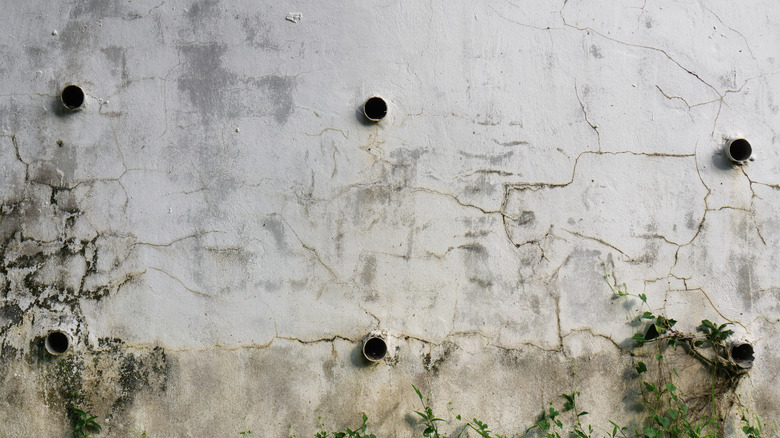
You may have noticed that even during a heavy rainfall, very little water exits the weep holes on your retaining wall. This is a sign that the drains are blocked. You might also notice water leaking from cracks in between the retaining wall stones in the hours and days after a rainfall. Often efflorescent stains are left behind. These white discolorations come from a chemical reaction where the water is trapped against the walls, seeping out, and leaving salt behind.
If you suspect your weep holes are clogged, first try peeking inside of with a flashlight. You might see a very clear block that you can try pulling out with your fingers. But the plant and soil buildup probably goes deeper if the blockage is severe enough to prevent water from leaving. In this case you can try stirring up the clump with a pipe cleaner or a straightened coat hanger. If you need to grab the material and pull it out, the Vastools Flexible Claw Pickup Tool sells for only $10. Claw pickup tools like this have thin, flexible structures that make them perfect for reaching into a curved drain. You'll know you have cleared the blockage when the water trapped behind the retaining wall leaks or rushes out.
You can also suck out the blockage with a Shop-Vac. Simply remove the filter dust bag, place the nozzle over the drainage hole, and suck out the gunk. When water begins to spill out, remove the nozzle. Also, make sure the cord and outlet stay dry. This is one of many unexpected uses for a Shop-Vac in the home and garden; other uses include inflating pool gear and cleaning out gutters.
The dangers of not repairing your retaining wall drainage
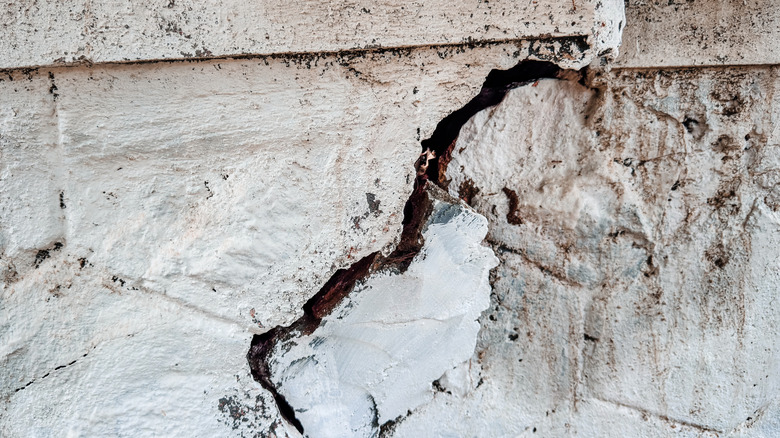
Blocked retaining wall drainage can cause a myriad of problems that are not just aesthetic. When water becomes trapped behind a retaining wall, hydrostatic pressure begins to build. You'll know this pressure is there when water is leaking from between the stones or the wall is beginning to crack. You may also see water pooling in your yard, which can lead to a foul smell or mildew growing on your grass. If you address the problem at this point, you can prevent greater structural damage that would require extensive repairs or even a full replacement of your retaining wall. Otherwise, the wall will begin to bulge or even tilt forward, both of which indicate that a collapse may occur.
There is a mathematical component to this problem. Your wall should be heavy and reinforced enough to support something called the sliding wedge. To imagine the sliding wedge, envision the conical shape that sand forms at the bottom of an hourglass. That shape is the result of gravity and the consistency of the sand particles. The same shape, yet cleaved down the center flipped on its head, branches from the base of your vertical retaining wall, making up the sliding wedge. To keep standing, the mass of your wall must be greater than the mass that the sliding wedge exerts against it. This only works if you can keep the sliding wedge relatively dry. That's why improper drainage is a commonly overlooked mistake that will cause your retaining wall to collapse.