

What To Do If You Find A Bat In Your Attic
We may receive a commission on purchases made from links.
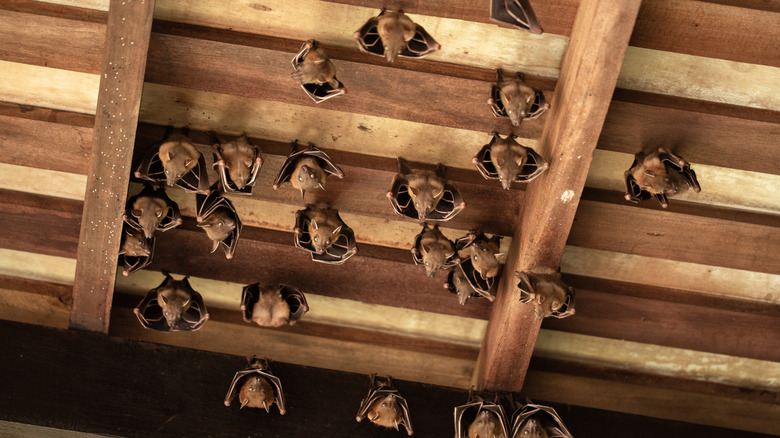
Scratchy noises, guano droppings, and strong odors are some dead giveaways that bats are secretly living in your attic. But if you still want to be 100% sure, don your protective goggles and a respirator, and take a peek in. Chances are you'll find the small mammals resting around vents, walls, or the ceiling, unbothered. After this discovery, you may wonder what to do next. But due to legal implications and the timing of the year, the answer to that question may be more complicated than you think.
Some bat species enjoy protection at the federal or state level, meaning if you incorrectly handle, injure, or even kill one, you might face steep penalties. But since these regulations vary across jurisdictions and distinguishing among species is difficult, it's best to consult your state wildlife office for guidance. Usually, if you find bats during their most active season, which for most areas runs from spring to August, your only option is to wait, as physical removal is both illegal and not very practical even if you wanted to do it. "If the bats are in the attic, or they're living in the upper portion of the house, it's really hard to go in there and actually find all of those bats, catch them effectively, and try to take them back outside the house," Kansas State University wildlife expert Drew Ricketts told the K-State Extension.
This means exclusionary tactics are the only legal, humane, and efficient way to get rid of bats in your attic. Exclusion systems are just one-way exits in your attic that don't allow bats back in. However, bat babies rely on their mothers for food and can't start flying until late summer. Since exclusion exclusively targets the mothers, you must wait for the maternity season to end before taking any further steps. Or, the pups may die of starvation, birthing new problems.
Seal off entry into your living area from bats
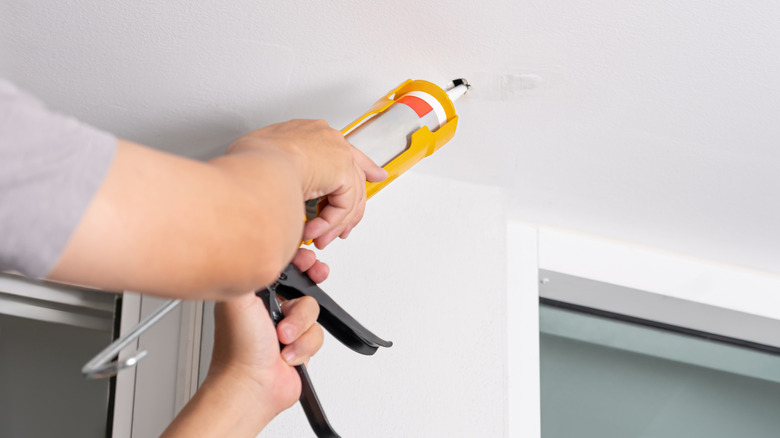
During the summer, it's best to leave the bat colony alone to avoid harming them. But to safeguard your household, seal off entry points into your living spaces. Bats are incredibly valuable to the ecosystem, but they can also carry diseases like rabies and histoplasmosis. Some disease-vectoring fleas also live on bats. For this reason, it's important to avoid direct contact or being bitten by these flying mammals.
Be warned, however, that sealing off areas is a challenging task, as bats can stream through tiniest openings — anything over ¼ inch wide is fair game. As such, several gaps or openings can serve as entrances. Ideally, if you've got the budget, you should hire out the job to wildlife control professionals. If that's not possible, pick a sunny day to closely examine for points where light is leaking out of the attic. Seal them with caulk or a ¼ inch mesh screen, or plug them with expandable foam or plywood.
That being said, if a bat falls from the attic through the chimney (if the damper is open) and enters inside your living space, help it exit your house in the calmest manner possible while avoiding any contact. Shut all doors, switch off exterior lights, turn the room lights dim, and shutter the windows, except one from which the bat can escape. You may also seek help from volunteer bat rescuers — Bat World Sanctuary maintains a database.
Seal the exterior and avoid home remedies
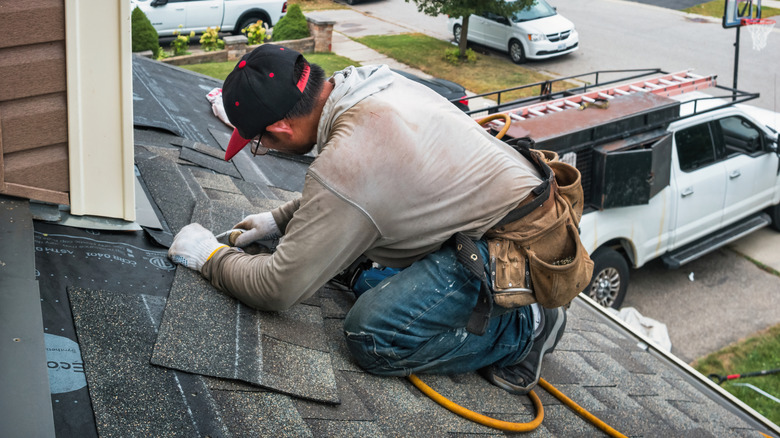
Just as you did on the inside of your home, scan for entry and exit points on your home's exterior. Again, it's a tall task and would likely involve step ladders and the help of a friend (or two). As bats emerge from the attic for their nightly hunt, keep track of the pathways they use, often hidden in soffits, vents, wood siding, flashing, loose shingles, or drop edges. These appear darkly tinted, thanks to all the poop, as well as dirt and oil from a bat rubbing up against the opening while coming and going.
Alternatively, scan your attic with a bright light and make note of all the exits through which it seeps outside. Leave two or three openings so mums can still feed their pups, and shut the remaining pathways permanently. Since uninsulated attics have erratic temperatures, bat colonies usually vacate them in the fall to seek warmer hibernating spots. Once they do, put up bat excluders, like Elspezi's One Way Bat Door, so they can't re-enter. After a week, seal the remaining openings.
But while they're your guests, avoid taking measures like throwing moth balls into the attic to banish bats. The amount necessary to annoy them will be equally, if not more, irritating for you. Besides, this may force them into living spaces, which can become a bigger problem. Similarly, avoid using any ultrasonic repellent devices, as their utility is unproven (and can even cause deafness in your pets). Motion sensor lights or bat baits aren't known to be effective, either. While building a bat house might be the mosquito solution of your dreams and may seem like a nifty way to evict these mammals, those only work before a colony has made its home in an attic, which is a far better shelter for them.