

Not Cotton Balls: The Worn-Out Bathroom Staple To Add To Compost
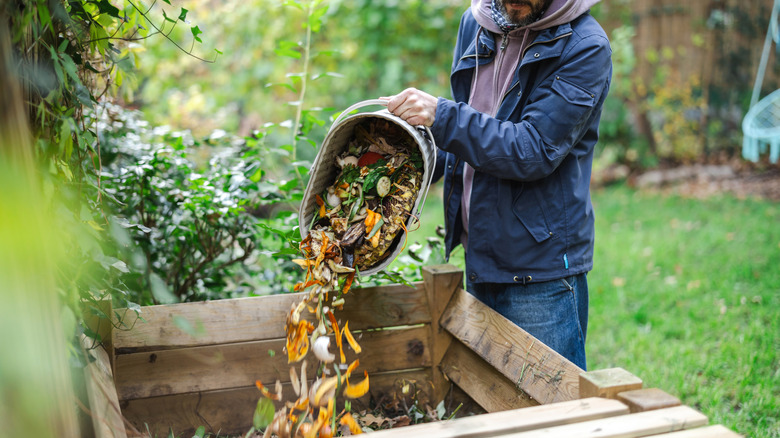
Your kitchen isn't the only source of compostable items in your home. Check your bathroom, too. Anything in there that's 100% natural and doesn't contain plastics or synthetic materials gets the pass. If you immediately thought of cotton balls, you're right. But besides that, other unexpected bathroom items you can put in your compost bin include the natural textiles in your wash area — think worn-out old cotton towels you no longer use. Turning those organic fiber towels into your gardener's black gold works, because bamboo, hemp, linen, and cotton towels are made from cellulose. And cellulose is a biodegradable carbohydrate-rich compound that's the building block of plant cells. So, in simpler terms, 100% natural-fiber towels have the same base material as the dry leaves, twigs, or tree bark you already add to the heap.
For this reason, natural fiber towels can easily serve as one of the brown materials that give your compost pile a serious carbon boost and bulk up the heap. The brown category of woody or dry plant matter provides energy for the little organisms that help break down the compost. It also keeps the green matter, like kitchen scraps, freshly cut leaves, and grass, from turning into a smelly and slimy mess by absorbing excess moisture. More so, natural fiber towels are easy to compost at home, because they degrade faster than synthetic fibers. They can take five months to decompose or as little as two weeks. And, unlike synthetics that break down to harmful microplastics, towels made from certified organic natural fibers create safe, eco-friendly compost.
How to turn old natural fiber bathroom towels to compost
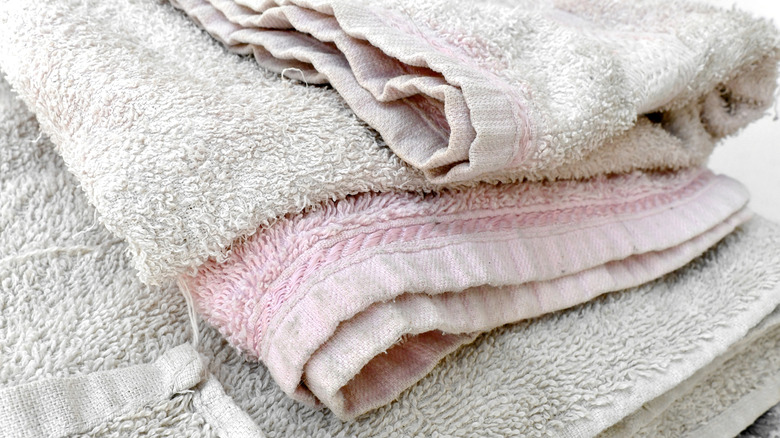
If there are signs that it's time to replace your old and worn-out bath towels, instead of trashing them, turn them into compost. In fact, towels are some of the easiest textiles to compost at home, because they're less likely to have embellishments like buttons, zippers, or elastic. But should they have any plastic or metallic elements, like tags and synthetic thread, remove them before composting.
Often, unless they have reputable certifications, new organic fiber garments may have undergone chemical bleaching, treatments, or dyeing. However, years of washing do not just make towels old, frayed, and thin, but it also strips these chemicals away, making old towels safer for composting. That said, avoid composting any old towels that may be synthetic blends or those that have harsh cleaners or chemicals. If your towels have any Certified Compostable label on them, even better, as that's added confirmation that the fabric breaks down safely without leaving microplastics behind.
Having said that, don't just chuck your towel into your composting bucket and call it a day. First, shred or cut up your old towels into small pieces. Then, for a balanced composting system, layer the natural fabric fibers with a rich green-matter layer of, say, farm animal manure, vegetable and fruit scraps, or grass trimmings. Add one part of green matter to every two to three parts of brown material. Together, the balance of materials will speed up the composting process and ultimately allow you to reap the benefits of composting.