

Boomers Will All Agree: The Simple, Low-Maintenance Flooring That Needs A Comeback
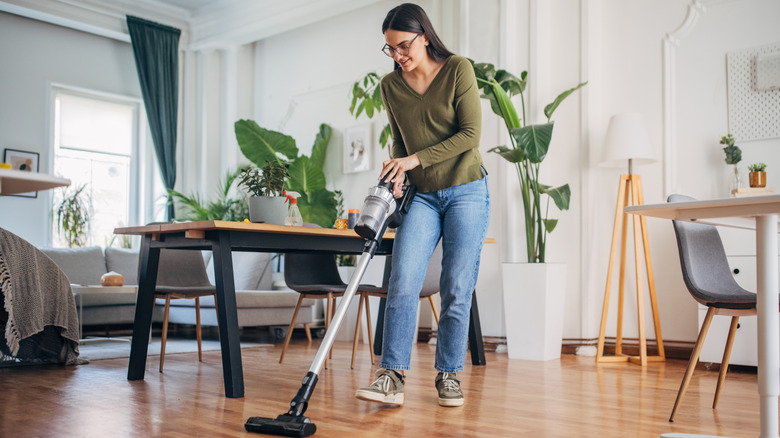
The 1980s had a rep for all things big and bold — from shoulder pads to neon hues. But there was one area where simplicity reigned. A rise in dual-income homes meant less availability for cleaning. That's one of the reasons faux tile vinyl sheets became one of the '80s floor trends boomers loved. A lower-maintenance alternative to hardwood and linoleum, the vinyl sheets offered the appearance of tiling, but without all of those grout lines to scrub clean. And now that younger generations have the floor, well, they, too, can see the appeal.
For starters, vinyl flooring is rather sturdy. Composed of a series of layers, the top wear layer is meant to protect it from scratches, nicks, and scuffs. And since it's made of plastic and stone composite, it's naturally water-resistant. That means any spills can easily be mopped up, and it can be maintained fairly simply with regular sweeping and mopping. (Though a combo of baking soda, WD-40, and jojoba oil will make particularly dingy vinyl floors look brand new again.)
A cushioned backing also offers a softer feel than tile or stone. Plus, the installation is so straightforward, handy types can likely lay down the sheets over a single weekend. But even if you're not a DIY enthusiast, Home Depot puts the cost at $1 to $2 per square foot, with an additional $1 to $2 cost per square foot for labor.
How vinyl flooring has changed over the years
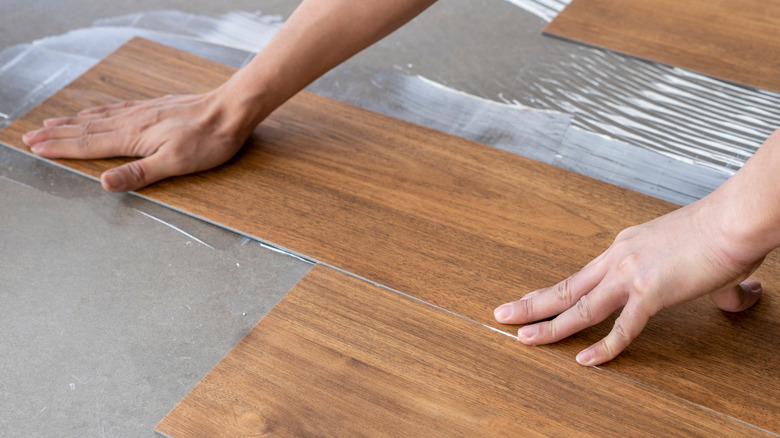
One of the main reasons vinyl flooring fell out of favor in the first place is that it wasn't just affordable; it could sometimes look cheap. If the layer underneath the flooring isn't completely flat, those lumps can show through. Moreover, some lower-quality varieties can yellow over time.
The good news is the bar has been raised on vinyl flooring in recent years. Thanks to more advanced design and printing techniques, today's varieties can closely mimic the appearance of more expensive natural materials, like hardwood, stone, or tile. They've also developed a softer composition and built-in underlay to make them feel more comfortable underneath.
An even more luxe subset of vinyl, luxury vinyl planks and luxury vinyl tiles are interlocking pieces versus a single roll. With an even thicker wear layer (upwards of 12 millimeters versus vinyl at roughly 6 millimeters), they're even more impervious to wear and tear, even in high-traffic areas. And thanks to the interlocking design, they're a very realistic dupe of real hardwood and tile, making them a flooring material you should consider if you want the look of stone.