

Skip Traditional Landscape Fabric: Recycle Something You Already Own
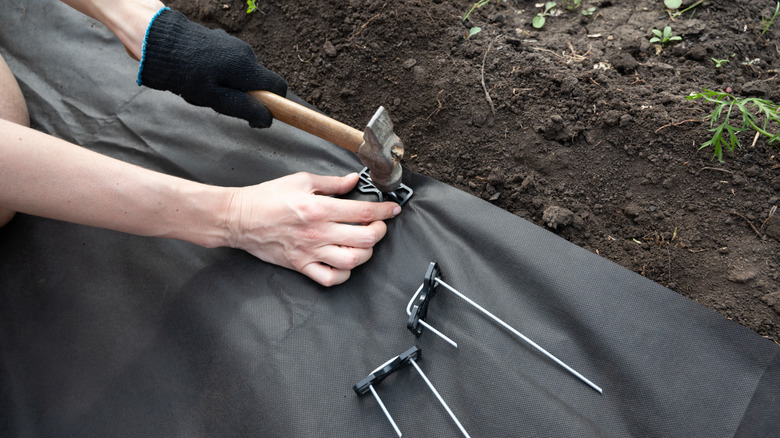
Landscape fabric is a sheet of material that you can place over the soil to block sunlight in order to stop weeds from growing, as a form of non-chemical weed control. You can buy landscape fabric at garden centers, or in the case of this hack, you can simply cut a shower curtain to fit around your plants. Most folks are used to replacing shower liners somewhat regularly. The plastic inner curtains have to contend with a lot of moisture, soap scum, and buildup, and it's often easier to throw them out and find a cheap replacement than it is to scrub off mildew. You should really replace your fabric shower curtain too once it becomes difficult to wash, starts to tatter, or develops deep-set stains. But wait; before you bundle that up old shower curtain and stuff it in the trash, consider taking it outside instead. It may have another, rather unexpected, life in it yet — as a makeshift weed barrier.
This could be a useful way of both reusing an old shower curtain in your yard and saving you money on more traditional landscape fabric. However, the caveat may come down to how your curtain was made — some shower curtains are made from waterproof plastic such as PEVA, but landscape fabric is usually designed to let water and air through. Experts actually recommend using permeable materials for weed control so as not to affect drainage. Otherwise, a solid plastic barrier could stop rain or irrigation from reaching the soil properly. It can also disrupt the lifecycle of insects in the soil. However, that might be a good quality if you want to suffocate weeds or clear a patch of grass. It all depends on your intentions.
How to use an old shower curtain in the garden
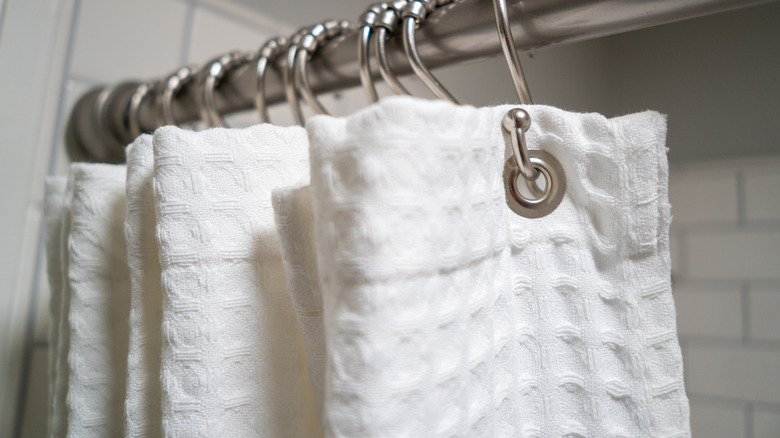
Before taking a shower curtain out to your garden, you'll want to first check if it's peeling or falling apart, particularly if its a plastic curtain. If it's disintegrating, you may want skip it to avoid accidentally bringing microplastics into your garden. Ideally, when burying it as a weed barrier in flower beds or pathways, you'll want to use an old fabric shower curtain made from an uncoated, breathable material such as cotton or linen, but some polyester curtains may also be suitable if the fabric isn't coated with a waterproof finish. Then simply lay the curtain flat out over the soil you wish to cover, cutting holes for existing plants to poke through.
From here, you'll need something to hold the curtain down, whether that's a layer of mulch, gravel, or decorative stones. This is for both practical reasons and for aesthetic, as no one wants a shower curtain on display in their garden. Keep an eye on drainage. If water begins to pool on top or your soil becomes too wet or too dry, then the shower curtain might not be the right material for the job. In that case, a permeable landscape fabric or a thick layer of organic mulch may be a better option for you. However, if your old shower curtain is simply destined for landfill, this might end up being quite a surprisingly useful second life for it.
A plastic shower curtain or liner isn't totally useless either. While it's not as effective as a black tarp, a plastic shower curtain laid over the top of your lawn or driveway can trap moisture and heat to kill weeds beneath it. You can also lay it out in the sun to kill grass in your yard and start a flower bed.