

Save Space And Recycle Easier: Make A Can Crusher With An Impressive DIY

Have you ever wondered how many beverage cans get thrown in the trash each year in the US? According to figures from 2023, it's 61 billion. Not millions, but billions, and that scrap metal is worth 1.2 billion dollars. Cutting down on waste is something we can all help with, but the challenge with empty 12-ounce cans is the space they take up. Crushing them down makes them a lot easier to dispose of, and over on YouTube, the Acutabove Woodworking channel has an impressive DIY can crusher you might like to build.
Recycling aluminum cans is among a number of easy ways to make your home more eco-friendly, and you could just buy a crusher. It's a lot more satisfying to make your own, though. You'll need patience and care to build the one demonstrated, but you don't need advanced woodworking skills. The whole thing is held together with glue, screws, and nuts and bolts.
Kenny, the guy who runs the channel, has a pretty extensive collection of tools. As we go through the process, we'll suggest a couple of alternatives that you might already own if you're a DIY enthusiast. First, you will need a table saw. It's one of the key tools to invest in for woodworking at home, and pretty much an essential for a wide range of different projects. You'll also need a cordless drill and a handful of clamps.
Using scrap wood or buying lumber from the store
In the video, Kenny uses lots of scrap hardwood, which is great if you have it, but many people won't. You don't have to use one species, of course. You could mix and match. He chooses hardwood because it is close-grained and strong. Much more so than pine, for example. Kenny has oak, but cherry or poplar could be used instead, and boards of all three varieties are available at major hardware stores.
You will need to check thicknesses. For example, Kenny starts off with a piece ⅞-inch thick, which you won't find at the store. If you have a planer, you can go thicker and trim it down. If you don't, you can choose slightly thicker or thinner, which isn't a big deal. Lumber sizes can be confusing. For example, what's described as 1-inch thick is actually ¾-inch. So be aware of this and check carefully when selecting. It's worth going through the video, noting the dimensions given, and working out what you need before visiting the store.
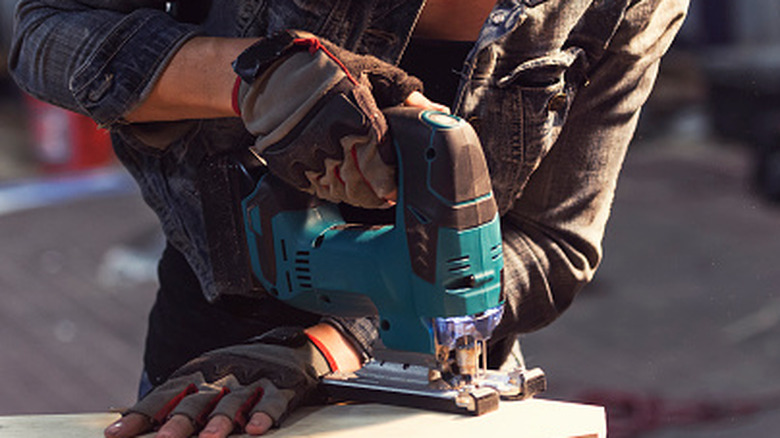
The plunger is made first, and right away a scroll saw is mentioned to cut the curves on the top of each side. A bandsaw could also be used and is another great tool for the avid woodworker, but an ordinary hand-held jigsaw will do the job if you clamp each piece securely to a bench. Smooth the curves with a sander, or sandpaper wrapped around a scrap block.
Extra tips to make building the DIY can crusher easier
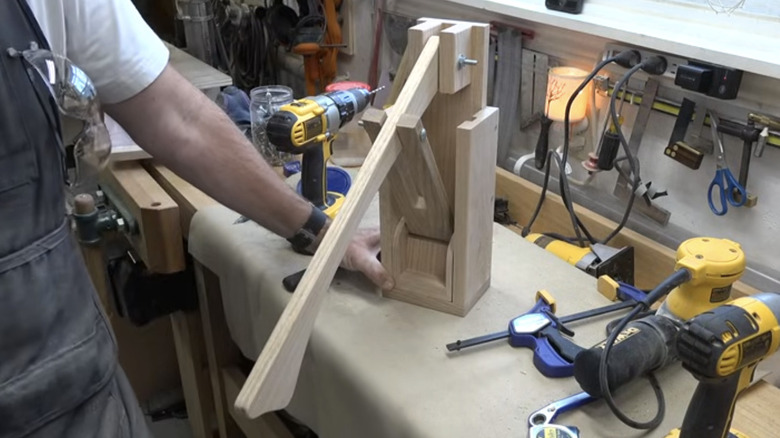
There is some trial and error to the build, but the instructions should be clear. Note that most joints are glued and screwed for maximum strength. Checking measurements twice before cutting saves a lot of waste, and clamping sections allows you to see whether parts work together before fixing them permanently.
Kenny's table saw has a dado blade to cut slots for the runners. You can use a standard blade, moving the fence over a little at a time until you get to the correct width. He has plastic for the runners, but wood is okay too. Just wax the slots so the plunger slides freely. When making the handle and lever mechanism, Kenny returns to his scroll saw and mentions a bandsaw. Again, careful use of a jigsaw can achieve the same thing.
Remember to use washers with bolts, or the wood will bind. Don't make the mistake Kenny did of fixing the top mounting points before putting in the plunger. It won't fit through the gap! A coat of water-based polyurethane will make the can crusher easy to clean and should be applied before final assembly.
There are many ways to reuse beverage cans rather than throw them out. Building this DIY can crusher means those that do go in the trash take up a fraction of the space. It will make recycling easier and should be a pleasure to use. It does take some force to crush a can. Giving the sides a little pinch first makes it easier.