

These Pesky Ants Actively Protect Some Of The Worst Pests In Your Garden

We may receive a commission on purchases made from links.
How many of us get worried if we see ants marching up and down our plants in the garden? Not many, right? After all, ants are not chewing holes in the leaves of our plants or stripping their stems bare of leaves like some other bugs, such as beetles and caterpillars. Most of the time, they just form their little trails and go about their business. Argentine ants, though, are not that innocent. Now, they don't damage the plant directly, but they do support some of the worst garden pests in your garden. Scales, mealybugs, aphids — these ants protect them all.
Why would Argentine ants do this? Surely they have better things to do than babysit aphids and mealybugs, right? Well, as it turns out, they do have a very sweet reason. Garden pests like scales, mealybugs, and aphids produce honeydew, which is basically a sugary, energy-rich substance that Argentine ants love to feed on. The ants thus have a strong reason to keep these tiny honeydew factories alive. In return, they protect the pests as they feed on your plants.
Even worse? Argentine ants also fight and interfere with parasitoid wasps and other good bugs that will chase pests like aphids and mealybugs from your garden. Once those good guys are gone, the honeydew-secreting bugs could get out of control, which can then attract problems like sooty mold to the garden. That is not all, though! Argentine ants can also become a home nuisance. This is especially true when their large colonies try to get inside homes in search of water and food, although they are not considered a threat to people in homes.
How to identify and get rid of Argentine ants in gardens?
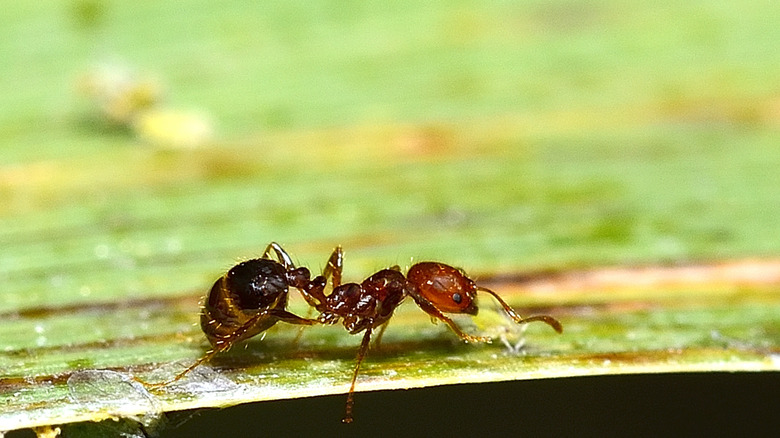
Unless you are an entomologist or you have dealt with Argentine ants before, you probably do not know what they look like, and it is not wise to declare war on every ant in the garden, as they do not all protect honeydew-secreting bugs. So, before taking measures to get rid of ants, make sure you are actually dealing with the Argentine ones. Start with what they look like. Argentine ants are tiny, roughly ⅛-inch long, with uniform light-to-dark brown bodies. You can also see a single node between the thorax and the abdomen on their bodies if you look closely. Plus, when crushed, they often release a musty smell.
As for where you can find them, they mostly favor moisture over depth. You can often find their outdoor nests just a couple of inches under mulch, debris, leaf litter, compost piles, and other sheltered locations. However, they do not make mounds as some other ants do. Nevertheless, once you are sure that Argentine ants are the ones invading your garden, it is time to eliminate them. However, you will need to do more than mindlessly douse them with a surface spray insecticide. This will not reach ants that are hidden inside the nests, and you will be dealing with a new ant infestation a few days later.
Instead, use sweet liquid baits and sticky traps and place them where you see the ants' trails and nest openings; Raid Max Liquid Ant Bait from Amazon should do the trick. While it will require some patience, this approach provides much better and longer control than spray. Lastly, take some measures to get rid of aphids and other honeydew producers in your garden. Once their sugary buffet is gone, they will probably leave, too.