

Be Warned: This Invasive Grass Is A Haven For Ticks In Your Yard
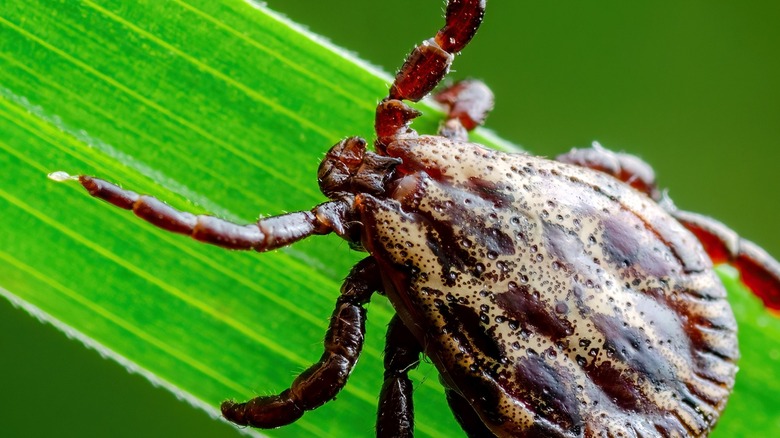
Weedy grasses can be some of the worst invasive plants to deal with in the yard. For most of us, the worst part is that they choke out desirable plants and require a lot of time spent weeding. But one invasive grass throws entire ecosystems off balance, creating the perfect haven for ticks in your yard. Cogongrass (Imperata cylindrica) is an invasive grass that when it takes over an area, creates conditions that allow ticks to survive more than 50% longer than normal.
There are a lot of plants to avoid growing if you want to keep ticks away, but you may want to put cogongrass at the top of the list. In a recent University of Florida study, researchers found that lone star ticks could survive for longer in areas that were infested with cogongrass compared to areas with native plants. The dense growth of cogongrass keeps the soil moist and cool so ticks are able to live for longer. Ticks don't survive low humidity with high temperatures, which is why Lyme disease is far more common in northern states.
With its fluffy plumes, cogongrass was actually used as a packing material, which is how it made its way to the United States in the early 20th century. While its arrival was by chance, its spread was more deliberate. For a time, cogongrass was seen as a way to possibly control soil erosion, as well as a potential forage crop. Being invasive, however, the grass kept on expanding. Today, it's on the Federal Noxious Weed List. What's more, it has an flammability rating of "extreme."
Tick survival and the invasive cogongrass
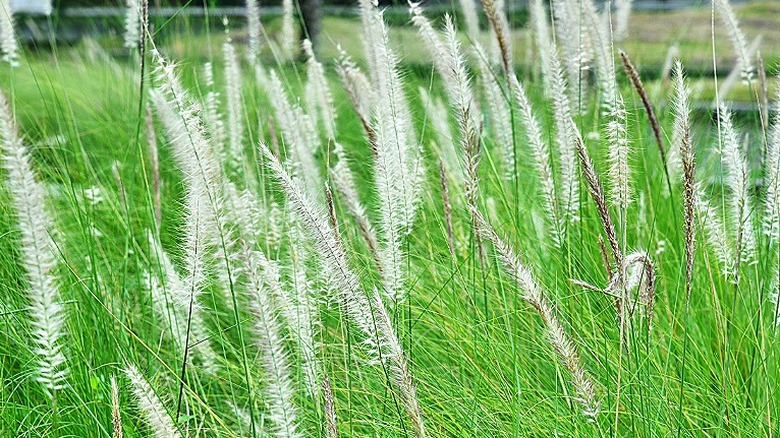
The lone star tick was chosen for the study in Florida since it's a problematic tick in the South. Its bites can spread a bacterial illness known as ehrlichiosis, which causes fever, chills, and body aches. One of the places ticks like to lurk is in tall grass; cogongrass grows to about 30 inches high. In the University of Florida study, researchers found that adult ticks were able to live more than 100 days longer in cogongrass. The longer they can survive, the longer they're able to spread infections.
Also, although deer are a common host of ticks, the study noted that the deer activity was the same across the studied areas of invading cogongrass and those with native plants. This data led the researchers to conclude that the "dominant driver of tick abundance in invaded areas" was the fact that the ticks could survive for longer.
Cogongrass spreads aggressively via its seeds — dispersed through the wind (anemochory) — and its deep rhizomes underground. It's also considered a Top 10 worst weed in the world (No. 7); paired with cogongrass's tick association, it's a nasty combination.
Note that there's an ornamental cultivar of cogongrass called Imperata cylindrica 'Red Baron.' Its red color can provide a garden with lovely contrast. However, per North Carolina State Extension, though this cultivar's red form is sterile, it's possible for it to return to its green form. In doing so, it can prove just as invasive. (Note that even when a cultivar is said to be sterile, it's possible for it to spread.) For this reason, you might want to consider one of the plants that keep ticks out of the yard instead.